
India-Japan Summit 2026: A Milestone in Strategic Partnership and Shared Resolve Against Terrorism

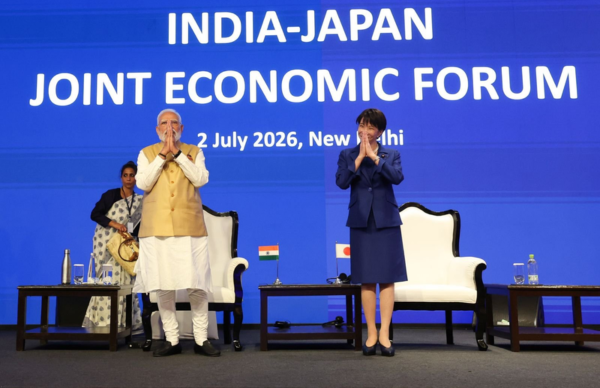
Prime Minister Narendra Modi and Japanese Prime Minister Sanae Takaichi concluded a highly productive 16th India-Japan Annual Summit, reinforcing the deep-rooted Special Strategic and Global Partnership between the two nations. The leaders issued a strong joint condemnation of terrorism while charting an ambitious path forward in defence, technology, economic security, and clean energy cooperation.
Strong Stand Against Terrorism
During their bilateral discussions at Hyderabad House, Prime Minister Modi and Prime Minister Takaichi unequivocally condemned terrorism and violent extremism in all forms, with particular emphasis on cross-border terrorism. They expressed deep concern over the Pahalgam attack in Jammu and Kashmir in April 2025 and the Red Fort incident in Delhi in November 2025.
The joint statement highlighted the need to bring the perpetrators, organizers, and financiers of these attacks to justice without delay. Drawing attention to relevant United Nations reports, the two Prime Ministers called for concerted international action against UN-listed terrorist entities, including Lashkar-e-Taiba (LeT), Jaish-e-Mohammad (JeM), Al Qaeda, ISIS/Daesh, and their proxies. They stressed the importance of dismantling safe havens, disrupting financing networks, and preventing cross-border movement of terrorists.
This unified stance underscores the shared commitment of India and Japan to regional and global peace and security.
Warm Personal Rapport and Cultural Bonds
Prime Minister Takaichi’s first official visit to India as Japan’s leader added a personal touch to the high-level engagements. Prime Minister Modi welcomed her warmly, referring to her affectionately as his “younger sister” and praising her visionary leadership. He also highlighted the shared Buddhist heritage connecting the two ancient civilizations, particularly linked to Takaichi’s home prefecture of Nara.
Takaichi reciprocated the warmth, noting the brother-sister spirit guiding the bilateral relationship. These cordial exchanges reflected the strong foundation of trust and mutual respect that has long defined India-Japan ties.
Advancing Defence and Technological Collaboration
A major highlight of the summit was the announcement of the first India-Japan defence co-development project focused on a naval radio antenna system. This initiative is expected to strengthen maritime security, enhance defence technology cooperation under the “Make in India” framework, and contribute to a rules-based order in the Indo-Pacific.
In the realm of emerging technologies, the leaders adopted a dedicated Joint Statement on Artificial Intelligence. The agreement aims to foster a safe, secure, and trustworthy AI ecosystem through joint research, shared computing resources, talent development, and policy exchanges. Plans include facilitating the movement of skilled professionals to deepen collaboration.
Economic Security and Sustainable Development Initiatives
The summit saw the adoption of the India-Japan Joint Declaration on Economic Security, promoting collaboration in critical areas such as semiconductors, critical minerals, information and communication technology, clean energy, and pharmaceuticals. These efforts are designed to build resilient supply chains and enhance mutual economic security.
On the sustainability front, the two sides launched the Cooperative Biogas for Growth Initiative, under which Japan will support the establishment of numerous biogas and organic fertilizer plants across India. Over 129 memoranda of understanding were signed across diverse sectors, including biotechnology, mobility, and financial services, reflecting robust business engagement.
Looking Ahead: A Partnership for the Future
The leaders agreed to deepen people-to-people exchanges and policy consultations on regional and global issues. They also decided to mark 2027 — the 75th anniversary of diplomatic relations — with special celebrations. Prime Minister Modi accepted an invitation to visit Japan for the next Annual Summit.
The MGMM Outlook
The 2026 India-Japan Annual Summit reflects the growing maturity of a partnership built on shared democratic values, strategic trust, and a common vision for a secure Indo-Pacific. The joint condemnation of terrorism, including a firm call for global action against internationally designated terrorist organizations and their support networks, signals increasing alignment on critical security concerns. At the same time, expanded cooperation in defence, artificial intelligence, economic security, and resilient supply chains demonstrates that the relationship has evolved beyond diplomacy into a comprehensive strategic collaboration capable of addressing emerging geopolitical and technological challenges.
The agreements reached during the summit also highlight a long-term commitment to sustainable development and innovation through initiatives such as clean energy, biogas infrastructure, semiconductor cooperation, and advanced technology partnerships. Combined with strong cultural ties and growing people-to-people engagement, these developments reinforce India and Japan's ability to shape a stable, rules-based regional order while creating new opportunities for economic growth, technological advancement, and shared prosperity in the years ahead.
(Sources: Hindustan Times, LiveMint, News on Air)



Comments