
PM Modi Welcomes US-Iran Peace Agreement, Expresses Hope for Regional Stability in West Asia

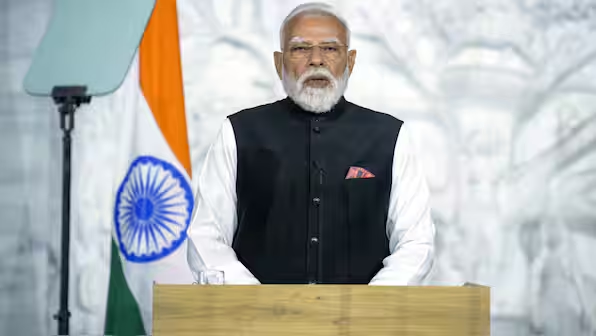
Prime Minister Narendra Modi has extended a warm welcome to the landmark peace agreement between the United States and Iran, viewing it as a significant step toward restoring calm and stability in West Asia following months of conflict. In a statement shared on X, the Prime Minister highlighted the devastating global economic fallout and the tragic loss of lives that the hostilities had inflicted across multiple nations. He expressed India's sincere hope that the full implementation of this understanding would lead to a durable and comprehensive final accord.
PM Modi particularly stressed the importance of ensuring freedom of navigation and the smooth flow of maritime commerce, especially through the critical Strait of Hormuz, which serves as a vital artery for global energy supplies. His remarks underscore India's consistent advocacy for diplomatic solutions, de-escalation, and the protection of international maritime routes that are essential for trade and energy security worldwide.
Details of the Historic US-Iran Agreement
The agreement, framed as a comprehensive Memorandum of Understanding, calls for an immediate and permanent cessation of military operations on all fronts, including in Lebanon. Key provisions include the reopening of the Strait of Hormuz to unrestricted commercial shipping and the lifting of the US naval blockade on Iranian ports. A formal signing ceremony is scheduled for June 19, 2026, in Switzerland, with a 60-day window set aside for further negotiations on critical issues such as Iran’s nuclear program, sanctions relief, and other outstanding matters.
Pakistan played a pivotal mediating role in facilitating the breakthrough, with Prime Minister Shehbaz Sharif announcing the finalization of the agreed text after intensive diplomatic efforts. US President Donald Trump hailed the deal on Truth Social, authorizing the immediate reopening of the Strait and famously urging, “Ships of the world, start your engines. Let the oil flow.” Iranian officials have confirmed the permanent end to hostilities and expressed optimism for the next phase of talks.
Global and Regional Reactions
The development has drawn positive responses from several international leaders and organizations. United Nations Secretary-General António Guterres welcomed the ceasefire, the reopening of the Strait, and the framework for ongoing dialogue as a critical step toward lasting peace. Leaders including Australian Prime Minister Anthony Albanese and French President Emmanuel Macron have also voiced support for this diplomatic achievement.
However, Israel has rejected the agreement, stating that it is not bound by the deal and will continue to prioritize its own security decisions independently. Despite this, the broader international community sees the accord as a promising opportunity to reduce tensions and address long-standing challenges in the region.
Economic Implications for India and the World
The prospect of restored shipping through the Strait of Hormuz has already triggered a notable decline in global oil prices, bringing relief to energy markets. For India, one of the world’s largest oil importers, this development holds substantial importance. Lower energy costs are expected to ease inflationary pressures, support economic growth, and strengthen the country’s energy security. Analysts anticipate that the resolution will help stabilize supply chains and reduce disruptions that had affected global trade.
This agreement aligns closely with India’s long-standing foreign policy approach, which prioritizes dialogue, multilateral engagement, and the maintenance of regional stability to foster prosperity for all nations involved.
The MGMM Outlook
India's positive response to the US-Iran peace agreement reflects the country's longstanding emphasis on diplomacy, dialogue, and regional stability. Prime Minister Narendra Modi's welcome of the breakthrough highlights the importance of peaceful resolutions in addressing conflicts that have caused significant humanitarian and economic consequences. The focus on safeguarding maritime trade routes, particularly through the Strait of Hormuz, demonstrates India's commitment to ensuring global energy security and maintaining uninterrupted international commerce.
The agreement carries major economic significance for both India and the wider world. The reopening of critical shipping lanes and the easing of tensions are expected to support stable energy supplies, reduce pressure on global markets, and strengthen supply chains. For India, lower oil prices and improved regional stability could contribute to economic growth and inflation control, while reinforcing the country's broader foreign policy objective of promoting peace and prosperity through multilateral cooperation.
(Sources: Firstpost, LiveMint, Economic Times)


Comments