
PM Modi to Land on Assam Highway Airstrip, Marking Major Leap in Strategic and Disaster Preparedness

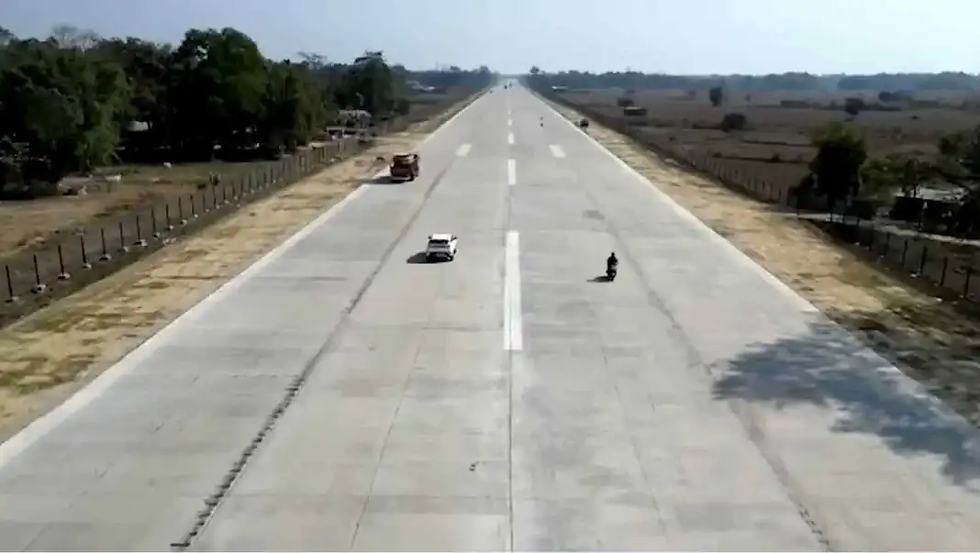
Prime Minister Narendra Modi is set to make history during his upcoming visit to Assam on February 14 by landing on a specially constructed emergency airstrip built on a national highway near Moran in the Dibrugarh district. This will be the first operational highway airstrip in Northeast India, representing a major milestone in the region’s infrastructure and strategic aviation capabilities. The 4.2-kilometre stretch of National Highway 127 has been designed to function as a fully operational runway in emergency and strategic scenarios.
Instead of using Dibrugarh Airport, the Prime Minister will travel from Guwahati aboard a military aircraft and land directly on the highway strip. The event is being viewed as both a symbolic and practical demonstration of India’s growing focus on dual-use infrastructure that serves civilian needs while strengthening national security.
Built for Military and Emergency Operations
The highway airstrip has been developed in coordination with the Indian Air Force and the National Highways and Infrastructure Development Corporation Limited. The surface has been reinforced with high-grade concrete capable of handling heavy military and transport aircraft. Fighter jets such as Rafale, Sukhoi-30MKI, and Tejas, along with transport aircraft like C-130J Hercules and AN-32, are expected to be able to operate from the strip when required.
To ensure safety and operational readiness, the central divider has been removed, fencing has been installed on both sides, and roadside structures have been cleared. During flight operations, the highway can be completely sealed off and converted into a functional runway within a short time, allowing rapid deployment of aircraft in emergency situations.
Air Force Demonstration to Showcase Capability
Following the Prime Minister’s landing, Indian Air Force fighter jets are expected to carry out special fly-pasts and multiple landings on the highway strip. This aerial demonstration will showcase the operational feasibility of highway runways and underline the Air Force’s ability to operate from alternative bases in times of conflict, disaster, or infrastructure disruption.
Such demonstrations are aimed at validating India’s readiness to maintain air operations even if conventional airbases are compromised, reinforcing the country’s strategic depth and flexibility.
Strategic Importance Near Sensitive Borders
The location of the Moran highway airstrip gives it significant strategic value. Assam lies close to the Line of Actual Control with China and also shares proximity with the India-Myanmar border. Defence experts have noted that highway-based airstrips enhance India’s ability to disperse aircraft, reduce vulnerability to targeted attacks, and ensure continuity of operations during heightened security situations.
This facility is part of a wider national strategy to integrate defence preparedness into civilian infrastructure. Similar highway airstrips have already been developed in states such as Uttar Pradesh and Rajasthan, and Assam has announced plans to construct additional emergency landing facilities in other parts of the state.
Strengthening Disaster Response in a Flood-Prone Region
Beyond military use, the airstrip is expected to play a critical role in disaster management. Assam is regularly affected by severe flooding and infrastructure disruptions. In situations where airports become inaccessible, the highway runway will allow rapid airlift of rescue teams, medical evacuation flights, and delivery of relief materials.
State officials have emphasised that this capability will significantly improve Assam’s disaster response framework, making it easier to maintain connectivity during natural calamities and humanitarian emergencies.
Development Projects to Be Inaugurated Alongside
During the same visit, Prime Minister Modi is also expected to inaugurate several major development initiatives in Assam. These include the Kumar Bhaskar Varma bridge connecting Guwahati and North Guwahati, the launch of academic operations at the new IIM Guwahati campus, the rollout of electric buses to strengthen urban transport, and the inauguration of a National Informatics Centre data centre.
Together, these projects reflect a coordinated push to combine economic development, modern infrastructure, digital capacity, and strategic preparedness in the Northeast.
The MGMM Outlook
Prime Minister Narendra Modi’s landing on a national highway airstrip in Assam marks a transformative moment for Northeast India’s infrastructure and strategic posture. The Moran highway runway is not just a symbolic first; it reflects a shift toward dual-use development where civilian assets are designed to serve national security and emergency needs. Built to handle advanced fighter jets and heavy transport aircraft, the strip strengthens India’s ability to disperse air operations, reduce dependence on fixed airbases, and maintain readiness in sensitive border regions near China and Myanmar. The Indian Air Force demonstrations further reinforce India’s evolving doctrine of flexibility, resilience, and rapid response.
Beyond defence, the airstrip significantly enhances Assam’s disaster preparedness in a flood-prone and infrastructure-challenged region. The ability to convert a highway into a functional runway enables faster deployment of rescue teams, medical evacuations, and relief operations when conventional airports are disrupted. Alongside major development initiatives such as new bridges, academic institutions, electric mobility, and digital infrastructure, the project reflects a broader strategy of integrating growth with security. Together, these efforts position Assam and the Northeast as increasingly central to India’s long-term development, connectivity, and strategic resilience.
(Sources: OpIndia, Times of India, NDTV)



Comments