
Jaishankar Calls for Urgent Reform of Global Institutions, Highlights India-UAE Partnership

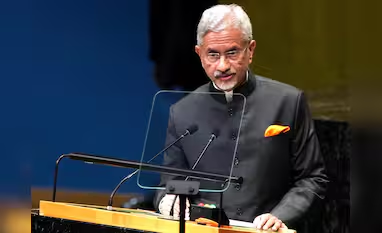
External Affairs Minister S. Jaishankar has called for urgent reforms in multilateral institutions, emphasising the need to make global decision-making more effective and responsive to changing geopolitical realities. Speaking at the Middle East edition of the Raisina Dialogue in Abu Dhabi, he highlighted the importance of strengthening international partnerships and exploring new approaches to cooperation.
During a discussion titled The World Ahead: Power, Purpose & Possibility, Jaishankar joined UAE Deputy Prime Minister and Foreign Minister Sheikh Abdullah bin Zayed Al-Nahyan to discuss the evolving international landscape. He observed that global affairs are being shaped by both long-term transformations and immediate geopolitical developments, requiring countries to reassess traditional approaches and adapt to emerging challenges.
His remarks highlighted the importance of international institutions that can respond effectively to contemporary concerns while providing countries with meaningful opportunities to participate in global decision-making.
Why Multilateral Institutions Need Reform
Multilateralism refers to cooperation among several countries through international organisations, agreements and diplomatic forums. Institutions such as the United Nations play an important role in addressing international security, economic development and other shared challenges.
However, the global balance of economic and political influence has changed considerably since many of these institutions were established. Calls for reform have therefore grown, particularly regarding representation, decision-making and the ability of international organisations to respond to emerging crises.
India has consistently advocated reforms that better reflect contemporary global realities, including greater representation for developing countries. Jaishankar's remarks reinforce the importance of building international frameworks that are more inclusive, effective and capable of addressing the interests of a wider range of nations.
Minilateralism as a Complement to Global Cooperation
Jaishankar also highlighted minilateralism, an approach in which a smaller group of countries works together to address specific challenges. Such partnerships can help governments coordinate policies, share expertise and pursue common objectives without requiring agreement among every country in a larger international forum.
Cooperation among smaller groups can be particularly useful in areas such as energy security, trade, technology, maritime security and resilient supply chains. These arrangements can complement multilateral institutions by helping countries make practical progress on shared priorities.
The approach also reflects the importance of flexible diplomatic engagement in a complex international environment. By working with different partners on different issues, countries can strengthen cooperation while maintaining their ability to respond to changing strategic and economic conditions.
India-UAE Partnership Strengthens Strategic Ties
Jaishankar cited the India-UAE partnership as an example of how sustained diplomatic engagement can create opportunities for cooperation in a changing global environment. Over the years, relations between the two countries have expanded across trade, investment, energy, defence, security and cultural exchanges.
A significant milestone in their economic relationship was the Comprehensive Economic Partnership Agreement (CEPA), which came into force on May 1, 2022. The agreement aims to improve market access, reduce trade barriers and create new opportunities for businesses. Both countries have also continued to explore ways to expand investment and strengthen economic connectivity.
Beyond trade, India and the UAE share interests in regional stability, energy security and technological development. Their cooperation demonstrates how bilateral partnerships can deliver practical outcomes while contributing to broader regional engagement. The presence of a large Indian community in the UAE further strengthens the social and economic connections between the two countries.
India's Role in Shaping Global Cooperation
India's growing engagement with international partners reflects its efforts to contribute to discussions on global governance, economic development and security. Its relationships with countries across West Asia and other regions provide opportunities to build cooperation on issues of mutual interest.
Reforming multilateral institutions remains an important part of this broader engagement. India has repeatedly supported changes to the United Nations Security Council to make it more representative of present-day global realities. Such reforms could help strengthen the credibility of international institutions and ensure that a wider range of countries has a meaningful voice in decisions affecting the international community.
Jaishankar's emphasis on stronger partnerships highlights the value of combining bilateral cooperation with efforts to improve global institutions. Both approaches can contribute to addressing shared challenges and building more effective international relationships.
The MGMM Outlook
External Affairs Minister S. Jaishankar has called for urgent reforms in global institutions to ensure they reflect changing geopolitical realities and provide more effective international cooperation. Speaking at the Middle East edition of the Raisina Dialogue in Abu Dhabi alongside UAE Foreign Minister Sheikh Abdullah bin Zayed Al-Nahyan, he highlighted the importance of multilateralism and flexible partnerships in addressing global challenges. India’s emphasis on greater representation for developing countries and reforms to international institutions reflects its continued engagement in shaping global decision-making. Jaishankar also highlighted minilateralism, through which smaller groups of countries can work together on shared priorities such as trade, energy security, technology and maritime cooperation.
The India-UAE partnership stands as an important example of how sustained diplomatic engagement can strengthen economic and strategic relations. Cooperation across trade, investment, energy, defence and technology, supported by the Comprehensive Economic Partnership Agreement, has created opportunities for deeper collaboration between the two nations. As global challenges continue to evolve, stronger bilateral partnerships and more representative international institutions can complement each other in promoting stability and shared progress. India’s continued diplomatic engagement highlights the importance of constructive dialogue, practical cooperation and global reforms that respond to the needs of the changing world.
(Sources: Hindustan Times, Business Standard, The New Indian Express)


Comments