
Jaishankar Holds Key UNGA Meetings, Focuses on AI, Space and UN Security Council Reform

External Affairs Minister S. Jaishankar held a series of bilateral and multilateral meetings on the sidelines of the 81st United Nations General Assembly in New York, discussing emerging technologies, space cooperation, energy, regional developments and reforms to global institutions. His engagements brought together India's key partners from Europe, the Gulf, Asia and other regions.
The discussions come during a UNGA session being held under the theme “Restoring Trust, Managing Transformation: A United Nations That Delivers for All.” The 81st session opened on September 8, 2026, with the high-level week taking place from September 22 to 28.
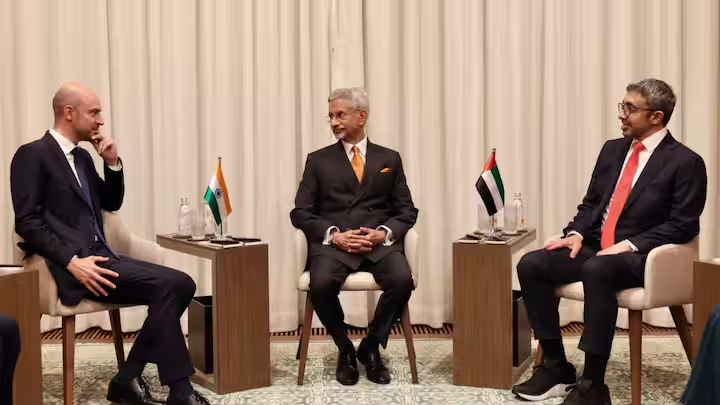
India-France-UAE Trilateral Expands Cooperation
One of the important meetings was the India-France-UAE trilateral ministerial meeting. Jaishankar met his French and Emirati counterparts to review cooperation across several areas, including artificial intelligence, space, health, energy, culture and heritage.
The three countries also exchanged views on developments in West Asia and discussed ways to strengthen their trilateral partnership. The focus on AI and space reflects the growing importance of advanced technologies in India's international partnerships, while cooperation in energy and health provides additional areas for practical collaboration.
G4 Discusses Reform of UN Security Council
Jaishankar also joined the foreign ministers of Brazil, Germany and Japan for a G4 meeting in New York. The four countries reviewed developments in the intergovernmental negotiations on reform of the UN Security Council and discussed the prospects for making the Council more representative and effective.
In their joint statement, the G4 ministers said that the increasingly challenging geopolitical environment makes Security Council reform more necessary. They also expressed concern that the existing Council is not effectively fulfilling its core responsibility of maintaining international peace and security.
The G4 has consistently coordinated on the issue of expanding the Security Council. India, Brazil, Germany and Japan have argued for reforms that better reflect present-day global realities and provide greater representation to countries and regions that are currently underrepresented.
Bilateral Meetings Cover Regional and Global Issues
Jaishankar's UNGA engagements also included discussions with several individual countries. Talks with Nepal covered bilateral relations, development cooperation and energy. He also met Qatar's Emir Sheikh Tamim bin Hamad Al Thani and Philippine Foreign Secretary Ma. Theresa Lazaro, among other international counterparts.
His meeting with German Foreign Minister Johann Wadephul included discussions on the Ukraine and Gulf crises, as well as cooperation between India and Germany through the G4 and other multilateral platforms. These conversations provided an opportunity to discuss both immediate international developments and longer-term bilateral cooperation.
India Steps Up Engagement on Emerging Technologies
Artificial intelligence and space featured prominently in the diplomatic discussions, reflecting the expanding role of technology in international relations. Countries are increasingly looking at partnerships in areas such as AI, space applications, advanced research, digital technologies and energy security.
For India, such engagements provide avenues to develop cooperation with established technological and economic partners while also connecting emerging technology with broader development priorities. The India-France-UAE format, in particular, brings together three countries with complementary capabilities and interests across several sectors.
Wider Push for Stronger Multilateralism
The discussions on UN reform also come amid a broader international debate about the future of multilateral institutions. The UN's 81st session has placed renewed emphasis on restoring trust, managing global transformation and making international cooperation more effective.
Jaishankar's engagements therefore covered both immediate geopolitical challenges and longer-term questions about global governance. From AI and space to energy, regional conflicts and Security Council reform, the meetings provided multiple platforms for India to engage with partners on issues shaping the international agenda.
The MGMM Outlook
Jaishankar’s engagements at the 81st UNGA highlighted India’s expanding diplomatic partnerships across AI, space, energy, health and regional cooperation. The India-France-UAE trilateral and meetings with countries including Nepal, Qatar, Germany and the Philippines provided opportunities to strengthen practical cooperation while discussing important regional and global developments.
The G4 meeting with Brazil, Germany and Japan also renewed the focus on making the UN Security Council more representative and effective. Overall, these engagements reflect India’s active participation in shaping discussions on emerging technologies, global governance, regional stability and stronger multilateral cooperation.
(Sources: Firstpost, India Today, News India Times)


Comments