
Jaishankar Highlights India’s Rising Global Influence Amid Strategic Competition Over Critical Resources

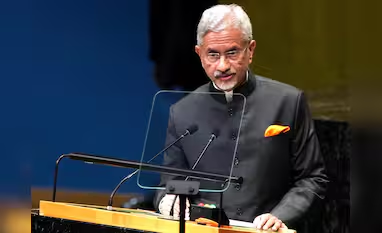
External Affairs Minister S. Jaishankar has emphasised that India’s growing economic strength and international influence cannot be fully captured by the conventional description of a “middle power”. Speaking at the Bloomberg New Economy Forum in New Delhi, he highlighted how global power dynamics are evolving and why countries must reassess their position in an increasingly competitive international environment.
Jaishankar described the emerging landscape as a “world of choke points”, where control over essential resources, financial systems and supply chains can provide countries with significant strategic leverage. His remarks reflect India’s growing focus on strengthening its economic resilience, securing critical resources and expanding its role in international decision-making.

Strategic Choke Points: The New Instruments of Global Power
Global influence is no longer determined solely by military strength or economic size. Access to critical minerals, advanced technology, financial networks and essential industrial components can also shape relations between countries. Jaishankar highlighted how these dependencies can become instruments of pressure when access to vital resources or systems is restricted.
Rare earth elements and other critical minerals are particularly important because they support semiconductor manufacturing, electric vehicles, renewable energy and defence technologies. Similarly, international financial systems and economic sanctions can influence trade, investment and a country's ability to participate in global markets.
These developments make supply-chain security an important consideration for major economies. Countries that diversify their sources of supply, strengthen domestic industries and develop alternative trade partnerships can improve their ability to navigate geopolitical uncertainty.
India’s Push for Critical Mineral Security
India’s efforts to secure critical minerals demonstrate the importance of reducing vulnerabilities in essential supply chains. In January 2025, the Union Cabinet approved the National Critical Mineral Mission, with a government expenditure of ₹16,300 crore and an expected investment of ₹18,000 crore from public-sector undertakings and other stakeholders.
The mission focuses on strengthening the entire mineral value chain, including exploration, mining, processing and recycling. It also encourages overseas mineral acquisitions and cooperation with resource-rich countries to improve the long-term availability of materials required by strategic industries.
In October 2026, The Indian Express reported that India was preparing a strategic stockpiling policy for critical minerals to address potential supply disruptions. Such measures could help improve the availability of essential materials for manufacturing, clean energy and emerging technologies.
These initiatives are significant because access to resources is increasingly linked to industrial competitiveness and national security. Developing domestic capabilities while diversifying international sources can help India build a more dependable economic foundation.
Technology and Manufacturing as Strategic Priorities
Beyond minerals, semiconductor manufacturing and advanced technology are becoming central to global economic competition. Semiconductors power smartphones, automobiles, telecommunications, artificial intelligence systems and modern defence equipment. Disruptions in their supply can therefore affect several industries simultaneously.
India Semiconductor Mission 2.0, announced in the Union Budget 2026–27, aims to deepen domestic capabilities in semiconductor equipment, materials, chip design, research and manufacturing. The initiative reflects India's broader ambition to strengthen its technological ecosystem and become a more significant participant in global electronics supply chains.
Building these capabilities requires sustained investment, skilled professionals, research partnerships and collaboration between industry and academic institutions. International cooperation will remain important, but developing domestic expertise can provide India with greater flexibility and reduce exposure to external disruptions.
Strategic Autonomy and India’s Global Partnerships
Jaishankar’s remarks also underline the importance of strategic autonomy, allowing India to pursue its national interests while engaging constructively with different countries. As global competition intensifies, partnerships based on trade, technology, energy and resource security can create opportunities for economic growth and diplomatic cooperation.
India can strengthen its international position by diversifying its trading relationships, expanding manufacturing capabilities and working with resource-rich countries. Such engagement can improve access to essential materials and markets while creating opportunities for investment and technological exchange.
The objective is not to withdraw from global interdependence but to participate in it from a position of greater resilience. A country with strong domestic industries, reliable supply chains and diverse international partnerships is better equipped to manage uncertainty and negotiate arrangements that serve its long-term interests.
The MGMM Outlook
S. Jaishankar’s remarks highlight India’s growing role in a changing global order, where influence increasingly depends not only on economic and military strength but also on control over critical resources, technology and supply chains. India’s initiatives, including the National Critical Mineral Mission and India Semiconductor Mission 2.0, reflect a strategic commitment to strengthening domestic manufacturing, securing essential resources and reducing vulnerabilities to global disruptions. These efforts can enhance India’s economic resilience while creating opportunities in advanced technology, clean energy, electronics and defence manufacturing.
India’s expanding global influence will depend on its ability to combine domestic capabilities with diversified international partnerships. Strengthening critical mineral supplies, investing in semiconductor research and manufacturing, and building reliable trade relationships can provide greater strategic flexibility amid intensifying international competition. Jaishankar’s observations underline the importance of strategic autonomy, enabling India to safeguard its national interests while remaining actively engaged with the global economy. Sustained investment in technology, infrastructure and industrial development can further strengthen India’s position as an influential participant in shaping the emerging world order.
(Sources: Firstpost, The Economic Times, The Indian Express)


Comments