
Suvendu Adhikari Named West Bengal’s Next Chief Minister: A New Chapter Begins

In a historic development, the Bharatiya Janata Party (BJP) has unanimously elected senior leader Suvendu Adhikari as the Leader of the BJP Legislature Party in West Bengal. Union Home Minister Amit Shah announced the decision following a meeting with the newly elected MLAs, paving the way for Adhikari to take oath as the state’s 9th Chief Minister on May 9, 2026. The swearing-in ceremony is set to take place at the Brigade Parade Ground in Kolkata, with Prime Minister Narendra Modi expected to grace the occasion.
This marks the BJP’s first government in West Bengal, ending the Trinamool Congress’s 15-year rule and ushering in a new political era for the state.
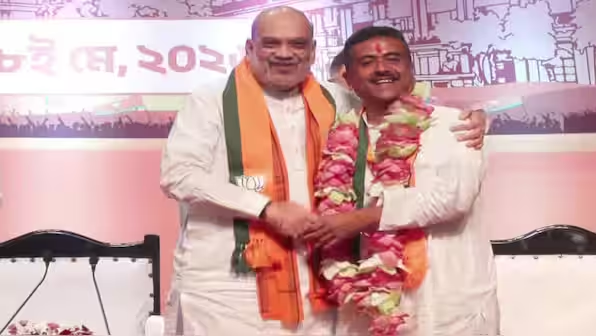
Historic Electoral Mandate
The BJP secured a decisive victory in the 2026 West Bengal Assembly elections, winning 207 seats in the 294-member House. The Trinamool Congress was reduced to around 80 seats. Polling took place in two phases on April 23 and 29, with results declared earlier this week, reflecting strong voter support for change across the state.
The outcome represents a significant shift in eastern India’s political landscape, with the BJP expanding its footprint dramatically from its previous tally of 77 seats in 2021.
The Rise of a Political Heavyweight
Suvendu Adhikari, aged 55, has emerged as one of Bengal’s most influential leaders. Born on December 15, 1970, in Karkuli village of Purba Medinipur, he comes from a well-known political family. His father, Sisir Kumar Adhikari, is a former Union Minister and three-time MP. Adhikari holds a postgraduate degree from Rabindra Bharati University.
His political journey began in the mid-1990s as a Congress councillor before he and his father joined the newly formed Trinamool Congress in 1998. He played a key role in the Singur and Nandigram movements, which helped shape the political narrative leading to the TMC’s rise in 2011. Adhikari served as a minister in the TMC government and represented Tamluk in the Lok Sabha twice.
In December 2020, he joined the BJP, citing his vision for the state’s development. Since then, he has served as the Leader of Opposition in the Assembly and worked tirelessly to strengthen the party’s grassroots presence.
Giant Slayer and Architect of Change
Adhikari earned widespread recognition for his electoral successes against formidable opponents. In the 2021 Assembly elections, he defeated Mamata Banerjee from Nandigram. In 2026, he repeated his victory in Nandigram and also won from Bhabanipur, Banerjee’s traditional stronghold, adding a symbolic dimension to the BJP’s triumph.
Party leaders and observers credit his strategic acumen, deep understanding of local issues, and organisational skills for contributing significantly to the BJP’s strong performance. Adhikari has consistently emphasised themes of good governance, women’s safety, industrial growth, and inclusive development.
Looking Ahead: Priorities for the New Government
As he prepares to assume office, Adhikari is expected to focus on strengthening law and order, accelerating infrastructure and industrial projects, and ensuring effective delivery of welfare schemes. The new administration aims to realise the vision of “Sonar Bangla” through collaborative efforts and people-centric policies. Reports suggest the cabinet will blend experienced leaders with fresh faces to ensure balanced representation across regions and communities.
The MGMM Outlook
Suvendu Adhikari’s elevation as West Bengal’s next Chief Minister marks a defining political shift in the state’s history, ending over a decade of Trinamool Congress dominance and opening a new chapter under BJP leadership. The decisive electoral mandate reflects a strong public demand for political change, with voters placing their trust in a leadership model centered on governance, accountability, and development. Adhikari’s political journey—from grassroots activism to becoming one of Bengal’s most influential leaders—has positioned him as a central figure in shaping the state’s evolving political landscape.
The transition also signals a broader transformation in Bengal’s political priorities, with expectations now focused on restoring law and order, accelerating industrial and infrastructure growth, and ensuring welfare reaches every section of society. With the promise of “Sonar Bangla” once again taking center stage, the incoming government carries both a significant mandate and a substantial responsibility to deliver inclusive progress, administrative stability, and long-term development for the people of West Bengal.
(Sources: Firstpost, Times of India, Economic Times)



Comments