
PM Narendra Modi's Gujarat Visit: ₹14,000 Crore Development Push and Grand Roadshow in Banaskantha

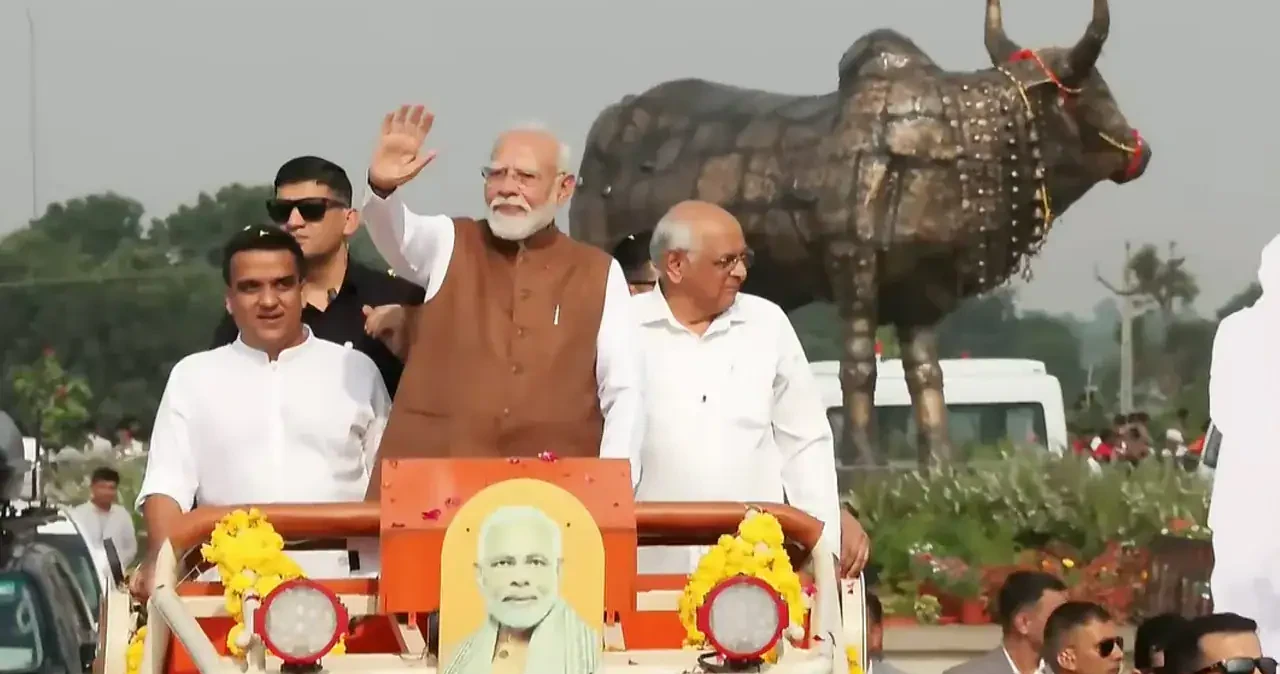
Prime Minister Narendra Modi began his two-day Gujarat visit on October 30, 2026, with a grand roadshow in Bhildi town of Banaskantha district. The visit focused on infrastructure development, agricultural growth, dairy modernisation and national unity, alongside the inauguration and foundation-laying of projects worth more than ₹14,000 crore.
Travelling in an open jeep with Gujarat Chief Minister Bhupendra Patel and Deputy Chief Minister Harsh Sanghavi, PM Modi received an enthusiastic welcome from large crowds. People gathered along the route with flowers, slogans and placards highlighting India's vision of becoming a developed and self-reliant nation.
Major Infrastructure and Connectivity Projects
A key highlight of the visit was the launch of development projects aimed at improving Gujarat's infrastructure. The Prime Minister laid the foundation stones for Ahmedabad Metro Phase 2A and 2B extensions, which will improve connectivity to Ahmedabad Airport and GIFT City.
He also announced the expansion of the Ahmedabad-Mehsana highway from four lanes to eight lanes. Two new train services, connecting Ahmedabad with Varanasi and Mehsana with Sabarmati, are also expected to strengthen regional and long-distance connectivity.
PM-KISAN Instalment and Support for Farmers
Prime Minister Modi released the 24th instalment of the PM-KISAN scheme, transferring approximately ₹19,000 crore to eligible farmers across the country. Under the scheme, farmer families receive ₹6,000 annually in three direct instalments of ₹2,000.
He also highlighted the importance of affordable fertilisers, crop insurance, minimum support prices and other agricultural support measures aimed at strengthening farmers' livelihoods.
Boost to Dairy and Agricultural Development
The Prime Minister inaugurated the Bharat Bovine Breeding and Research Centre at Bhildi, spread across 127 acres. The centre will focus on improving indigenous cattle breeds, particularly the Kankrej breed, through scientific research and advanced breeding technologies.
He also laid the foundation stones for two Bio-CNG plants associated with Banas Dairy at Tharad and Radhanpur. These facilities will convert cattle dung into clean energy, supporting waste management and renewable energy production.
Additionally, 521 projects under the Agriculture Infrastructure Fund, involving approximately ₹4,950 crore, were dedicated to the nation. These include cold storage facilities, warehouses and food-processing infrastructure to improve agricultural storage and market access.
Bharat Parv and Rashtriya Ekta Diwas
The Prime Minister also inaugurated Bharat Parv 2026 at Ekta Nagar, near the Statue of Unity. The festival showcases India's cultural diversity through traditional performances, handicrafts, regional cuisines and local art.
On October 31, PM Modi is scheduled to participate in Rashtriya Ekta Diwas celebrations marking the 151st birth anniversary of Sardar Vallabhbhai Patel. The occasion will feature the Ekta Parade, highlighting the contribution of India's security forces and celebrating national integration.
The MGMM Outlook
Prime Minister Narendra Modi’s two-day Gujarat visit, featuring development projects worth over ₹14,000 crore, highlights the government’s continued focus on infrastructure, agricultural growth and public welfare. From expanding metro and highway connectivity to releasing the 24th PM-KISAN instalment of approximately ₹19,000 crore, the initiatives aim to strengthen regional economies and improve opportunities for farmers. Investments in indigenous cattle breeding, Bio-CNG plants and agricultural infrastructure also reflect the growing importance of modern technology, dairy development and sustainable farming in rural India.
The visit further highlights the connection between economic progress and national development, with initiatives supporting farmers, improving transportation and promoting renewable energy. The inauguration of Bharat Parv 2026 and the upcoming Rashtriya Ekta Diwas celebrations honouring Sardar Vallabhbhai Patel add a cultural and national significance to the programme. Such initiatives reflect the importance of combining infrastructure expansion, rural empowerment, technological advancement and national unity in India's journey towards becoming a developed nation.
(Sources: NDTV, Hindustan Times, India Today)


Comments