
India–South Korea Relations Enter a New Phase with Focus on Peace and Strategic Growth
- MGMMTeam

- Apr 20
- 3 min read
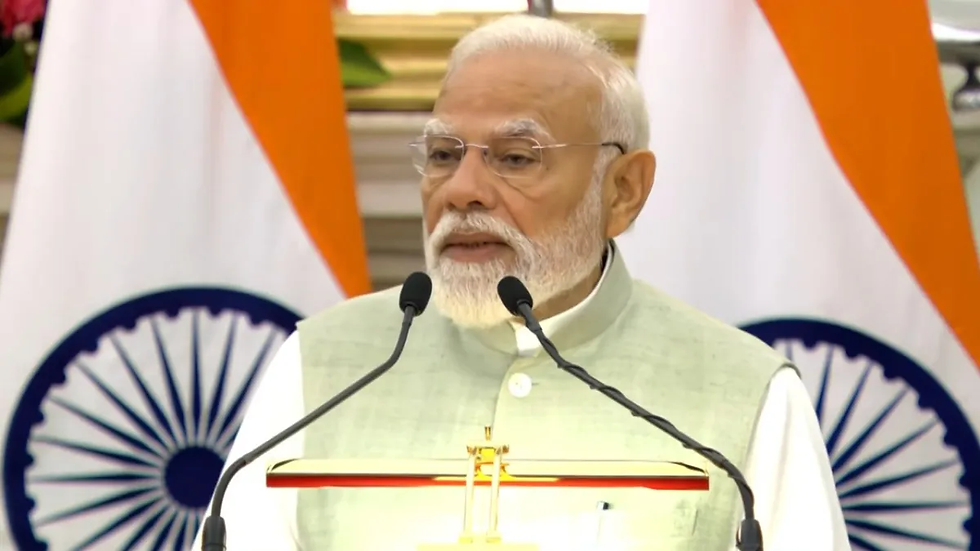
During a high-level meeting in New Delhi, Prime Minister Narendra Modi and South Korean President Lee Jae Myung underscored the importance of peace and stability in an increasingly uncertain global environment. Addressing a joint press conference, both leaders highlighted that amid geopolitical tensions and economic disruptions, cooperation between like-minded nations is essential to maintain balance and ensure long-term global security. Their statements reflected a convergence of views on strengthening a rules-based international order and promoting dialogue over conflict in sensitive regions across the world.
The discussions also touched upon pressing global issues, including instability in key regions such as the Middle East. Both sides acknowledged that regional conflicts have far-reaching consequences, particularly on global supply chains, energy security, and economic growth. By advocating for peaceful resolutions and sustained diplomatic engagement, India and South Korea signaled their intent to play a constructive role in global affairs.
Strengthening Economic and Technological Cooperation
A major highlight of the summit was the renewed push to deepen economic engagement between the two countries. India and South Korea agreed to expand bilateral trade significantly in the coming years, building on an already robust economic relationship. With trade currently valued at around $27 billion, both nations expressed confidence in reaching higher targets through enhanced cooperation and policy alignment.
The partnership is set to grow across a wide range of sectors, including semiconductors, artificial intelligence, shipbuilding, renewable energy, and advanced manufacturing. Both countries bring complementary strengths to the table—India with its expanding digital ecosystem and skilled workforce, and South Korea with its technological expertise and industrial capabilities. This synergy is expected to create new opportunities for investment, innovation, and job creation.
In addition, both leaders agreed to review and upgrade existing trade frameworks to ensure more balanced and mutually beneficial outcomes. The emphasis on resilient supply chains and emerging technologies reflects a forward-looking approach aimed at navigating future economic challenges.
Expanding Strategic and Security Collaboration
Beyond economic ties, the meeting reinforced the growing strategic dimension of India–South Korea relations. Both countries emphasized the importance of secure maritime routes and stable supply chains, particularly in the context of global trade and energy transportation. The safety of critical sea lanes was highlighted as a shared priority, given their importance for economic stability and national security.
The leaders also explored avenues to enhance defence cooperation, signaling a broader commitment to regional stability in the Indo-Pacific. As two influential players in the region, India and South Korea are increasingly aligning their strategies to address common challenges, including security risks, technological disruptions, and shifting geopolitical dynamics.
Building on a Special Strategic Partnership
India and South Korea have steadily strengthened their relationship over the years, elevating it to a “Special Strategic Partnership.” This framework has enabled deeper collaboration across sectors such as infrastructure, innovation, culture, and education. The latest summit builds upon this foundation, paving the way for stronger institutional ties and more frequent high-level engagements.
People-to-people connections, cultural exchanges, and educational collaborations also continue to play an important role in reinforcing bilateral ties. These softer aspects of diplomacy complement economic and strategic cooperation, creating a more comprehensive and enduring partnership between the two nations.
The MGMM Outlook
The meeting between Narendra Modi and Lee Jae Myung reflects a clear alignment between two nations that see stability and cooperation as essential in a rapidly shifting global landscape. The emphasis on dialogue, rules-based order, and peaceful resolution of conflicts signals a deliberate move toward responsible global engagement, especially at a time when regional tensions and disruptions continue to impact economies and supply chains. By positioning themselves as constructive voices on global issues, both countries are not only safeguarding their own interests but also contributing to a broader sense of balance in international relations.
At the same time, the growing focus on economic, technological, and strategic collaboration highlights a partnership that is becoming increasingly future-oriented. Expanding cooperation in sectors like semiconductors, artificial intelligence, and renewable energy shows an intent to move beyond traditional trade and build long-term resilience. The strengthening of maritime security and defence ties further reinforces mutual trust, while ongoing cultural and educational exchanges add depth to the relationship. Together, these efforts indicate a partnership that is evolving into a comprehensive and dynamic alliance, capable of adapting to emerging global challenges while fostering sustained growth.
(Sources: India TV News, Times of India, Economic Times)


Comments