
India Deepens Enduring Partnership with Bhutan Through Major Development Push

India and Bhutan have reinforced their close and time-tested relationship through a fresh wave of developmental cooperation. The fifth India-Bhutan Development Cooperation Talks, held in Thimphu on July 30, 2026, marked an important milestone in supporting Bhutan’s ongoing progress under its 13th Five-Year Plan covering the period from 2024 to 2029. Co-chaired by Indian Foreign Secretary Vikram Misri and his Bhutanese counterpart Dasho Pema Lektup Dorji, the discussions reviewed the status of ongoing projects and announced several new initiatives that span energy, infrastructure, urban development, health and sustainable mobility.
High-Level Engagements Strengthen Bilateral Bonds
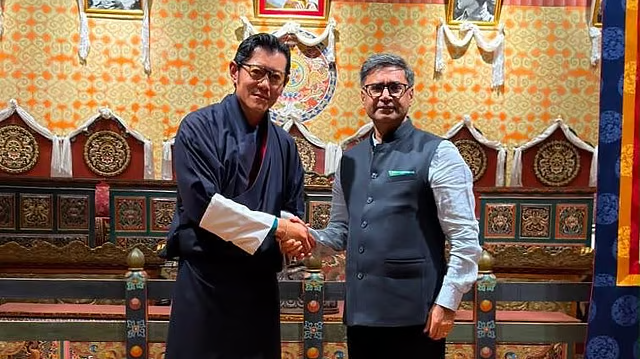
Foreign Secretary Misri’s two-day visit to Bhutan from July 30 to 31 included a series of significant meetings that reflected the depth of mutual trust between the two nations. He received an audience with His Majesty the King of Bhutan, Jigme Khesar Namgyel Wangchuck, during which he shared updates on the progress of bilateral development cooperation. His Majesty appreciated the advances made and also spoke about developments related to the Gelephu Mindfulness City project, while reiterating support for further strengthening ties. Misri also called on Prime Minister Tshering Tobgay and Minister for Foreign Affairs and External Trade Lyonpo D.N. Dhungyel. These interactions covered a wide range of subjects including development partnership, energy cooperation, trade, investment, connectivity and people-to-people contacts, reaffirming the exemplary nature of India-Bhutan relations.
Comprehensive Financial Support for Bhutan’s Five-Year Plan
India has committed a total of Rs 10,000 crore towards Bhutan’s 13th Five-Year Plan. This support is structured across four main channels: Project Tied Assistance projects, High Impact Community Development Projects, the Economic Stimulus Programme and a Programme Grant. Of the overall package, a substantial portion is allocated specifically for Project Tied Assistance. India has already released Rs 1,250 crore under the Economic Stimulus Programme, Rs 735.20 crore for High Impact Community Development Projects and Rs 200 crore as Programme Grant. Officials from both sides carefully reviewed the utilisation of these funds during the talks, ensuring that the resources continue to be deployed effectively in line with Bhutan’s national priorities.
New Project Approvals Expand Development Reach
As part of the ongoing review, the two sides approved twelve new Project Tied Assistance projects amounting to Rs 332 crore. These projects cover important areas such as infrastructure, healthcare, agriculture, urban amenities and disaster management. With these latest approvals, the total number of Project Tied Assistance projects under the 13th Five-Year Plan has risen to eighty-two, representing a cumulative outlay of Rs 6,860 crore. The selection of projects continues to be guided by Bhutan’s own development agenda, ensuring that Indian assistance remains closely aligned with the aspirations of the Royal Government and the people of Bhutan.
Major Boost to Energy Sector Through Concessional Credit
One of the most significant outcomes of the talks was the exchange of an Umbrella Line of Credit Agreement between the Royal Government of Bhutan and the Export-Import Bank of India. This agreement operationalises a concessional line of credit of Rs 4,000 crore dedicated to energy projects in Bhutan. The facility is expected to support a wide range of initiatives including new hydropower schemes, strengthening of the electricity grid and transmission network, and diversification into other clean energy sources such as solar and wind. Building on the long-standing hydropower partnership that enables surplus power exports from Bhutan to India, this credit line is designed to ease financing constraints and accelerate the pace of project implementation in the energy sector.
Green Urban Spaces and Clean Mobility Initiatives Take Shape
The talks also delivered visible progress on the ground in the areas of urban sustainability and electric mobility. The two Foreign Secretaries virtually inaugurated the Thimphu Ecological Park and Olakha Park, both developed under the Project Tied Assistance initiative titled “Green Infrastructure and Open Spaces in Thimphu.” These parks form part of broader efforts to enhance urban liveability and create more green public spaces in the Bhutanese capital. In another tangible step, forty-five electric vehicles procured under the project “Accelerate e-mobility uptake in Bhutan” were formally handed over to the Royal Government of Bhutan, signalling continued support for the country’s transition towards cleaner modes of transport.
Strengthening Institutional Ties in Healthcare
Cooperation in the health sector received a further fillip through the exchange of a Memorandum of Understanding between the All India Institute of Medical Sciences in New Delhi and the Khesar Gyalpo University of Medical Sciences of Bhutan. The agreement focuses on collaboration in research, exchange programmes and capacity building in health education and training. This institutional linkage complements the existing people-to-people and professional exchanges that have long characterised the India-Bhutan partnership in the social sector.
The MGMM Outlook
India’s continued investment in Bhutan’s development reflects the strength of a relationship built on trust, shared interests, and long-term cooperation rather than short-term strategic calculations. The commitments announced during the fifth India-Bhutan Development Cooperation Talks, including support for infrastructure, energy, healthcare, green mobility, and community development, reinforce India’s role as Bhutan’s most dependable development partner while respecting Bhutan’s own national priorities and development goals.
The expansion of clean energy cooperation through the ₹4,000 crore concessional credit line, along with new infrastructure projects, ecological parks, electric vehicles, and healthcare collaboration, demonstrates a partnership that is evolving with changing regional and global needs. As India and Bhutan deepen cooperation across multiple sectors, the relationship continues to serve as an example of how sustained developmental assistance, mutual respect, and close diplomatic engagement can contribute to stability, prosperity, and shared growth in South Asia.
(Sources: The Financial Express, The New Indian Express, India Today)


Comments