
India-Canada Trade Talks Enter Fifth Round as Both Sides Target C$70 Billion Trade by 2030

India and Canada are set to begin the fifth round of negotiations for a Comprehensive Economic Partnership Agreement (CEPA) in Ottawa on October 5, marking another important step in efforts to expand bilateral economic ties. Both countries are working towards concluding the negotiations by the end of 2026 and have set an ambitious target of taking bilateral trade to C$70 billion by 2030.
The upcoming round follows the fourth round held in Mumbai, where Commerce and Industry Minister Piyush Goyal and Canadian International Trade Minister Maninder Sidhu discussed ways to accelerate the negotiations. Canadian officials have said that the two sides will continue working to narrow differences and maintain momentum towards a mutually beneficial agreement.
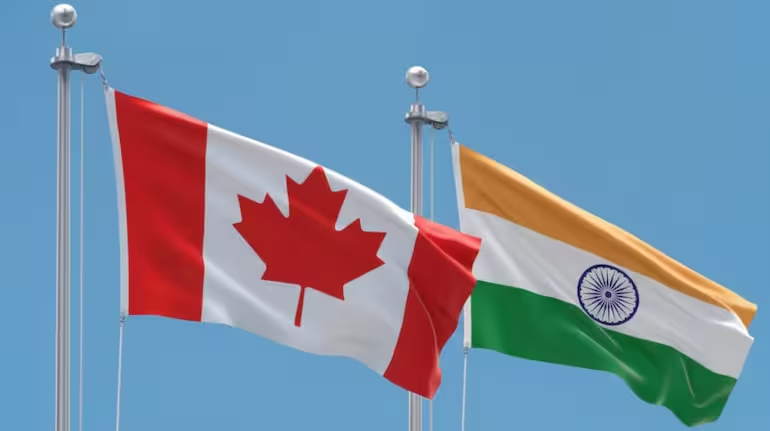
CEPA Could Give a New Framework to Bilateral Trade
The proposed CEPA is intended to create a broader and more predictable framework for trade and investment between India and Canada. The negotiations cover areas including goods, services, investment and other trade-related matters, with both countries seeking greater market access and stronger economic cooperation.
The agreement has gained renewed momentum after India and Canada decided to restart negotiations. The two countries formally finalised the Terms of Reference for the CEPA negotiations during Canadian Prime Minister Mark Carney’s visit to India in March 2026. The leaders subsequently reaffirmed their commitment to complete the negotiations by the end of the year.
C$70 Billion Trade Target Reflects Wider Economic Ambitions
The C$70 billion target represents a significant expansion of the existing economic relationship. According to Global Affairs Canada, two-way trade in goods and services reached C$30.4 billion in 2025, while merchandise trade stood at C13.6billion.Canada’sservicesexportstoIndiawerevaluedatC15.2 billion during the year, with education-related travel accounting for a substantial share.
India and Canada therefore have considerable scope to expand commercial engagement across both traditional and emerging sectors. The proposed trade agreement is expected to provide a framework for businesses in both countries to access new markets and explore opportunities in areas where the two economies have complementary strengths.
Energy and Critical Minerals Become Key Areas of Cooperation
The economic relationship is also expanding beyond conventional trade. Energy and critical minerals have emerged as important areas of cooperation, particularly as countries seek more diversified and reliable supply chains.
During the March 2026 visit, India and Canada agreed to advance a Strategic Energy Partnership covering cooperation across the energy value chain. The two sides also welcomed a C$2.6 billion agreement between Cameco and India’s Department of Atomic Energy for long-term uranium supplies, highlighting the growing importance of civil nuclear cooperation.
India and Canada have additionally established cooperation in critical minerals, including exploration, mining, processing, investment promotion and technical exchanges. These resources are increasingly important for clean-energy technologies, advanced manufacturing and other strategic industries.
Opportunities Extend to Aerospace, Technology and Clean Energy
The renewed economic engagement is also opening opportunities in sectors such as aerospace, life sciences, clean technologies and energy transition. During his September visit to Mumbai, Minister Sidhu held discussions with representatives of Indian companies including Mahindra & Mahindra, Bajaj Integrated Health System and JSW Group, along with Canadian aerospace company CAE.
The two countries have also identified innovation, artificial intelligence, renewable energy and advanced technologies as potential areas for deeper cooperation. Such partnerships could complement the CEPA negotiations by encouraging investment and business-to-business collaboration alongside the expansion of merchandise and services trade.
India-Canada Economic Engagement Gains Fresh Momentum
The trade negotiations are part of a broader effort to strengthen India-Canada relations following a period in which bilateral engagement faced difficulties. In 2026, both governments have increased high-level interactions and revived several institutional mechanisms covering economic, energy, critical minerals, science and technology and other areas.
At the September 2026 Foreign Office Consultations in New Delhi, officials from both countries reviewed progress in these areas and reiterated their commitment to concluding the CEPA negotiations before the end of the year. They also reaffirmed the shared objective of more than doubling bilateral trade to C$70 billion by 2030.
The MGMM Outlook
The fifth round of India-Canada CEPA negotiations, beginning in Ottawa on October 5, marks another step in strengthening bilateral economic engagement. With both sides aiming to conclude the agreement by the end of 2026 and raise bilateral trade to C$70 billion by 2030, the talks have the potential to expand cooperation across goods, services and investment. The renewed engagement also extends into strategic areas such as energy, critical minerals and civil nuclear cooperation, including the long-term uranium supply agreement.
The expanding economic relationship creates opportunities for Indian and Canadian businesses across sectors including aerospace, technology, clean energy, life sciences and advanced manufacturing. Cooperation in critical minerals, artificial intelligence and innovation could further support diversified supply chains and investment. As the negotiations progress, resolving outstanding issues while building a predictable framework for trade and investment will be important for translating the C$70 billion target into sustained economic opportunities for both countries.
(Sources: Moneycontrol, The Economic Times)


Comments