
Uttar Pradesh Electoral Roll Overhaul: Nearly 2.89 Crore Names Deleted in Draft SIR List

In a landmark update to Uttar Pradesh’s electoral rolls, the Election Commission of India (ECI) has released the draft voter list following the Special Intensive Revision (SIR), resulting in the deletion of approximately 2.89 crore names. The revision, affecting nearly 18.7% of the state’s registered voters, has drawn significant attention as the state prepares for the upcoming elections. The revised draft now lists 12.55 crore voters, down from 15.44 crore in the previous roll.
The exercise reflects a broader effort by the ECI to ensure the integrity of electoral rolls nationwide. The SIR aims to remove duplicate entries, names of deceased individuals, and voters who have permanently shifted residence. By doing so, the Election Commission seeks to maintain accuracy and prevent irregularities in the electoral process, a critical task in India’s most populous state.
Understanding the SIR Process
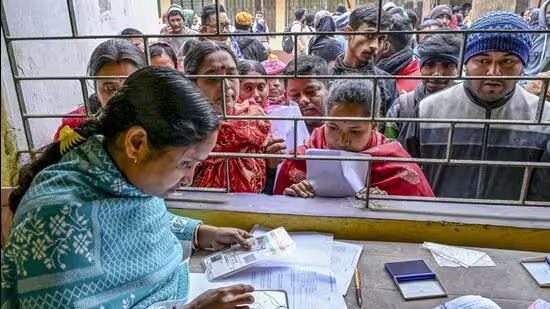
The Special Intensive Revision is part of a nationwide initiative to verify voter details and clean electoral rolls. Field verification teams visit households to confirm voter identities, addresses, and eligibility. In Uttar Pradesh, the process began in late 2025 and has been among the most exhaustive in the country, given the state’s complex demographics and large population.
According to Chief Electoral Officer Navdeep Rinwa, of the removed entries, a significant portion were due to permanent migration, with approximately 12.9 million voters marked as shifted. About 4.6 million names belonged to deceased individuals, while the rest included duplicate or untraceable entries. The scale of deletions has been unprecedented, highlighting the challenges of maintaining accurate voter databases in densely populated regions.
District-Level Variations and Unmapped Voters
The revisions have not been uniform across the state. Districts such as Lucknow, Ghaziabad, Kanpur Nagar, Meerut, and Balrampur witnessed higher deletion rates, with some constituencies seeing up to 30% of voters’ names removed. These variations underscore the demographic mobility and discrepancies in record-keeping that exist across districts.
In addition to deletions, the SIR process identified nearly 1.25 crore unmapped voters whose details could not be verified during field visits. These voters will be notified and given the opportunity to provide valid proof of identity and residence to ensure they are not permanently excluded from the final list.
Claims, Objections, and Final Publication
To safeguard the rights of eligible voters, the ECI has opened a claims and objections window from January 6 to February 6, 2026. Citizens who find their names missing from the draft list can submit applications for inclusion through official online portals or via Booth Level Officers.
Once all objections are processed and corrections made, the final electoral roll will be published on March 6, 2026. This final list will serve as the authoritative register for all upcoming elections in Uttar Pradesh, ensuring that only verified and eligible voters are allowed to participate in the democratic process.
Political Reactions and Public Discourse
The large-scale deletion of names has sparked political debate. Opposition parties have raised concerns about potential disenfranchisement, calling for investigations into the methodology of the SIR process. Meanwhile, the ECI and state officials emphasize that the revision is a transparent and necessary exercise to prevent irregularities, maintain electoral integrity, and uphold democratic principles.
Experts note that while the SIR is essential for cleaning up electoral rolls, it also exposes challenges such as tracking population shifts, verifying identities in densely populated areas, and ensuring that eligible voters are not inadvertently left out. Public awareness campaigns and proper communication from election authorities remain critical for effective implementation.
The MGMM Outlook
The recent Special Intensive Revision (SIR) of Uttar Pradesh’s electoral rolls has led to the removal of nearly 2.89 crore names, reducing the voter list from 15.44 crore to 12.55 crore. This massive overhaul highlights the Election Commission’s push to maintain the integrity and accuracy of voter records by eliminating duplicates, deceased individuals, and those who have permanently shifted residence. The exercise, one of the largest in India’s history, reflects the complexity of managing voter databases in the country’s most populous state, with field verification teams meticulously checking household records across all districts. Some areas, including Lucknow, Ghaziabad, Kanpur Nagar, Meerut, and Balrampur, saw deletion rates as high as 30%, revealing both demographic mobility and gaps in record-keeping. Alongside deletions, the SIR process flagged over 1.25 crore unmapped voters, ensuring that mechanisms exist for citizens to verify their eligibility before final publication.
The exercise has sparked political debate, with opposition voices raising concerns about potential disenfranchisement, while the Election Commission emphasizes transparency and necessity in maintaining credible electoral rolls. The claims and objections window allows voters to correct discrepancies, ensuring that eligible citizens are not inadvertently excluded. Beyond the technical and administrative challenges, the SIR highlights the broader importance of citizen vigilance, accurate record-keeping, and public awareness in safeguarding democratic processes. In a state as diverse and populous as Uttar Pradesh, such meticulous revisions are critical to balancing inclusivity with the integrity of elections.
(Sources: Hindustan Times, Economic Times, Times of India)


Comments