
US Secretary of State Marco Rubio Highlights Joint Defence Production as Key Pillar of India-US Partnership

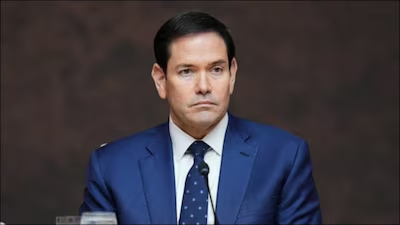
During his maiden visit to India, US Secretary of State Marco Rubio has underscored the growing strategic convergence between the United States and India, particularly in the realm of defence manufacturing. In an exclusive interview, Rubio described joint defence production as “ideal” for both countries, signalling a strong commitment to elevating bilateral ties beyond traditional buyer-seller arrangements.
Rubio, who arrived in India on May 23, 2026, for a four-day official visit, emphasised India’s vast industrial potential, skilled workforce, and vibrant corporate sector. He noted that multiple countries are increasingly looking towards India as a reliable hub for defence manufacturing, making it a valuable contributor to global strategic supply chains.
Evolving Defence Cooperation
The emphasis on joint production reflects a maturing phase in India-US defence relations. Both nations are actively transitioning from conventional arms procurement to collaborative development, technology sharing, and co-manufacturing of advanced platforms. This shift is anchored in the recently renewed 10-year Framework for the US-India Major Defense Partnership, which outlines cooperation in critical areas such as intelligence, surveillance, reconnaissance, undersea domain awareness, munitions, and autonomous systems.
Ongoing discussions include potential co-production projects involving advanced systems like Javelin anti-tank missiles and infantry combat vehicles, alongside progress on jet engine technology for India’s indigenous fighter aircraft programmes. These initiatives are expected to strengthen supply chain resilience and enhance interoperability between the armed forces of the two democracies.
Rubio’s remarks align seamlessly with India’s vision of building a self-reliant yet globally integrated defence industry. By fostering such partnerships, both countries aim to create mutually beneficial opportunities that support economic growth and strategic stability in the Indo-Pacific region.
Broader Strategic Engagement
Beyond defence, Rubio’s visit has covered a wide spectrum of bilateral priorities, including trade, energy security, critical minerals, and emerging technologies. Meetings with Prime Minister Narendra Modi and External Affairs Minister S. Jaishankar has focused on deepening economic ties and addressing practical concerns such as visa facilitation for Indian nationals.
The visit also sets the stage for the Quad Foreign Ministers’ Meeting scheduled for May 26 in New Delhi. This gathering of the United States, India, Japan, and Australia is expected to reinforce commitment to a free, open, and inclusive Indo-Pacific, with discussions on maritime security, regional stability, and multilateral cooperation.
Rubio has described his engagements in India as highly productive, praising the warmth of the welcome and the depth of shared interests between the two nations. His itinerary includes visits to cultural landmarks in Kolkata, Agra, and Jaipur, reflecting the multifaceted nature of the bilateral relationship.
A Promising Future for Bilateral Ties
The India-US partnership continues to evolve as a cornerstone of regional and global stability. Joint defence production represents not just a military collaboration but also an economic opportunity that can drive innovation, job creation, and technological advancement in both countries.
As the world’s two largest democracies work together, their cooperation holds significant potential to address contemporary challenges ranging from supply chain vulnerabilities to emerging security threats. Rubio’s visit reinforces the momentum towards a comprehensive global strategic partnership that benefits both nations and contributes positively to the broader international community.
The MGMM Outlook
The growing emphasis on joint defence production between India and the United States signals a major shift in bilateral ties—from a traditional buyer-seller dynamic to a more balanced and strategic partnership built on shared capabilities and long-term trust. For India, this cooperation aligns strongly with its ambition to strengthen indigenous defence manufacturing under the vision of self-reliance, while also integrating itself into global supply chains. Access to advanced technologies, co-development opportunities, and enhanced industrial collaboration could significantly accelerate India’s rise as a credible global defence manufacturing hub.
At the same time, this partnership carries broader geopolitical significance. As global security challenges evolve, stronger India-US defence cooperation reinforces stability in the Indo-Pacific and sends a clear message about the importance of democratic alliances in maintaining regional balance. Beyond military gains, such collaboration can create economic opportunities, generate employment, and deepen strategic trust—making the relationship not just a defence partnership, but a vital pillar of 21st-century global diplomacy.
(Sources: News18, Firstpost, Times of India)


Comments