
Rahul Gandhi Faces Questions After Pregnant Journalist Alleges Being Pushed; Congress Under Scrutiny Over Response

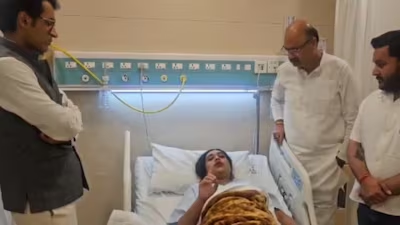
Congress leader Rahul Gandhi has come under scrutiny following allegations by Richa Parashar, a journalist associated with Oneindia, who claimed that she was pushed and pulled during an Opposition protest in Delhi on October 12, 2026. Parashar, who said she was three months pregnant, alleged that Gandhi grabbed her hand and pulled her when she attempted to seek his response. She further claimed that members of his security team pushed her amid the ensuing commotion, causing her to fall on the steps of the Supreme Court premises.
The allegations have sparked a political controversy and raised questions about the conduct expected from senior public representatives. Journalists routinely approach political leaders to seek comments on matters of public interest, and leaders have every right to decline interviews or ask reporters to maintain their distance. However, such interactions should be handled with restraint and professionalism. If the allegations are substantiated, the incident would raise serious concerns about the treatment of journalists performing their professional duties.
Rahul Gandhi Must Address the Allegations Transparently
As the Leader of the Opposition in the Lok Sabha, Rahul Gandhi holds a prominent constitutional and political position. His public statements and conduct are therefore subject to legitimate scrutiny. A leader who frequently raises questions about accountability in public life should also be prepared to address serious allegations concerning his own behaviour.
According to Parashar's account, she initially moved her microphone away after being signalled to do so but subsequently attempted to approach Gandhi again when other reporters were seeking his response. She alleged that the encounter then turned physical and that her cameraman was also pushed. These claims have placed the focus on what happened during the confrontation and whether those involved acted appropriately.
However, the allegations must not be confused with established findings. The publicly circulating video footage has limitations, and NDTV reported that it did not clearly establish the alleged push or pull. This makes a careful examination of the available evidence particularly important. Gandhi should address the controversy clearly, while any conclusions about responsibility should be based on verified facts rather than political assumptions.
Congress’s Response Raises Questions About Political Accountability
The Congress party rejected the allegations and characterised the controversy as politically motivated propaganda. Congress leaders and supporters also questioned the journalist's account and circulated footage to challenge the claims. The party is entitled to dispute allegations it considers inaccurate, but its denial alone cannot settle the matter.
The larger concern is whether political accountability is applied consistently. When Congress leaders question the conduct of political opponents, they expect explanations and answers. The same principle should apply when allegations concern a senior Congress leader. Dismissing a controversy as political propaganda without conclusively resolving the disputed facts risks shifting attention away from the central issue.
At the same time, it would be premature to conclude that Gandhi or members of his security team committed wrongdoing without sufficient evidence. A transparent assessment of video footage, eyewitness accounts and other relevant information would help establish what occurred. Such scrutiny would serve both the journalist's interests and the interests of those accused.
Respect for Journalists Must Go Beyond Political Statements
The incident has also brought renewed attention to the safety of journalists covering political demonstrations. Reporters must be able to ask questions and perform their duties without facing intimidation or unnecessary physical obstruction. Political leaders may disagree with a question, refuse to answer or move away, but interactions with the media should remain professional.
For Rahul Gandhi, the controversy presents an opportunity to demonstrate that accountability applies universally, including to those holding prominent positions within the Opposition. For the Congress, it is an opportunity to show that defending its leadership does not mean dismissing every allegation as politically motivated.
Political credibility is strengthened by transparency and a willingness to address difficult questions. It is weakened when partisan arguments overshadow legitimate concerns. The journalist's allegations deserve serious consideration, but fairness also requires that the facts be established before anyone is declared responsible.
The MGMM Outlook
The allegations made by journalist Richa Parashar against Rahul Gandhi following an Opposition protest in Delhi have raised serious questions about his conduct and accountability. Parashar alleged that Gandhi grabbed and pulled her hand when she attempted to seek his response, while members of his security team allegedly pushed her, causing her to fall. Although the available footage has not conclusively established the disputed actions and the Congress has rejected the allegations, the controversy demands a clear and transparent response. Rahul Gandhi, who frequently questions political opponents on accountability, must demonstrate the same willingness to address allegations concerning himself. Holding a senior political leader accountable should not be dismissed as partisan politics, but the facts must be established through a fair examination of the available evidence.
The controversy also highlights the importance of protecting journalists who approach public representatives with questions in the course of their professional duties. Rahul Gandhi and the Congress should address the allegations with clarity rather than allowing political arguments to overshadow concerns about media safety and professional conduct. Disagreement with a journalist’s questions does not remove a leader’s responsibility to maintain appropriate standards of behaviour, while allegations must also be assessed fairly before responsibility is determined. Political credibility depends on consistency, transparency and a willingness to face difficult questions. If evidence establishes misconduct, appropriate action should follow; if the claims are not substantiated, that too should be made clear. Accountability must apply equally to every political leader, regardless of party or position.


Comments