
Prime Minister Narendra Modi’s Historic Visit to Israel: A New Era in Strategic Partnership

Prime Minister Narendra Modi undertook a landmark two-day state visit to Israel, marking a significant milestone in the evolving relationship between the two nations. The visit reflected not only the maturity of diplomatic ties but also the growing strategic alignment between New Delhi and Jerusalem in a rapidly changing global order. From high-level talks to symbolic gestures, the visit underscored a partnership built on shared democratic values, technological innovation, and security cooperation.
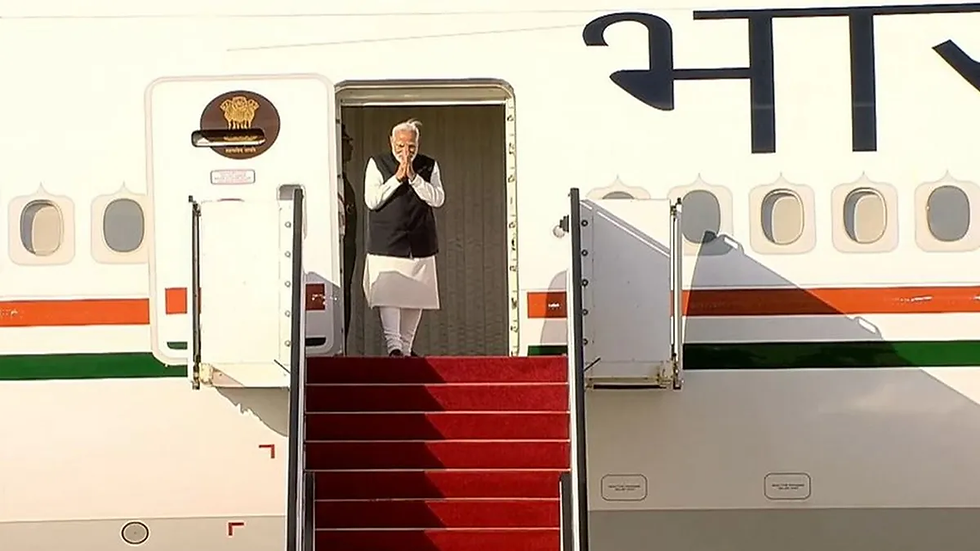
Upon arrival in Tel Aviv, Prime Minister Modi received a warm welcome from Israeli Prime Minister Benjamin Netanyahu, highlighting the strong personal rapport between the two leaders. Their meeting set the tone for comprehensive discussions aimed at deepening bilateral engagement across defence, trade, innovation, and people-to-people ties.
Historic Address at the Knesset
One of the most significant moments of the visit was Prime Minister Modi’s address to the Knesset. In his speech, he reaffirmed India’s firm stand against terrorism and emphasized the shared experiences of both nations in combating extremism. He spoke about the civilizational links between India and Israel and reiterated India’s commitment to peace, stability, and cooperation in the region.
The visit also saw Prime Minister Modi being conferred the prestigious “Speaker of the Knesset Medal,” the highest parliamentary honour in Israel. This rare recognition symbolized the strength of the India–Israel partnership and acknowledged India’s growing global stature.
Elevating Ties to a Special Strategic Partnership
A major outcome of the visit was the formal elevation of bilateral relations to a “Special Strategic Partnership.” This upgraded framework aims to institutionalize cooperation in critical sectors and expand collaboration beyond traditional domains. Both leaders agreed to accelerate negotiations on a mutually beneficial Free Trade Agreement, which is expected to boost bilateral trade and open new opportunities for businesses in both countries.
Economic engagement formed a key pillar of the discussions. The introduction of India’s Unified Payments Interface (UPI) in Israel was announced, a move that could significantly enhance financial connectivity and facilitate smoother transactions for tourists, businesses, and investors.
Strengthening Defence and Security Cooperation
Defence cooperation remains one of the strongest pillars of India–Israel relations. During the visit, both sides reaffirmed their commitment to expanding collaboration in advanced defence technologies, joint production, and research. Discussions reportedly covered air-defence systems, mid-air refuelling capabilities, and broader technology transfer initiatives aligned with India’s self-reliance goals.
The partnership also extends to cybersecurity, artificial intelligence, quantum technologies, and semiconductors. By aligning in emerging and critical technologies, both countries aim to build resilient systems capable of addressing modern security and economic challenges.
Agriculture, Water, and Innovation
Beyond defence and trade, the visit reinforced cooperation in agriculture and water management areas where Israel’s technological expertise is globally recognized. India has already benefited from Israeli innovations in drip irrigation and precision farming, and the new agreements seek to scale up such collaborations.
Innovation and startup ecosystems were another area of focus. Both nations acknowledged the complementary strengths of India’s expanding digital economy and Israel’s reputation as a global innovation hub, paving the way for deeper technological partnerships.
People-to-People and Cultural Engagement
Prime Minister Modi also visited Yad Vashem in Jerusalem, paying tribute to the victims of the Holocaust. The solemn gesture underscored India’s respect for historical memory and human dignity. The visit highlighted the importance of cultural understanding and people-to-people exchanges in strengthening bilateral ties.
Agreements aimed at increasing labour mobility were also discussed, potentially opening avenues for more Indian professionals and skilled workers in Israel. Such initiatives are expected to further deepen societal connections between the two nations.
The MGMM Outlook
Prime Minister Narendra Modi’s historic visit to Israel marks a decisive step in strengthening a partnership rooted in shared democratic values, technological excellence, and a firm stand against terrorism. His address at the Knesset and the conferment of the Speaker of the Knesset Medal reflect the depth of mutual respect between the two nations. The elevation of ties to a “Special Strategic Partnership” signals long-term strategic alignment, expanding cooperation across defence, trade, innovation, and emerging technologies. The introduction of UPI in Israel further demonstrates India’s growing digital influence and the practical integration of both economies.
The visit reinforces the idea that India–Israel relations are no longer limited to defence collaboration but are evolving into a comprehensive, future-oriented alliance. From advanced defence technologies and cybersecurity to agriculture, water management, startups, and labour mobility, the engagement reflects a multidimensional partnership designed for stability and growth. Prime Minister Modi’s tribute at Yad Vashem also underscored the human and civilizational connect between the two societies. The outcomes of this visit establish a strong foundation for sustained cooperation, positioning both nations as trusted partners in an increasingly complex global landscape.
(Sources: India TV News, NDTV, Economic Times)


Comments