
Pradhan Criticises Congress Over Student Protests Amid NEET Row

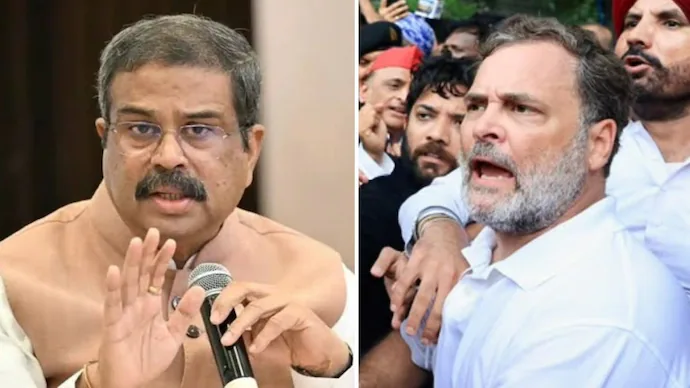
Union Education Minister Dharmendra Pradhan has responded firmly to recent opposition protests, stating that students deserve solutions and accountability rather than being drawn into political disruptions. His remarks followed a series of events surrounding the NEET-UG 2026 examination controversy and related demonstrations in the capital.
Background of the NEET-UG 2026 Examination
The National Eligibility cum Entrance Test (Undergraduate) 2026, held on May 3 for over 22 lakh aspirants, faced significant challenges. Reports of irregularities led to the cancellation of the original exam by the National Testing Agency. A re-examination took place on June 21 under enhanced security measures. The Central Bureau of Investigation has been conducting a probe into the matter, resulting in several arrests.
In response to these developments, the government has outlined plans to transition NEET to a computer-based testing format in the coming year and implement broader reforms to strengthen the examination system. Education Minister Pradhan has emphasised the need for accountability while committing to improvements that protect the interests of students.
Rise of Youth Protests and the Cockroach Janata Party
The controversy sparked widespread concern among students and young people, giving rise to the Cockroach Janata Party (CJP), an online movement that evolved into street protests. Founded by Abhijeet Dipke, the group has organised demonstrations calling for greater transparency and reforms in competitive examinations. Activist Sonam Wangchuk joined the effort, undertaking a hunger strike at Jantar Mantar to highlight issues related to education and other concerns.
These protests reflect the deep anxieties of aspirants and their families regarding the fairness of high-stakes exams that shape future careers in medicine and other fields.
The 'Chalo Sansad' March and Subsequent Events
On July 20, the CJP organised a 'Chalo Sansad' march towards Parliament on the first day of the Monsoon Session. Large numbers of participants gathered, leading to clashes with security forces. Delhi Police reported injuries to over 100 personnel, while accounts from protesters also indicated injuries on their side. The situation resulted in detentions and the clearing of the protest site amid heightened security measures.
Congress Leaders' Demonstration Outside PM's Residence
The following day, on July 21, Congress leaders including Rahul Gandhi, Priyanka Gandhi Vadra, and other opposition figures marched to the Prime Minister’s official residence at Lok Kalyan Marg. They protested the police action during the previous day’s events and pressed for discussions on the NEET issue. Several leaders, including Rahul Gandhi and Priyanka Gandhi Vadra, were detained briefly before being released.
The demonstration brought attention to the ongoing demands for addressing student concerns through parliamentary channels and other democratic means.
Minister Pradhan's Reaction and Government Stance
In his response, Minister Pradhan noted that the government had conveyed readiness for a detailed discussion on the NEET matter in Parliament. He expressed the view that students should not be used as instruments for political disruption. “The students of India deserve far better than being treated as props in a political campaign,” he stated, calling for focus on certainty, solutions, and responsibility.
Government sources highlighted security implications of protests near high-security zones such as the Prime Minister’s residence, describing it as a precedent that requires careful consideration in the interest of public order and institutional safety.
The MGMM Outlook
The NEET-UG 2026 controversy has understandably raised concerns among students, but the government's response indicates an effort to address the issue through institutional reforms rather than short-term measures. With the cancellation of the compromised examination, a re-test under tighter security, an ongoing CBI investigation, and plans to shift NEET to a computer-based format, the focus appears to be on restoring credibility and ensuring that future examinations are conducted with greater transparency and accountability.
At the same time, while peaceful democratic expression is an essential part of public life, student-related concerns are best resolved through constructive dialogue and policy reforms rather than political confrontation. Discussions in Parliament, administrative reforms, and a thorough investigation into the irregularities are likely to provide more durable solutions for millions of aspirants than prolonged street protests.
(Sources: India Today, Hindustan Times, Economic Times)


Comments