
PM Modi’s Assam Visit: A Symbolic Outreach to Tea Garden Workers

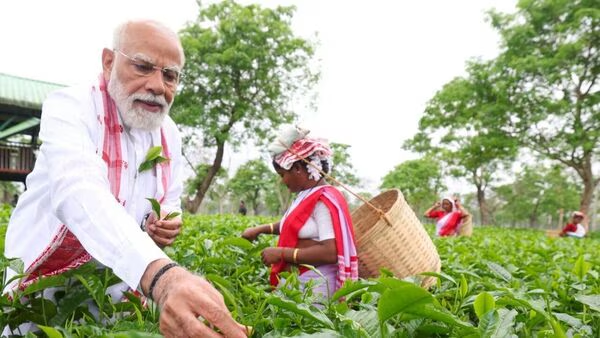
Prime Minister Narendra Modi’s recent visit to a tea garden in Assam has drawn national attention, blending symbolism, grassroots engagement, and political messaging. During his tour of the poll-bound state, Modiji visited the Manohari Tea Estate in Dibrugarh, where he interacted with workers and participated in tea leaf plucking, calling the experience “memorable.”
A Ground-Level Interaction in Dibrugarh
Spending nearly half an hour at the tea estate, the Prime Minister engaged closely with women workers, who form the backbone of Assam’s tea industry. He joined them in plucking tea leaves and placing them into traditional baskets, learning the technique directly from the workers themselves.
The visit was marked by informal interactions, including conversations about their daily lives, children’s education, and cultural practices. Modiji also praised the contribution of tea garden families, stating that their “hard work and perseverance have enhanced Assam’s pride.”
In addition to the work experience, he witnessed traditional performances such as the Jhumur dance, reflecting the deep cultural roots of the tea garden community.
“Tea is the Soul of Assam”
Highlighting the cultural and economic importance of tea, Modiji described it as the “soul of Assam,” emphasizing how the state’s tea has gained global recognition.
The Manohari Tea Estate itself holds a special place in India’s tea industry, being known for producing premium varieties like the highly valued “Manohari Gold Tea,” which is considered among the most expensive teas in the country.
Political Context: Elections and Outreach
The visit comes amid the ongoing campaign for the Assam Assembly elections, where tea garden workers represent a significant voter base. Modiji’s interaction is widely seen as an effort to connect directly with this influential community ahead of the polls.
During the same visit, the Prime Minister also addressed rallies in different parts of the state, highlighting development achievements and promising continued growth.
Tea garden communities have long played a decisive role in Assam’s electoral landscape, making such outreach politically significant.
The Tea Garden Community: History and Challenges
The tea garden community in Assam is a unique socio-cultural group, largely descended from labourers brought during the colonial era to work on plantations.
Today, the tea industry contributes significantly to India’s economy, with Assam producing over half of the country’s tea. The sector is highly labour-intensive, employing around a million workers—most of them women.
Despite their contribution, tea workers have historically faced challenges such as low wages, limited access to education and healthcare, and poor living conditions.
Government Initiatives and Welfare Measures
In recent years, both central and state governments have introduced measures aimed at improving the socio-economic conditions of tea garden workers. These include initiatives like providing land ownership rights (pattas), welfare schemes, and financial support programs.
Such steps are seen as efforts to address long-standing issues faced by the community while also ensuring their inclusion in the broader development narrative of the state.
The MGMM Outlook
Prime Minister Narendra Modi’s visit to the Assam tea gardens reflects a carefully crafted blend of symbolism and direct public engagement, where political outreach meets cultural acknowledgment. His interaction with workers, especially women who form the backbone of the tea industry, projects an image of leadership that seeks connection at the grassroots level. By participating in tea plucking and engaging in conversations about their lives, the visit reinforces the importance of recognizing communities that have historically contributed to the state’s identity and economy but often remain on the margins of development narratives.
At the same time, the timing and setting of the visit highlight the strategic importance of tea garden communities in Assam’s socio-political landscape. While welfare initiatives and promises of development signal progress, they also underline the long-standing challenges that continue to define the lives of these workers. The outreach, therefore, operates on multiple levels—acknowledging cultural pride, addressing socio-economic concerns, and strengthening political connection with a community that plays a decisive role in shaping the state’s future.
(Sources: OpIndia, Times of India, Livemint)


Comments