
PM Narendra Modi Inaugurates Samrat Samprati Museum: Reviving India’s Civilisational Legacy

Prime Minister Narendra Modi inaugurated the Samrat Samprati Museum in Gandhinagar, Gujarat, on the occasion of Mahavir Jayanti, marking a significant moment in India’s ongoing efforts to preserve and promote its cultural heritage. Located at Koba Tirth, the museum is dedicated to showcasing the philosophical depth and historical journey of Jainism. Named after Samrat Samprati, the institution reflects the legacy of a ruler known for spreading the message of non-violence and ethical governance.
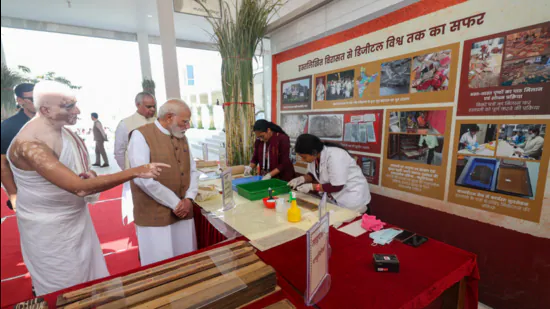
The museum houses over 2,000 artefacts, including rare manuscripts, ancient sculptures, coins, and paintings, offering a comprehensive narrative of Jain traditions and their influence on Indian civilisation. Designed with modern technology, it provides an immersive experience through digital displays and curated galleries, making ancient knowledge accessible to contemporary audiences.
Bridging the Past with the Future
In his address, Modiji emphasised that the museum is not merely a repository of historical objects but a living bridge connecting India’s past with its future. He highlighted the importance of presenting traditional knowledge systems in innovative formats so that younger generations can engage with them meaningfully. The integration of technology within the museum reflects a broader vision of preserving heritage while adapting to modern modes of learning and exploration.
The Prime Minister also underlined how India’s civilisational strength lies in its diversity and continuity. By showcasing Jain philosophy alongside other streams of thought, the museum demonstrates how different traditions have coexisted and enriched the country’s intellectual fabric over centuries.
Manuscripts and the Question of Neglect
A central theme of the Prime Minister’s speech was the preservation of India’s vast manuscript heritage. He pointed out that ancient centres of learning once held immense repositories of knowledge, much of which has been lost due to historical disruptions and insufficient preservation efforts.
Modiji criticised earlier governments for not giving adequate attention to safeguarding these invaluable resources after independence, attributing this gap to a lingering colonial mindset. According to him, the lack of systematic efforts to collect and protect manuscripts resulted in the gradual disappearance of significant portions of India’s intellectual legacy.
Gyan Bharatam Mission: A Modern Initiative
Addressing these concerns, the government has launched the Gyan Bharatam Mission, an initiative aimed at digitising and conserving ancient manuscripts using scientific methods. The programme focuses on collecting scattered texts from across the country, preserving them through advanced techniques, and making them accessible in digital formats.
The initiative also encourages public participation, inviting individuals and institutions to contribute manuscripts preserved in private collections. This collaborative approach seeks to build a comprehensive archive that reflects the depth and diversity of India’s knowledge traditions.
Global Relevance of Jain Philosophy
Placing the museum within a global context, Modiji highlighted the relevance of Jain principles such as non-violence, compassion, and self-discipline in today’s world. At a time marked by conflict and instability, these values offer a pathway toward peace and coexistence.
He expressed confidence that the museum would not only attract domestic visitors but also scholars and tourists from around the world, serving as a centre for cultural dialogue and intellectual exchange. By presenting India’s philosophical heritage on a global stage, the museum reinforces the country’s role as a source of timeless wisdom.
A Vision Balancing Heritage and Progress
The inauguration of the museum also reflects a broader vision of balancing cultural preservation with technological and economic progress. Alongside such initiatives, the government continues to invest in sectors like infrastructure and technology, demonstrating a dual commitment to honouring the past while building the future.
This approach underscores the idea that development is not solely about economic growth but also about preserving identity and heritage. By integrating tradition with innovation, India aims to create a model of progress that is both rooted and forward-looking.
The MGMM Outlook
The inauguration of the Samrat Samprati Museum by Narendra Modi reflects a growing emphasis on reclaiming and presenting India’s civilisational depth through structured cultural initiatives. By centering the museum around Jainism and the legacy of Samrat Samprati, the effort goes beyond preservation and moves toward reinterpreting historical knowledge for contemporary relevance. The integration of digital tools with traditional artefacts indicates a conscious attempt to make ancient philosophies more accessible, especially to younger audiences who engage with history through interactive and immersive formats.
At the same time, the focus on manuscript preservation and initiatives like the Gyan Bharatam Mission signals a shift toward addressing long-standing gaps in safeguarding India’s intellectual heritage. By linking cultural revival with global relevance—particularly through the universal values of non-violence and coexistence embedded in Jain thought—the initiative positions India’s traditions within broader international discourse. This approach aligns cultural identity with modern development, suggesting that heritage is being treated not as a static legacy but as an active component in shaping future narratives and global engagement.
(Sources: Hindustan Times, Indian Express, Times of India)


Comments