
INS Malvan Joins the Indian Navy: A New Chapter in India's Maritime Defence

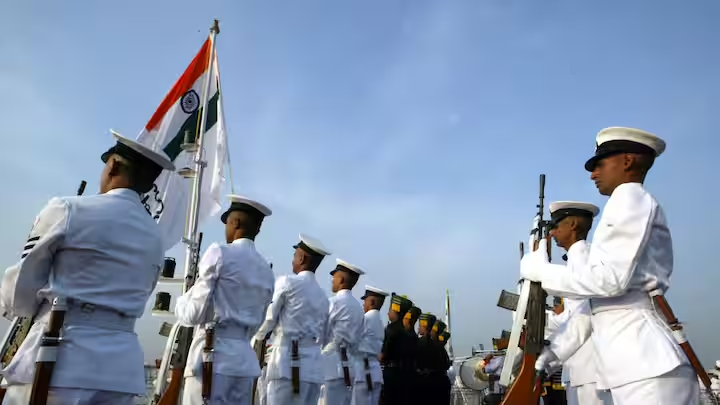
India has further strengthened its maritime defence capabilities with the commissioning of INS Malvan, the second Mahe-class Anti-Submarine Warfare Shallow Water Craft (ASW-SWC), into the Indian Navy. The vessel was formally commissioned on July 22, 2026, at the Karwar Naval Base in Karnataka, marking another milestone in the country's ongoing naval modernisation programme. Built by Cochin Shipyard Limited (CSL) under the Make in India and Atmanirbhar Bharat initiatives, INS Malvan demonstrates India's continued progress in developing advanced indigenous defence platforms.
The induction of INS Malvan comes at a time when maritime security is becoming increasingly important in the Indian Ocean Region. As underwater threats evolve and naval competition intensifies, specialised anti-submarine vessels are expected to play a critical role in protecting India's coastline, ports, and strategic maritime interests.

A Warship Designed for Modern Underwater Warfare
Unlike conventional warships designed for open-sea combat, INS Malvan has been purpose-built to operate in shallow coastal waters, where detecting enemy submarines is particularly challenging. These waters often provide natural cover for submarines, making dedicated anti-submarine platforms essential for effective surveillance and defence.
The vessel is equipped with sophisticated sonar systems capable of detecting underwater movements, integrated combat management systems for rapid threat assessment, lightweight torpedoes, and anti-submarine rocket launchers. Together, these systems enable the ship to detect, track, and neutralise hostile submarines before they can threaten naval assets or commercial shipping.
INS Malvan also incorporates modern stealth technologies that reduce its acoustic signature, making it more difficult for enemy submarines to detect the vessel. Its water-jet propulsion system enhances manoeuvrability while producing less underwater noise, giving it an operational advantage during sensitive anti-submarine missions.
The Importance of Anti-Submarine Warfare
Submarines remain among the most difficult military platforms to detect because they operate silently beneath the ocean's surface. Modern submarines can carry advanced torpedoes, cruise missiles, and intelligence-gathering equipment, allowing them to pose significant threats to naval forces, merchant shipping, and coastal infrastructure.
For a country like India, with a coastline stretching over 7,500 kilometres and vital sea lanes supporting international trade and energy imports, maintaining strong underwater surveillance has become an essential component of national security. Dedicated anti-submarine warfare vessels serve as an important defensive shield by continuously monitoring coastal waters and responding rapidly to suspicious underwater activity.
Beyond submarine hunting, ships such as INS Malvan are capable of conducting maritime patrols, search and rescue operations, mine-laying missions, and surveillance tasks, making them valuable assets during both peacetime and conflict.
Part of the Indigenous Mahe-Class Programme
INS Malvan is the second vessel in the Mahe-class Anti-Submarine Warfare Shallow Water Craft programme, under which eight specialised ships are being constructed for the Indian Navy. The project represents one of India's significant indigenous naval shipbuilding efforts and reflects the country's growing capability in designing complex military platforms.
Named after the historic coastal town of Malvan in Maharashtra, known for the iconic Sindhudurg Fort built by Chhatrapati Shivaji Maharaj, the vessel also carries symbolic importance by connecting India's maritime heritage with its modern naval ambitions.
The Mahe-class ships are designed specifically to strengthen coastal defence by operating in areas where larger destroyers and frigates may face operational limitations. Their smaller size, combined with advanced technology, allows them to effectively patrol shallow waters while maintaining constant underwater surveillance.
Strengthening Maritime Security in the Indian Ocean Region
The commissioning of INS Malvan comes amid increasing strategic activity across the Indian Ocean Region. The region has witnessed greater naval deployments, expanding submarine operations, and rising geopolitical competition, making maritime domain awareness more important than ever.
India's strategic location places it at the centre of major international shipping routes that transport energy supplies and commercial goods between Asia, Africa, Europe, and the Middle East. Protecting these sea lanes is essential not only for India's economic security but also for regional stability.
The Indian Navy has steadily expanded its underwater surveillance network by integrating anti-submarine warfare ships with long-range maritime patrol aircraft, naval helicopters equipped with dipping sonars, coastal radar systems, and satellite-based maritime monitoring. INS Malvan adds another specialised capability to this layered defence architecture, improving the Navy's ability to respond to underwater threats closer to India's coastline.
Advancing Self-Reliance in Defence Manufacturing
One of the most significant aspects of INS Malvan is its high indigenous content. More than eighty percent of the vessel has been developed using Indian technology, components, and expertise, reflecting the steady growth of the country's domestic defence manufacturing sector.
The successful construction of advanced naval platforms within India demonstrates the increasing capabilities of Indian shipyards, research organisations, and private defence industries. Indigenous production not only strengthens national security by reducing dependence on foreign suppliers but also contributes to technological innovation, employment generation, and long-term industrial development.
Over the past decade, India has accelerated the induction of home-built destroyers, frigates, aircraft carriers, submarines, offshore patrol vessels, and survey ships. The addition of specialised anti-submarine warfare vessels further broadens the Navy's operational capabilities while reinforcing the country's commitment to self-reliance in defence production.
Supporting India's Long-Term Maritime Vision
India's maritime strategy increasingly focuses on securing the Indian Ocean Region, safeguarding freedom of navigation, protecting offshore assets, and ensuring the uninterrupted flow of international trade. As underwater threats continue to evolve, anti-submarine warfare has become one of the most important components of modern naval operations.
The commissioning of INS Malvan reflects the Indian Navy's continued efforts to build a technologically advanced, versatile, and balanced fleet capable of addressing both conventional and emerging maritime challenges. By strengthening coastal surveillance and underwater defence, vessels like INS Malvan enhance India's ability to protect its maritime interests while contributing to regional security and stability.
The MGMM Outlook
The commissioning of INS Malvan reflects India's steady commitment to strengthening maritime security at a time when the Indian Ocean Region is witnessing growing strategic competition and increased underwater activity. As an indigenously built anti-submarine warfare vessel, it enhances the Indian Navy's ability to monitor shallow coastal waters, protect critical sea lanes, and respond swiftly to emerging underwater threats. The induction also demonstrates the practical progress of the Make in India and Atmanirbhar Bharat initiatives by showcasing India's growing capability to design and build sophisticated defence platforms at home.
Beyond adding another warship to the fleet, INS Malvan represents a broader vision of creating a technologically advanced and self-reliant naval force capable of safeguarding India's long coastline and maritime interests. Its advanced surveillance and anti-submarine capabilities strengthen the country's layered coastal defence architecture while supporting regional stability and secure maritime trade. As more Mahe-class vessels join the Navy, India's indigenous defence ecosystem and maritime preparedness are expected to become even stronger, reinforcing the nation's long-term strategic position in the Indian Ocean.
(Sources: Firstpost, Times of India, Economic Times)


Comments