
INS Aridhaman: India’s Next Big Leap in Sea-Based Nuclear Deterrence
- MGMMTeam

- 1 hour ago
- 4 min read
India’s maritime security architecture is set for a major transformation as INS Aridhaman, the country’s third indigenously built nuclear-powered ballistic missile submarine, approaches commissioning. With the vessel now in the final phase of trials, the Indian Navy stands on the brink of significantly enlarging and strengthening its sea-based nuclear shield. The induction of INS Aridhaman marks not only a milestone in India’s underwater combat capabilities but also a decisive step toward self-reliance in strategic defence technologies.
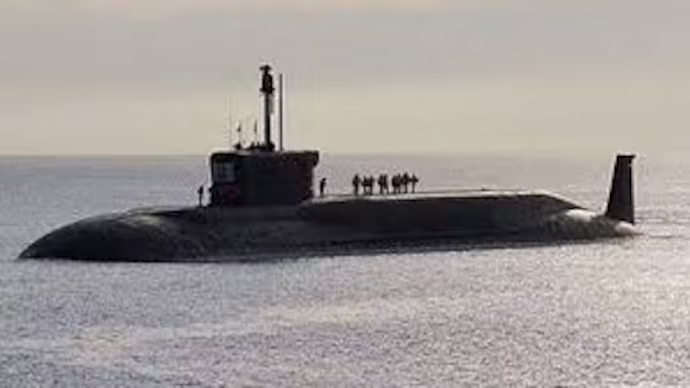
A Landmark in Indigenous Nuclear Submarine Development
During Navy Day week, Chief of Naval Staff Admiral Dinesh K. Tripathi confirmed that INS Aridhaman has nearly completed its harbour and sea trials. This places India on the cusp of possessing a formidable trio of nuclear missile submarines—INS Arihant, INS Arighaat, and now Aridhaman—each contributing to a robust and survivable second-strike capability.
The submarine is an evolution of the Arihant-class platform but with major technological improvements. Reports suggest that Aridhaman features a larger displacement, more advanced systems, improved stealth characteristics, and the ability to carry longer-range submarine-launched ballistic missiles. These advancements reinforce India’s position among a select group of nations capable of producing and operating nuclear-propelled ballistic missile submarines indigenously.
Enhancing India’s Nuclear Triad
INS Aridhaman strengthens the sea-based leg of India’s nuclear triad, widely regarded as the most survivable component of a credible nuclear deterrent. Unlike land or air delivery systems, SSBNs can remain undetected underwater for extended durations, ensuring a guaranteed retaliatory capability in the event of a nuclear first strike.
Aridhaman’s ability to potentially carry missiles such as the K-4 SLBM significantly extends India’s strike range and strategic reach. Together with Arihant and Arighaat, the submarine will allow the Navy to eventually maintain continuous deterrent patrols—an essential element of a matured nuclear doctrine. With neighbouring nations rapidly advancing their naval and strategic assets, India’s strengthened SSBN fleet also signals a clear commitment to preserving regional stability through credible and survivable deterrence at sea.
Part of a Broader Naval Modernisation Wave
The arrival of Aridhaman comes as the Indian Navy undergoes a sweeping modernisation programme aimed at upgrading both conventional and nuclear propulsion capabilities. Over the past year, twelve new warships have been inducted, reflecting a growing manufacturing capacity within India’s defence ecosystem. The Navy is also pushing forward with plans to induct nuclear-powered attack submarines (SSNs), which would complement the SSBN fleet by conducting escort missions, tracking adversary submarines, and safeguarding vital sea lanes.
At the same time, the force is steadily expanding its conventional submarine fleet with upgraded diesel-electric platforms and air-independent propulsion capabilities. Such developments highlight a layered approach to maritime security—combining stealth, firepower, and endurance across different submarine classes to maintain strategic superiority in the Indian Ocean Region.
Another historic shift under way is the gradual inclusion of women in the submarine branch, signalling a broader cultural and structural evolution within the Navy and reflecting India’s progressive approach to equal opportunity in defence roles.
Strategic Implications in the Indo-Pacific Era
INS Aridhaman’s commissioning holds wider geopolitical implications. As global power centres shift toward the Indo-Pacific, undersea assets have become essential tools of influence, deterrence, and power projection. India’s SSBN programme, driven by indigenous reactors, hulls, and missile systems, enhances its autonomy in a region witnessing rapid submarine proliferation.
Modern maritime conflicts increasingly rely on stealth and information superiority. Nuclear submarines such as Aridhaman provide India with unmatched endurance and operational depth in contested waters. Their presence also acts as a stabilising force, signalling that India’s vital interests—from trade routes to territorial sovereignty—are protected by one of the most complex and sophisticated defence technologies known to humankind.
The MGMM Outlook
India’s rapid progress in strategic maritime capability becomes unmistakable with the nearing commissioning of INS Aridhaman. From our viewpoint, this submarine is not just a technological upgrade but a major assertion of India’s growing self-reliance in nuclear defence. The vessel reinforces the country’s second-strike capability, strengthens the nuclear triad, and places India firmly among the very few nations that can design and operate nuclear-powered ballistic missile submarines indigenously. With its improved stealth, greater endurance, and capacity for longer-range SLBMs, Aridhaman marks a decisive evolution from the earlier Arihant-class submarines and signals India’s readiness to ensure secure deterrence in an increasingly unpredictable Indo-Pacific environment.
At the same time, Aridhaman’s arrival reflects a larger transformation in the Indian Navy—one defined by rapid modernisation, indigenous shipbuilding, and broadening inclusion. The induction of multiple new warships, the push toward nuclear-powered attack submarines, and the gradual opening of submarine roles to women all point toward a confident and future-ready force. In our view, Aridhaman is more than a strategic asset; it represents India’s long-term commitment to safeguarding its maritime interests, securing vital trade routes, and asserting stability in the Indian Ocean Region. It embodies the nation’s technological maturity and strategic foresight at a moment when undersea power is becoming central to geopolitical balance.
(Sources: India Today, Hindustan Times, Indian Express)


Comments