
India-US Interim Trade Deal Nears Completion as July 24 Tariff Deadline Looms Large

India and the United States are intensifying efforts to finalize a landmark interim trade agreement, with high-level negotiations in New Delhi signaling that a deal could be reached before the critical July 24, 2026, expiration of Washington’s temporary 10% import tariff on trading partners. Both sides describe the talks as being in the final stages, aiming to deliver reciprocal market access, tariff relief, and a boost to bilateral economic ties.
A senior US official recently stated that the two countries are “very, very close” to concluding what has been termed a historic bilateral trade pact. This agreement seeks to open India’s massive 1.4 billion-consumer market more effectively for American goods while providing Indian exporters with greater certainty and competitive advantages in the US market.
Background and Recent Momentum
The current push builds on a framework announced in February 2026 following discussions between Prime Minister Narendra Modi and President Donald Trump. Under the initial understanding, the US agreed to reduce tariffs on Indian goods (lowering them from previous levels to around 18% in key areas), while India committed to eliminating or significantly cutting tariffs on a wide array of US industrial goods and agricultural products, such as dried distillers’ grains, red sorghum, tree nuts, fruits, soybean oil, wine, and spirits.
Subsequent shifts in US tariff policy, including the imposition of a temporary 10% levy and ongoing Section 301 investigations into industrial capacity and forced labor concerns (which include India), have required adjustments. India is particularly focused on securing preferential treatment over competitors like Vietnam and other ASEAN nations to maintain a comparative edge for its exporters.
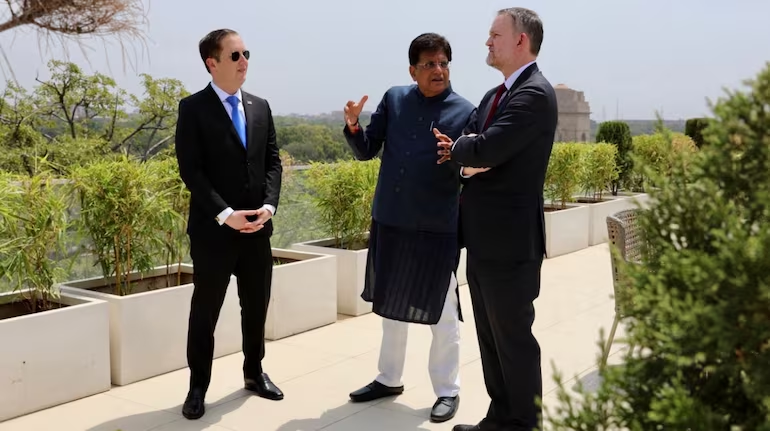
US Trade Representative Jamieson Greer has been in New Delhi for key meetings with Commerce and Industry Minister Piyush Goyal and other officials. These discussions follow the Modi-Trump bilateral meeting on the sidelines of the G7 summit in France in mid-June, which helped reinvigorate the process.
Minister Goyal has expressed strong optimism, indicating that the first tranche of the Bilateral Trade Agreement (BTA) could be executed by mid-July. He emphasized efforts to close all open issues swiftly, describing the potential pact as “very, very vibrant.”
Economic Stakes and Broader Benefits
The US is India’s second-largest trading partner. In 2025-26, India’s exports to the US stood at approximately $87.3 billion, with imports at $52.9 billion, resulting in a trade surplus of $34.4 billion. A successful deal is expected to further expand this relationship toward the ambitious “Mission 500” target of $500 billion in bilateral trade by 2030.
India has also indicated intentions to significantly increase purchases of US energy products, aircraft and parts, precious metals, technology, and coking coal—potentially reaching substantial volumes over the coming years. Energy cooperation is already growing, with hydrocarbon trade hitting $14.4 billion recently.
Additional pillars of the partnership include surging Indian investments in the US (with $20 billion in recent commitments announced at SelectUSA) and education ties, where over 330,000 Indian students contribute billions to the US economy.
Challenges and Strategic Context
While progress is evident, challenges remain. India seeks assurances against future tariff hikes post-deal and is navigating concerns from domestic agricultural stakeholders regarding market access. The US continues to prioritize reducing its trade deficit and opening markets, supported by broader investigations under Section 301.
A safeguard clause in the February framework allows adjustments if tariff policies change, providing some flexibility. Both nations view the deal as a milestone in their strategic partnership, extending beyond trade to supply chain resilience, digital economy, and geopolitical alignment.
The next few weeks will be pivotal. Success could mark a significant step in strengthening US-India economic relations under the current administrations, delivering wins for exporters, businesses, and consumers on both sides.
The MGMM Outlook
The ongoing efforts between India and the United States to finalize an interim trade agreement reflect the growing maturity and strategic importance of the bilateral relationship. As both countries work toward resolving outstanding issues before the July 24 tariff deadline, the proposed pact has the potential to provide greater market access, reduce trade barriers, and strengthen confidence among exporters and businesses. The momentum generated by recent high-level engagements demonstrates a shared commitment to expanding economic cooperation and creating a more balanced and mutually beneficial framework.
The agreement could further accelerate India's rise as a key global economic partner while supporting the ambitious goal of increasing bilateral trade to $500 billion by 2030. Expanding cooperation in energy, technology, manufacturing, and investment would not only enhance commercial opportunities but also contribute to supply chain resilience and long-term strategic alignment. While certain challenges related to tariffs and domestic interests remain, the progress achieved so far highlights the willingness of both nations to deepen ties and build a stronger foundation for future growth.
(Sources: Moneycontrol, Firstpost, Indian Express)


Comments