
India’s Semiconductor Push Gains Momentum as Vaishnaw Warns of Disruption Attempts

India’s semiconductor journey is moving rapidly from policy and investment announcements towards actual manufacturing. With multiple projects now progressing and commercial production beginning at several facilities, the country is building capabilities across chip design, fabrication, advanced packaging, materials and equipment.
Against this backdrop, Union Electronics and Information Technology Minister Ashwini Vaishnaw has warned that India must remain prepared for attempts to disrupt its growing semiconductor ecosystem. In an interview with NDTV, Vaishnaw said that as India becomes a more important manufacturing and technology destination, challenges could emerge in the form of cyberattacks, misinformation and physical disruptions.
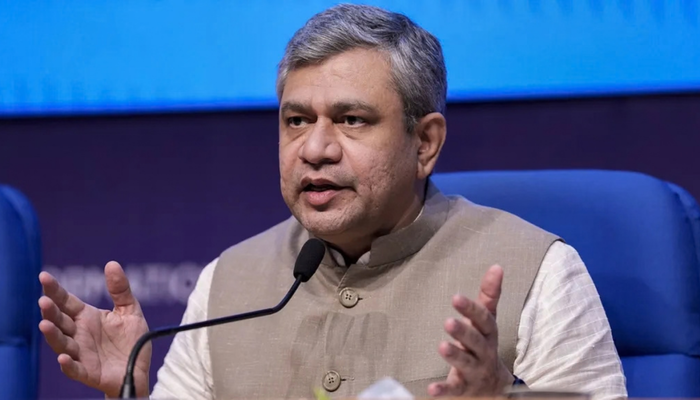
Vaishnaw Recalls the Foxconn Incident
While discussing the challenges faced during the expansion of electronics manufacturing in India, Vaishnaw referred to the 2021 incident at Foxconn’s iPhone manufacturing facility near Chennai. In December 2021, more than 150 workers were hospitalised following a food-poisoning incident at accommodation associated with the facility. The episode triggered protests and temporarily disrupted operations at the plant.
Vaishnaw described the incident as part of what he believes were attempts to disrupt India’s emergence as a major manufacturing destination. He also referred to negative reports and other controversies surrounding Apple’s manufacturing expansion in India.
However, the 2021 Foxconn episode should be distinguished from the minister’s broader allegation of deliberate disruption. Contemporary reporting documented concerns surrounding food and accommodation conditions at the facility, but the available public record does not independently establish that the food-poisoning incident was deliberately orchestrated as sabotage. The allegation therefore remains attributed to Vaishnaw.
From Electronics Manufacturing to Semiconductor Production
India’s semiconductor strategy is considerably broader than attracting individual chip manufacturers. The objective is to create an ecosystem covering the entire value chain, from chip design and fabrication to packaging, testing, equipment, materials and research.
The progress made so far indicates that this ecosystem is beginning to take shape. According to government data, 12 semiconductor manufacturing projects involving investments of more than ₹1.64 lakh crore had been approved under Semicon 1.0 by July 2026. Three facilities had already begun commercial production, with another expected to commence operations during 2026.
Semicon 2.0 Expands India’s Semiconductor Strategy
The next phase of the programme, Semicon 2.0, was approved by the Union Cabinet in July 2026 with an outlay of ₹1,27,500 crore. The programme expands the focus beyond fabrication and packaging to include semiconductor design, equipment and materials, new fabs, advanced packaging, research and development, and talent development.
This broader approach is significant because a successful semiconductor industry depends on much more than factories. Reliable supplies of specialised materials, manufacturing equipment, skilled engineers, design capabilities and research infrastructure are all essential for building a sustainable domestic ecosystem.
SEMICON India 2026 Showcases Growing Capabilities
The scale of India’s semiconductor ambitions was visible at SEMICON India 2026, held in New Delhi from September 17 to 19. The event brought together more than 600 exhibitors, including around 300 international companies, with participation from representatives of 52 countries. The event recorded more than 51,000 registrations and around 40,000 cumulative footfall.
The event also marked an important transition for India. Commercial production lines at CDIL Semiconductor in Mohali and Suchi Semicon in Surat were virtually inaugurated, taking the number of operational commercial semiconductor units among the projects approved under Semicon 1.0 to five, according to the government.
Building a Resilient Semiconductor Ecosystem
As semiconductor manufacturing expands, resilience will become increasingly important. Semiconductor facilities require uninterrupted electricity, specialised infrastructure, secure supply chains and highly controlled manufacturing environments. Disruptions to any part of this network can have consequences beyond an individual company.
Vaishnaw’s warning therefore comes at a time when India is attempting to establish itself within a highly competitive global industry. His comments highlight the importance of preparing the sector for cybersecurity risks, misinformation and other forms of disruption as domestic semiconductor capabilities grow.
India is also developing international partnerships with major semiconductor economies. Government data notes cooperation with countries and regions including the United States, Japan, the European Union, Singapore and the Netherlands, while the country is also working to expand its position in global chip-design capabilities.
The MGMM Outlook
India’s semiconductor journey is moving from policy announcements towards commercial production, with projects spanning fabrication, packaging, design, materials and equipment. The expansion under Semicon 1.0 and the launch of Semicon 2.0 reflect a broader effort to establish a complete and resilient domestic semiconductor ecosystem. The growing participation of global companies and the progress showcased at SEMICON India 2026 further indicate the increasing scale of India’s ambitions in this strategically important sector.
At the same time, Electronics and IT Minister Ashwini Vaishnaw has highlighted the need to remain prepared for potential disruptions as India’s semiconductor and electronics manufacturing capabilities expand. His remarks underline the importance of strong cybersecurity, reliable infrastructure, secure supply chains and skilled talent. With continued investment, international partnerships and a wider focus under Semicon 2.0, India is strengthening the foundations needed to become a more significant participant in the global semiconductor industry.
(Sources: OpIndia, Moneycontrol, NDTV)


Comments