
India’s Planned Coal Mining Capacity Nearly Doubles to 638 MTPA, Strengthening Energy Security
- MGMMTeam

- 1 hour ago
- 6 min read
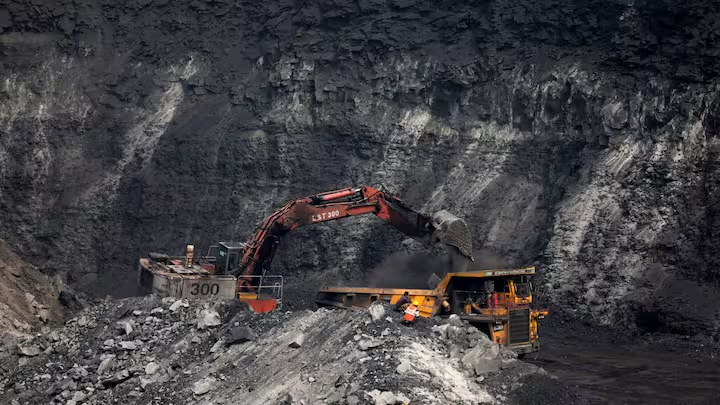
India is set to play an increasingly important role in the global coal market, with its planned coal mining capacity nearly doubling to 638 million tonnes per annum (MTPA) in 2025, up from 329 MTPA a year earlier. According to the latest analysis by Global Energy Monitor (GEM), India’s expansion accounted for much of the increase in the worldwide pipeline of proposed coal mining projects.
The development comes as India prepares for sustained growth in electricity consumption and industrial activity. With a rapidly expanding economy, increasing urbanisation and rising demand for reliable power, ensuring adequate domestic energy supplies has become an important component of the country’s broader energy strategy.
Global Coal Mining Pipeline Records a Significant Rise
GEM’s latest assessment shows that the global pipeline of proposed coal mines increased by around 11 per cent in 2025 to 2,521 MTPA. Five countries account for approximately 92 per cent of the proposed capacity, with China leading at 1,321 MTPA and India following with 638 MTPA.
The increase is noteworthy because global coal demand has been showing signs of slowing. Nevertheless, countries with rapidly growing energy requirements continue to plan additional mining capacity to ensure that sufficient fuel is available for power generation and industrial development. For India, the expansion is particularly significant because domestic coal remains a central component of the country's energy system.
Rising Electricity Demand Drives Domestic Coal Expansion
India’s electricity requirements have been rising steadily as economic activity expands. The country has also experienced periods of exceptionally high power demand during extreme weather, particularly when temperatures increase and cooling requirements surge.
In July 2026, coal continued to account for a substantial share of India's electricity generation even as renewable generation reached record levels. Renewable sources accounted for around 20 per cent of electricity generation that month, while coal’s share stood at about 65.7 per cent.
This combination illustrates an important feature of India’s energy transition: renewable energy is expanding rapidly, but coal remains important for ensuring reliable electricity, particularly during periods when solar, wind or hydropower generation is unable to fully meet demand.
India Crosses the Billion-Tonne Coal Production Mark
The expansion of planned mining capacity follows a record year for India’s coal industry. According to the Ministry of Coal, the country produced 1,047.523 million tonnes of coal during 2024-25, compared with 997.826 million tonnes in 2023-24. Production therefore increased by nearly 5 per cent and reached its highest-ever level.
The achievement reflects India's efforts to increase domestic production and strengthen the availability of coal for power plants and industries. Higher domestic output can also reduce the need to rely on overseas supplies, helping insulate the economy from international price fluctuations and disruptions in global supply chains.
Jharkhand and Odisha at the Centre of Expansion
A significant portion of the increase in India's proposed mining capacity is concentrated in Jharkhand and Odisha, two of the country's major coal-producing states. GEM has reported that proposals in these states expanded substantially, contributing significantly to India's overall increase.
These states have long been important to India's coal economy because of their extensive reserves and established mining infrastructure. Increased mining activity can also generate employment, support ancillary industries and contribute to economic activity in mining regions, provided development proceeds alongside appropriate environmental and community safeguards.
Coal Remains Important for India’s Power Security
India's continued reliance on coal is closely connected to the requirement for dependable electricity. During periods of peak demand, thermal power plants can provide electricity consistently regardless of whether sunlight or wind conditions are favourable.
Recent power-sector data illustrates this continuing role. In July 2026, India's coal-based generation increased even as renewable generation reached a record level. Lower hydropower output and higher cooling demand contributed to the continued requirement for thermal generation.
The government has also continued to focus on maintaining adequate coal supplies at power plants. Earlier in July, coal stocks at coal-fired power stations were reported at 42.8 million tonnes, sufficient for about 14 days of operation at an 85 per cent plant-load factor.
Renewable Energy Continues to Expand Rapidly
The growth of coal should not be viewed separately from India's equally significant expansion of renewable energy. India is simultaneously building one of the world's largest renewable-energy programmes.
As of March 31, 2026, India had 283.46 GW of installed non-fossil-fuel capacity, including 274.68 GW of renewable energy and 8.78 GW of nuclear capacity. Solar power alone accounted for 150.26 GW, while wind capacity stood at 56.09 GW.
The Ministry of New and Renewable Energy also states that non-fossil sources account for more than half of India's cumulative installed power capacity, while renewable electricity generation has increased substantially over the past decade.
This demonstrates that India's energy strategy is not centred on a single source. Instead, the country is expanding different forms of generation to address both present energy requirements and longer-term development goals.
Building a More Diverse Energy System
India’s energy requirements are expected to continue increasing as manufacturing, infrastructure, transportation and household electricity consumption expand. The International Energy Agency has described India as a major source of future global energy-demand growth while also noting the country's progress in integrating renewable energy into its electricity system.
A larger and more diversified energy system can provide greater flexibility in meeting these requirements. Coal can provide dependable baseload and balancing power, while solar and wind can increasingly contribute low-cost electricity during periods of strong generation. Battery storage, pumped hydro, transmission infrastructure and demand management can further strengthen the system as renewable penetration rises. This gradual diversification will be particularly important as India seeks to meet growing electricity demand without compromising reliability.
Domestic Production and Energy Independence
Increasing domestic coal production also has a strategic dimension. India has historically imported coal for several industrial and power-sector requirements, making domestic production an important tool for reducing exposure to international markets.
Greater availability of domestically produced coal can help power producers maintain supplies during periods of global disruption. It can also provide greater predictability for industries that require coal as an essential input. The record production achieved in 2024-25, therefore, represents more than a production milestone. It reflects the broader effort to strengthen India's domestic energy supply chain.
The Road Ahead for India’s Coal Sector
The increase in planned mining capacity will need to be matched by actual project development, infrastructure, clearances, investment and transportation capacity. Not every proposed mining project necessarily reaches commercial production, meaning the 638 MTPA figure should be understood as a planned pipeline rather than guaranteed future output.
At the same time, the expansion provides an indication of how policymakers and industry are preparing for future energy requirements. India's approach is based on ensuring that conventional sources remain available while the country continues to accelerate renewable-energy deployment.
The challenge ahead will be to maintain this balance efficiently. As renewable capacity grows, stronger grids and energy-storage systems will become increasingly important, while coal will continue to provide a dependable source of power during periods of high demand.
India’s Energy Transition Is Taking a Dual-Track Approach
India's latest coal figures highlight the distinctive nature of its energy transition. The country is increasing coal production and planning additional mines while simultaneously expanding solar, wind, hydro and nuclear capacity.
This dual-track approach reflects the scale of India's energy requirements. The country needs to support economic growth and provide reliable electricity to a population of more than a billion people, while also steadily increasing the contribution of cleaner energy sources. Recent developments show that both sides of this strategy are moving forward. Coal production has reached record levels, while non-fossil electricity capacity has also expanded rapidly.
The MGMM Outlook
India’s decision to significantly expand its planned coal mining capacity reflects the country’s growing energy requirements and its need to maintain reliable domestic power supplies. With planned capacity rising to 638 million tonnes per annum, alongside record coal production of over 1 billion tonnes in 2024–25, India is strengthening an important pillar of its energy security. This is particularly relevant as electricity demand continues to rise with economic growth, industrialisation, urbanisation and increasing cooling requirements. Greater domestic production can also reduce dependence on imported coal and provide greater protection against international price fluctuations and supply disruptions.
At the same time, the expansion of coal should be understood as part of a broader and increasingly diversified energy strategy rather than as a replacement for renewable energy. India is simultaneously witnessing rapid growth in solar, wind, hydro and nuclear capacity, with non-fossil sources now accounting for more than half of cumulative installed power capacity. The country's approach recognises that reliable electricity remains essential for development while the transition towards cleaner energy continues. Strengthening domestic coal availability alongside investments in renewable generation, storage, transmission and modern power infrastructure can therefore provide India with greater flexibility to meet present demand while preparing for its long-term energy transition.
(Sources: Firstpost, The Hindu BusinessLine)


Comments