
India’s Nuclear Renaissance: Forging Stronger US Ties and Embracing Small Modular Reactors for Sustainable Growth
- MGMMTeam

- May 21
- 4 min read
India is witnessing a significant transformation in its nuclear energy landscape, driven by rapidly growing electricity needs from data centres, artificial intelligence, semiconductors, and advanced manufacturing industries. The country is actively expanding its nuclear capacity while deepening collaboration with the United States, with a clear focus on achieving reliable, clean baseload power and developing next-generation technologies like Small Modular Reactors (SMRs).
This renewed momentum follows the enactment of the landmark Sustainable Harnessing and Advancement of Nuclear Energy for Transforming India (SHANTI) Act, 2025, and the recent visit of a high-level US nuclear industry delegation in May 2026. These developments mark a new chapter in India’s journey toward energy security and industrial leadership.
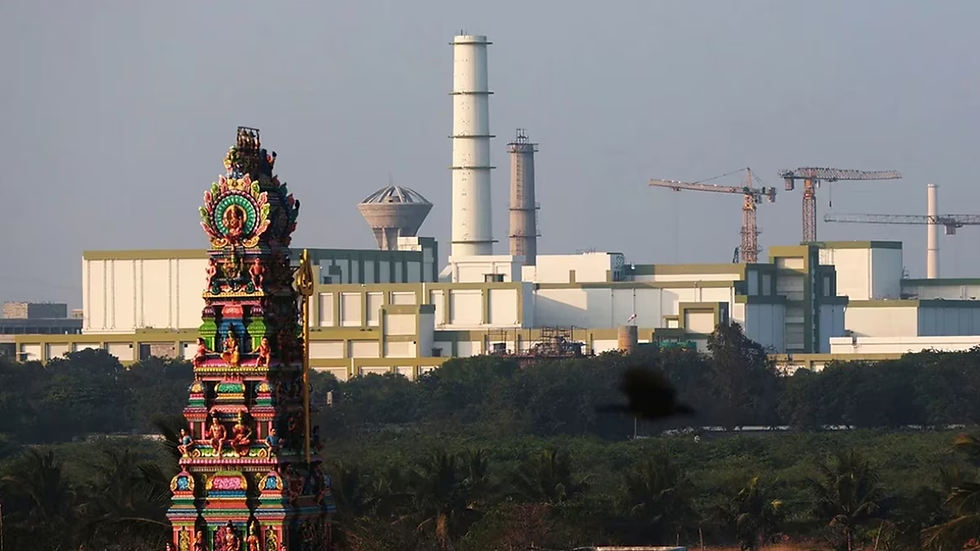
The SHANTI Act 2025: A Historic Opening of the Sector
The SHANTI Act, passed by Parliament in December 2025 and receiving presidential assent shortly thereafter, represents one of the most comprehensive reforms in India’s nuclear sector since independence. It repeals the Atomic Energy Act of 1962 and the Civil Liability for Nuclear Damage Act of 2010, paving the way for greater private sector participation.
Under the new framework, Indian private companies and joint ventures can now engage in building, owning, operating, and decommissioning nuclear power plants, along with fuel fabrication and component manufacturing, subject to regulatory oversight. Sensitive activities such as fuel enrichment and reprocessing remain under government control. The Act also strengthens the Atomic Energy Regulatory Board (AERB) with statutory powers and aligns liability provisions more closely with international practices.
These changes are expected to attract substantial investments, accelerate project deployment, and foster innovation, while maintaining the highest standards of safety and security. The reforms have been welcomed by international partners as a major step forward in enabling collaborative growth.
Advancing Small Modular Reactors for the Future
A central pillar of India’s strategy is the development and deployment of Small Modular Reactors. The Union Budget 2025-26 launched the Nuclear Energy Mission with a dedicated allocation of ₹20,000 crore for research, development, and deployment of SMRs. The ambitious target is to operationalise at least five indigenous SMRs by 2033, contributing to the broader goal of reaching 100 GW of nuclear capacity by 2047.
The Bhabha Atomic Research Centre (BARC) is progressing on multiple designs, including the 200 MWe Bharat Small Modular Reactor (BSMR-200), a 55 MWe unit, and a high-temperature gas-cooled reactor for hydrogen production. These technologies offer advantages such as shorter construction times, enhanced safety features, flexibility for industrial applications, and suitability for both greenfield and brownfield sites.
SMRs are seen as particularly valuable for meeting captive industrial power demands, supporting remote locations, and complementing the existing Pressurised Heavy Water Reactor programme.
Maharashtra’s Leadership in Nuclear Expansion
Maharashtra has positioned itself at the forefront of this national effort. The state, which already hosts nearly 60 percent of India’s data centre capacity and attracts a significant share of foreign investment, has signed agreements for around 25,000 MW of nuclear projects.
Chief Minister Devendra Fadnavis has emphasised the critical role of nuclear energy in providing carbon-free, reliable baseload power essential for continuous industrial operations. During interactions with the US delegation, he highlighted Maharashtra’s readiness to serve as an early hub for SMR deployment and invited American companies to establish manufacturing facilities, technology partnerships, and supply chain ecosystems in the state.
The state government is offering comprehensive support, including land allocation, infrastructure development, skill enhancement programmes, research collaborations, and policy incentives to facilitate swift project implementation.
Deepening India-US Nuclear Partnership
The “US Nuclear Executive Mission to India,” held from May 18 to 21, 2026, and organised by the Nuclear Energy Institute (NEI) and the US-India Strategic Partnership Forum (USISPF), brought together senior executives from leading American nuclear firms. The delegation engaged with Union ministers, state governments, and major Indian industries including Reliance, Adani, Tata Power, JSW Energy, and others.
Discussions centred on SMR technology, localisation of supply chains, private sector models, and long-term strategic cooperation. US Ambassador Sergio Gor expressed optimism about the future of bilateral ties in this sector.
This engagement builds upon earlier foundations, including the 2008 Civil Nuclear Agreement and recent policy alignments, creating opportunities for technology transfer, joint ventures, and mutual economic benefits.
The MGMM Outlook
India’s renewed focus on nuclear energy reflects a decisive shift toward building a stronger, self-reliant, and future-ready energy ecosystem. With electricity demand rising sharply due to rapid industrialisation, digital infrastructure, artificial intelligence, and advanced manufacturing, the government’s reforms through the SHANTI Act and its commitment to expanding nuclear capacity signal a long-term strategic vision. By opening the sector to greater private participation while preserving strong regulatory oversight, India is creating the foundation for faster innovation, larger investments, and a more resilient clean energy framework capable of supporting sustained economic growth.
The emphasis on Small Modular Reactors, alongside deeper cooperation with the United States, highlights India’s ambition to lead in next-generation nuclear technology rather than merely follow global trends. Maharashtra’s proactive role and the growing interest from major domestic and international players demonstrate how nuclear energy is increasingly being viewed not just as a power source, but as a catalyst for industrial competitiveness, energy security, and technological leadership. This evolving partnership-driven approach positions India to strengthen its global standing while advancing sustainable development and ensuring reliable power for decades ahead.
(Sources: News18, Indian Express, Times of India)


Comments