
India’s Military Focus to Remain Centred on Pakistan and China: IISS Asia-Pacific Regional Security Assessment 2026
- MGMMTeam

- May 28
- 3 min read
India’s conventional military planning and threat perception in the Asia-Pacific region will continue to prioritise its two nuclear-armed neighbours, Pakistan and China, according to the latest edition of the International Institute for Strategic Studies’ (IISS) Asia-Pacific Regional Security Assessment (APRSA) 2026. The report, released ahead of the Shangri-La Dialogue in Singapore, emphasises that any potential large-scale conventional conflict involving India is likely to remain localised rather than escalating into a wider regional confrontation.
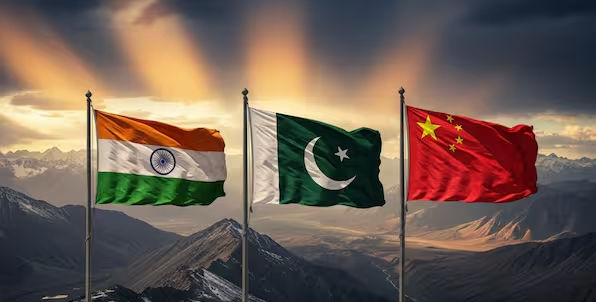
Persistent Challenges on Two Fronts
The IISS assessment notes that India is actively preparing its Army for large-scale conventional combat operations due to long-standing territorial disputes with both Pakistan and China. The report states that India will continue to maintain heavily militarised borders with these neighbours for the foreseeable future.
Tensions along the Line of Actual Control with China are often characterised as more traditional and less volatile in terms of sudden escalation compared to the India-Pakistan border. Nevertheless, both frontiers require sustained military vigilance and resources. India has been steadily refining its approach to address potential simultaneous threats from both sides, commonly referred to as the two-front scenario, through enhanced coordination and integrated operational capabilities.
Adapting to a Hybrid Security Environment
A significant aspect highlighted in the report is India’s management of a prolonged “no war, no peace” hybrid situation with its adversaries. Indian military doctrine continues to evolve by incorporating lessons from past operations and engagements. This adaptive process strengthens operational effectiveness and informs future planning.
Experiences from previous incidents, including surgical strikes against Pakistan in 2016, 2019, and 2025, illustrate how practical operations contribute to doctrinal development. On the eastern front, India contends with challenges related to infrastructure developments and broader strategic partnerships that influence regional dynamics.
Strategic Restraint Beyond Immediate Neighbourhood
According to the IISS, India is expected to maintain a focused approach, limiting active military involvement in distant Asia-Pacific flashpoints. New Delhi is likely to avoid being drawn into broader conflicts, such as potential escalations between the United States and China over Taiwan, while safeguarding its strategic autonomy.
This neighbourhood-centric posture allows India to concentrate resources on strengthening deterrence and modernising its forces, including advancements in missile systems, naval capabilities, and air power, to effectively address core security concerns in the Indian Ocean Region.
Broader Regional Context and Rising Defence Trends
The APRSA 2026 is published amid increasing strategic competition across the Indo-Pacific. Regional defence spending is on the rise, with projections indicating continued growth in military investments by major powers. These developments underscore the importance of credible deterrence and preparedness in a complex security landscape.
The report also explores evolving military doctrines among leading nations, modernisation of land forces, nuclear risks, and the implications of emerging technologies.
Spotlight on the Shangri-La Dialogue
The findings will feature prominently at the 2026 Shangri-La Dialogue, scheduled from May 29 to 31 in Singapore. This premier defence summit brings together defence ministers, military officials, and experts from across the region for in-depth discussions on pressing security issues. India’s participation is anticipated to highlight its perspectives on stability, maritime security, and cooperative approaches in the Indo-Pacific.
The MGMM Outlook
India’s evolving military posture reflects a calculated and disciplined approach to regional security, with strategic attention firmly directed toward Pakistan and China. The continued focus on a two-front challenge highlights how national defence planning is increasingly shaped by the realities of border tensions, hybrid warfare, and long-term geopolitical competition in the Indo-Pacific. India’s emphasis on strengthening operational readiness, refining military doctrine, and improving coordination across its armed forces demonstrates a broader commitment to sustaining deterrence in an unpredictable security environment.
At the same time, India’s approach remains measured and pragmatic, avoiding unnecessary involvement in wider geopolitical flashpoints while preserving strategic autonomy. The emphasis on modernisation of naval strength, missile systems, and air capabilities underlines the country’s intention to secure its core interests, particularly in the Indian Ocean Region. As defence competition intensifies across Asia-Pacific, India’s balanced posture of preparedness, restraint, and regional engagement positions it as a stabilising force amid rapidly shifting strategic dynamics.


Comments