
India Firmly Rejects Unwarranted References to Jammu & Kashmir in China-Pakistan Joint Statement
- MGMMTeam

- May 27
- 3 min read
India has strongly responded to the joint statement issued by China and Pakistan following high-level talks in Beijing, describing references to Jammu and Kashmir as “unwarranted.” The Ministry of External Affairs (MEA) has reiterated that the Union Territories of Jammu & Kashmir and Ladakh are integral and inalienable parts of India.
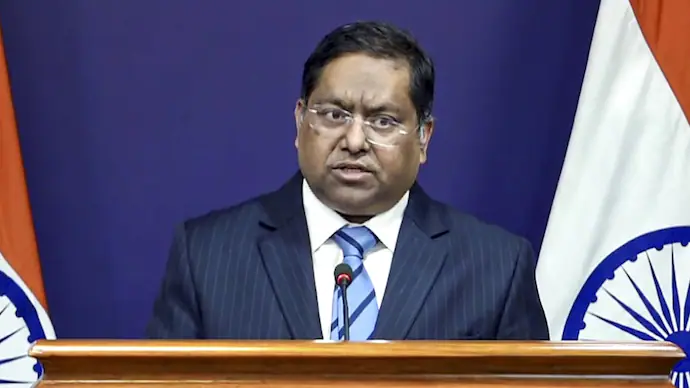
India’s Official Response
The Ministry of External Affairs issued a clear and measured statement through its spokesperson, Randhir Jaiswal. He emphasised that India’s position on this matter remains consistent and well-known to all concerned parties. According to the MEA, the Union Territories of Jammu & Kashmir and Ladakh have been, are, and will always remain integral and inalienable parts of the country. The statement further noted that no other country has the locus standi to comment on India’s internal affairs.
This response came shortly after the release of the joint statement from China and Pakistan on May 26, 2026, at the conclusion of Pakistani Prime Minister Shehbaz Sharif’s visit to Beijing.
Content of the China-Pakistan Joint Statement
During the visit, Pakistan briefed China on what it described as the latest developments in Jammu and Kashmir. In response, China stated that the issue is a dispute left over from history and should be resolved peacefully in accordance with the UN Charter, relevant UN Security Council resolutions, and bilateral agreements. The two countries also expressed support for continued cooperation under the China-Pakistan Economic Corridor (CPEC) and mentioned enhancing trans-boundary water resources cooperation.
Such language has appeared in previous joint statements between the two nations, reflecting their longstanding diplomatic positions.
India’s Opposition to CPEC
India has once again voiced its firm opposition to the China-Pakistan Economic Corridor. The MEA pointed out that certain CPEC projects pass through territories that are under Pakistan’s illegal occupation, which India considers its sovereign land. New Delhi maintains that any attempt by other countries to advance or legitimise such projects undermines India’s sovereignty and territorial integrity.
Furthermore, India rejected references to trans-boundary water resources cooperation between China and Pakistan. The two countries do not share a common border, and India does not recognise the 1963 boundary agreement through which Pakistan ceded the Shaksgam Valley to China.
Broader Diplomatic Context
The Jammu and Kashmir issue has long been viewed by India as a bilateral matter between India and Pakistan. Successive governments in New Delhi have consistently maintained that external involvement or attempts to internationalise the issue are not acceptable. India continues to uphold its territorial integrity while engaging with international partners on the basis of mutual respect and sovereignty.
This latest development highlights the complex dynamics in South Asia, where strategic partnerships continue to evolve amid regional sensitivities.
The MGMM Outlook
India’s firm rejection of the references to Jammu & Kashmir in the China-Pakistan joint statement reflects New Delhi’s continued commitment to protecting its sovereignty and territorial integrity. By reiterating that Jammu & Kashmir and Ladakh are integral and inalienable parts of India, the government has once again made it clear that any external commentary on internal matters will not be accepted. The response also demonstrates India’s consistent diplomatic approach in addressing attempts to internationalise issues that it considers strictly bilateral in nature.
The developments surrounding the China-Pakistan joint statement further underline the strategic complexities emerging in South Asia. India’s opposition to the China-Pakistan Economic Corridor remains rooted in concerns over sovereignty, especially as parts of the project pass through territories under Pakistan’s illegal occupation. At the same time, India’s rejection of references to trans-boundary water cooperation highlights its broader concern over agreements and arrangements that disregard its territorial claims. The episode showcases how regional partnerships and geopolitical interests continue to shape diplomatic tensions in the Indo-Pacific region.
(Sources: News18, Hindustan Times, India Today)


Comments