
India’s Landmark Leap in Highway Infrastructure: First Multi-Lane Free-Flow Barrier-Less Tolling System Launched in Gujarat

On May 1, 2026, Union Road Transport and Highways Minister Nitin Gadkari inaugurated India’s first Multi-Lane Free Flow (MLFF) barrier-less tolling system at the Choryasi toll plaza on National Highway-48 in Gujarat. This milestone event on the Surat-Bharuch stretch represents a significant advancement in the country’s efforts to create seamless, efficient, and modern national highways.
Understanding the MLFF Technology
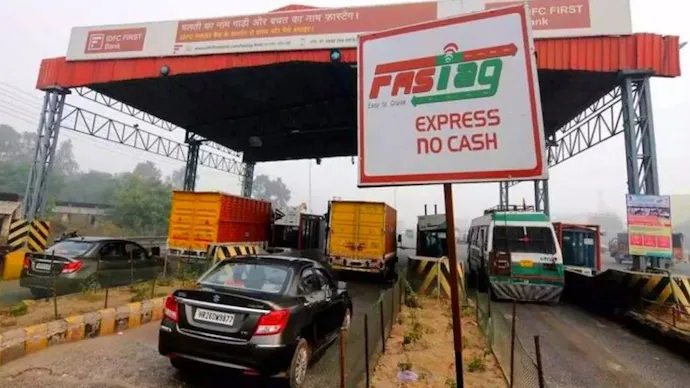
The MLFF system allows vehicles to pass through toll zones at normal highway speeds without stopping or slowing down. Overhead gantries equipped with advanced technologies—including high-resolution ANPR cameras, RFID readers for FASTags, LiDAR sensors, radar, and AI-driven verification—capture vehicle details in real time.
For vehicles with valid FASTags, the system automatically identifies the RFID sticker, cross-verifies information with the VAHAN database, and deducts the applicable toll. Vehicles without FASTags are identified through number plate recognition, with digital invoices or follow-up enforcement ensuring compliance. Developed at an approximate cost of ₹15-16 crore in collaboration with ICICI Bank, the Choryasi plaza is designed to handle around 25,000 vehicles daily, setting a strong precedent for future implementations.
Key Advantages for Commuters and the Economy
This barrier-less approach is expected to bring substantial improvements to highway travel across India. By eliminating queues and stoppages, it reduces overall travel time, eases congestion at toll points, and enhances fuel efficiency while lowering vehicular emissions.
Commuters benefit from a smoother journey that supports greater convenience and productivity. For the logistics sector, faster movement of goods strengthens business efficiency and contributes to economic growth. Minister Gadkari noted that the system advances digitisation of tolling and aligns national highways with global standards, promoting ease of living for citizens and ease of doing business.
Background and Progressive Implementation
India’s journey toward electronic toll collection gained strong momentum with the widespread adoption of FASTags, achieving high penetration rates that created a solid foundation for this next phase. Earlier pilot projects, such as the one at Gharaunda on the Delhi-Chandigarh highway, provided valuable insights and helped refine the technology.
Supporting measures, including directives for FASTag verification and updates to motor vehicle rules for handling unpaid tolls, ensure the system operates smoothly through digital compliance rather than physical checks. These steps reflect a thoughtful progression from conventional tolling to fully automated operations.
Looking Ahead: Nationwide Rollout Plans
The successful launch at Choryasi paves the way for broader adoption. Authorities plan to convert additional toll plazas in phases, with an initial focus on around 25 sites this year and further expansion to approximately 200 plazas in the coming financial year. The government has set a target to implement MLFF across the national highway network by the end of 2026, promising a future where vehicles experience uninterrupted travel nationwide.
The MGMM Outlook
The launch of the Multi-Lane Free Flow (MLFF) barrier-less tolling system on the Surat–Bharuch stretch signals a decisive shift in how India approaches highway mobility and infrastructure efficiency. By eliminating physical toll barriers and enabling real-time, automated toll collection through technologies like ANPR cameras, FASTag integration, and AI verification, the system directly addresses long-standing bottlenecks such as congestion and delays. This move reflects a broader transition from incremental digital adoption to fully integrated smart transport systems, where highways are no longer just physical assets but technology-driven corridors designed for speed, accuracy, and minimal human intervention.
Beyond commuter convenience, the implications extend deeply into economic productivity and environmental sustainability. Faster vehicle movement reduces fuel consumption and emissions while significantly improving logistics turnaround times—an essential factor for a growing economy aiming to strengthen supply chains and trade efficiency. The phased nationwide rollout plan further indicates a structured and scalable vision, building on the success of FASTag adoption and earlier pilot projects. As more toll plazas transition to this system, it sets the foundation for a modern, globally competitive highway network that aligns infrastructure development with digital innovation and long-term economic growth.
(Sources: Hindustan Times, India Today, Business Standard)


Comments