
India Rejects Pakistan’s Remarks on Terror Verdict, Calls Out “Frivolous Narratives”
- MGMMTeam

- Mar 26
- 3 min read
India has issued a strong and unequivocal response to Pakistan’s remarks concerning a recent court verdict involving a banned terrorist organisation. The Ministry of External Affairs (MEA) dismissed the comments as baseless and misleading, asserting that Pakistan has no authority to interfere in matters that fall strictly within India’s internal jurisdiction. Emphasizing the independence of the judiciary, India reiterated that all legal proceedings are conducted in accordance with due process and constitutional principles, free from any external influence.
The response underscores India’s long-standing position that its sovereignty and institutional integrity are non-negotiable. By firmly rejecting outside commentary, New Delhi has reinforced its stance that domestic legal decisions must be respected as the outcome of a transparent and lawful system.
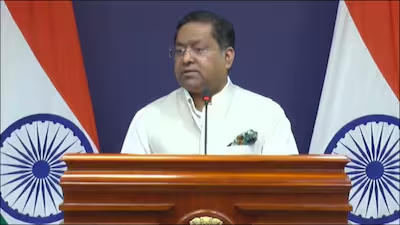
Sharp Rebuttal to Pakistan’s Narrative
In a strongly worded statement, India accused Pakistan of “peddling lies and frivolous narratives,” signaling its growing impatience with what it sees as repeated attempts to distort facts. Officials pointed out that such statements are not isolated incidents but part of a broader pattern of misinformation aimed at shaping international perception.
India also urged Pakistan to engage in introspection rather than making unfounded allegations. The criticism reflects New Delhi’s view that countries facing their own internal challenges, particularly concerning extremism, should refrain from commenting on others’ internal matters. The tone of the rebuttal highlights a shift toward a more assertive diplomatic posture in countering narratives related to terrorism.
Background of the Verdict and Its Implications
The controversy stems from a significant Delhi court verdict that sentenced separatist leader Asiya Andrabi and her associates, linked to the banned organisation Dukhtaran-e-Millat, under the Unlawful Activities (Prevention) Act (UAPA). The court found that their actions were not merely ideological but had tangible implications for national security, including promoting secessionist agendas and encouraging activities that could destabilize the country.
The judgment is being viewed as part of India’s broader effort to address threats to its sovereignty through legal mechanisms. By delivering a strict sentence, the judiciary has reinforced the message that activities undermining national unity will be dealt with firmly and within the framework of the law.
Pakistan’s Reaction and India’s Counter-Position
Pakistan, in its response, criticized the verdict and raised concerns over the situation in Jammu and Kashmir, calling the legal action unjust. India, however, categorically rejected these claims, stating that judicial decisions are evidence-based and cannot be influenced by political or external pressures.
New Delhi further maintained that commentary from Pakistan lacks credibility, especially given India’s consistent allegations regarding cross-border terrorism. This exchange once again highlights the deep divide between the two nations on issues of security and governance, with both sides holding sharply contrasting narratives.
Broader Context of Bilateral Tensions
The latest development reflects the persistent strain in India-Pakistan relations, where issues related to terrorism and Kashmir continue to dominate diplomatic discourse. Over the years, India has adopted a policy of zero tolerance toward terrorism, combining legal enforcement with diplomatic efforts to counter threats and isolate extremist elements.
Such confrontations are not merely reactive but form part of a larger geopolitical dynamic in South Asia. The repeated exchange of statements underscores the fragile nature of bilateral ties, where even judicial developments can trigger diplomatic friction.
The MGMM Outlook
India’s response reflects a firm assertion of its sovereignty and the credibility of its judicial system, making it clear that internal legal matters are not open to external interpretation or political commentary. By dismissing Pakistan’s remarks as misleading, the stance reinforces the idea that judicial outcomes in sensitive cases—especially those linked to national security—are grounded in due process and constitutional authority. The strong language used also signals a more confident diplomatic posture, where narratives perceived as distortions are directly challenged rather than diplomatically softened.
At the same time, the episode highlights a continuing pattern of narrative conflict between the two countries, where legal and security developments quickly evolve into diplomatic flashpoints. The emphasis on Pakistan’s need for introspection, particularly on issues related to extremism, underlines a broader strategic messaging aimed at shifting international focus. The verdict itself, tied to actions deemed harmful to national unity, reinforces a consistent approach of addressing internal threats through legal frameworks while simultaneously countering external criticism with assertive clarity.
(Sources: News18, NDTV, Times of India)


Comments