
India-Oman CEPA Poised for Implementation on June 1, 2026: A New Chapter in Bilateral Economic Relations
- MGMMTeam

- May 13
- 3 min read
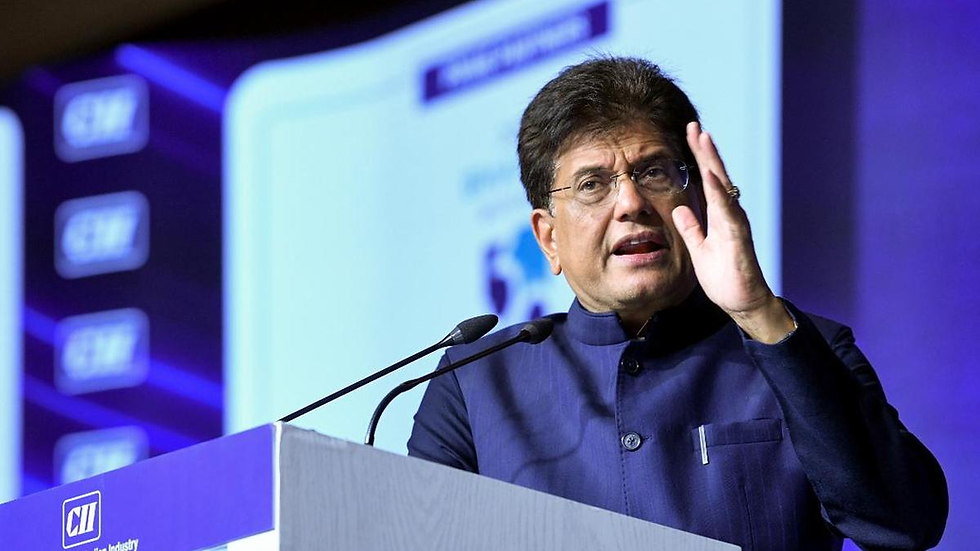
The Comprehensive Economic Partnership Agreement (CEPA) between India and Oman is set to take effect on June 1, 2026, marking a significant milestone in strengthening economic ties between the two nations. Union Commerce and Industry Minister Piyush Goyal announced the development after productive discussions with the Omani delegation on the sidelines of the CII Annual Business Summit 2026.
This agreement, signed in December 2025, represents Oman’s first comprehensive trade pact in nearly two decades and forms part of India’s broader strategy to expand market access in the Gulf region.
Tariff Liberalisation and Market Access Benefits
The CEPA offers substantial advantages for trade in goods. Oman will provide duty-free access on 98.08 per cent of its tariff lines, covering 99.38 per cent of India’s exports by value. Many of these benefits will apply immediately upon implementation, giving Indian exporters prompt and predictable market access.
In exchange, India will liberalise tariffs on approximately 77.79 per cent of its tariff lines, accounting for nearly 95 per cent of imports from Oman. The agreement includes safeguards through an exclusion list to protect sensitive domestic sectors while promoting overall growth.
Sectors in India expected to benefit significantly include textiles and ready-made garments, leather and footwear, gems and jewellery, engineering products, automobiles and auto components, pharmaceuticals, medical devices, chemicals, plastics, furniture, as well as agricultural and marine products. These areas, many of which are labour-intensive and driven by micro, small and medium enterprises, stand to gain improved competitiveness in the Omani market.
Services, Investment and Mobility Provisions
Beyond goods, the CEPA encompasses a wide range of areas including trade in services, investment promotion, and regulatory cooperation. It facilitates greater mobility for professionals, with extended stay provisions for contractual service suppliers and intra-corporate transferees. The pact also opens opportunities for 100 per cent foreign direct investment in select services sectors, fostering deeper integration in areas such as professional services, education, healthcare, and information technology.
Oman’s strategic location as a gateway to the Gulf Cooperation Council countries, East Africa, and broader West Asian markets adds further value, positioning it as a potential hub for Indian businesses seeking regional expansion.
Current Trade Relations and Growth Potential
Bilateral trade between India and Oman reached approximately US$10.61 billion in FY 2024-25, reflecting steady growth from US$8.95 billion in the previous year. India’s exports to Oman stood at around $4.06 billion, while imports were valued at $6.55 billion. The CEPA is anticipated to help address the existing trade imbalance and unlock higher volumes through enhanced cooperation.
Analysts project that the agreement will boost Indian exports, generate employment in key sectors, and encourage greater investment flows. For Oman, the pact supports its economic diversification efforts beyond hydrocarbons by providing access to India’s large and growing consumer market.
Broader Economic Context
During his address at the CII summit, Minister Goyal highlighted the challenging global geopolitical environment as an opportunity for Indian industry to focus on efficiency, productivity, and self-reliance. He emphasised that India has a strong track record of transforming difficulties into avenues for progress and urged businesses to collaborate for collective growth.
The Minister also reiterated the government’s ambition to achieve $2 trillion in exports over the next five to six years, noting that consistent annual growth of around 15 per cent would make this target attainable. Sectors such as automobiles, steel, and start-ups were identified as key drivers through innovation and global competitiveness.
The MGMM Outlook
The implementation of the India-Oman CEPA marks a strategic advancement in India’s economic engagement with the Gulf region, reinforcing its commitment to building stronger and more diversified trade partnerships. By unlocking wider market access and reducing tariff barriers, the agreement is expected to create new momentum for Indian exports, particularly in sectors driven by MSMEs and labour-intensive industries. This development not only strengthens bilateral trade but also aligns with India’s broader ambition of expanding its global economic footprint through well-targeted regional agreements.
Beyond trade in goods, the CEPA reflects a deeper vision of economic cooperation by promoting services, investment, and professional mobility between the two nations. Oman’s strategic location offers Indian businesses an important gateway into wider Gulf, African, and West Asian markets, making this partnership valuable from both commercial and geopolitical perspectives. The agreement signals a mature and forward-looking relationship that can contribute to long-term economic resilience and shared prosperity for both countries.
(Sources: The Hindu BusinessLine, Economic Times, Financial Express)


Comments