
India and South Korea Forge a Futuristic Partnership: President Lee Jae-myung’s Landmark Visit to India
- MGMMTeam

- Apr 20
- 4 min read
In a significant boost to bilateral relations, South Korean President Lee Jae-myung concluded his three-day state visit to India on a high note, describing the country as an “ultra-high-speed growth country” with immense potential to reshape global production and supply chains. The visit, the first by a South Korean president in eight years, culminated in productive summit talks with Prime Minister Narendra Modi that opened new avenues for economic, technological, and strategic collaboration between the two nations.
President Lee, accompanied by First Lady Kim Hye-kyung and a high-level delegation, arrived in New Delhi on April 19. He received a warm ceremonial welcome and paid homage at Rajghat before engaging in extensive discussions with the Indian leadership. The highlight of the visit was the bilateral summit held on April 20 at Hyderabad House, where the two leaders witnessed the exchange of 15 key agreements and Memoranda of Understanding covering diverse sectors including shipbuilding, artificial intelligence, semiconductors, clean energy, defence, and supply chain resilience.
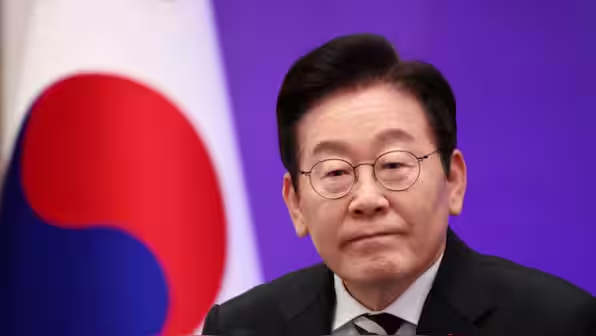
President Lee’s Vision for Deeper Economic Ties
During his engagements, President Lee emphasised the vast untapped opportunities in India-South Korea relations. He noted that while South Korean companies have a strong presence in several countries, their footprint in India remains modest compared to the potential. “The level of economic cooperation between South Korea and India is still very low,” he observed, adding that both nations are committed to expanding this space and transforming their partnership into something far more dynamic and comprehensive.
Prime Minister Modi echoed this sentiment, hailing the partnership as a move towards a “futuristic” alliance. He welcomed South Korea’s participation in initiatives such as the International Solar Alliance and the Indo-Pacific Oceans Initiative, underlining the alignment of the two countries’ visions for sustainable and inclusive growth.
Ambitious Trade Goals and CEPA Upgrade
A central outcome of the summit was the shared commitment to nearly double bilateral trade from the current level of approximately $27 billion to $50 billion by 2030. To achieve this target, the leaders agreed to fast-track negotiations for upgrading the Comprehensive Economic Partnership Agreement (CEPA), originally signed in 2010. The 12th round of upgrade talks is expected to begin in May 2026, with both sides aiming to conclude the process by the first half of 2027.
In addition, the two countries decided to establish a ministerial-level India-Korea Industrial Cooperation Committee to institutionalise deeper industrial collaboration and address practical challenges in trade and investment. These steps are designed to create more favourable conditions for businesses, ease non-tariff barriers, and enhance market access in emerging sectors.
Strategic Cooperation Amid Global Challenges
The summit took place against the backdrop of global uncertainties, including supply chain disruptions and energy security concerns arising from tensions in West Asia. President Lee highlighted that these developments position India and South Korea as vital strategic partners capable of supporting each other’s resilience.
Both nations agreed to expand cooperation in critical areas such as shipbuilding and maritime logistics, semiconductors, artificial intelligence, defence industry collaboration, clean energy, and critical minerals. South Korea’s advanced technological capabilities in shipbuilding and semiconductors complement India’s growing manufacturing base and talent pool, creating promising synergies for joint projects and co-production.
The leaders also adopted joint statements on sustainability and energy resource security, reflecting a shared focus on long-term environmental and economic stability. Fifteen documents, including MoUs on ports, steel supply chains, small and medium enterprises, and technology cooperation, were signed to give concrete shape to these ambitions.
Historical Context and Enduring Friendship
Diplomatic relations between India and South Korea were established in 1973 and elevated to a Special Strategic Partnership in 2015. Over the decades, the relationship has grown steadily across political, economic, defence, and cultural domains. The popularity of Korean culture in India has further strengthened people-to-people ties, opening doors in areas such as entertainment, food, and consumer goods.
President Lee’s visit builds on this foundation and signals a renewed momentum to take the partnership to greater heights. After concluding his engagements in India, the South Korean President is scheduled to proceed to Vietnam as part of his broader regional outreach.
The MGMM Outlook
India’s engagement with Lee Jae-myung during his landmark visit reflects a clear shift toward building a partnership that is not just transactional but deeply future-oriented. The emphasis on emerging sectors like semiconductors, artificial intelligence, and clean energy signals a recognition that long-term growth will depend on technological alignment and resilient supply chains. With Narendra Modi positioning the relationship within broader global frameworks such as the Indo-Pacific and sustainability initiatives, the collaboration appears designed to balance economic ambition with strategic foresight. The push to expand South Korean industrial presence in India also highlights a mutual understanding that untapped potential, if leveraged correctly, could significantly reshape bilateral economic dynamics.
The decision to nearly double trade targets and upgrade the Comprehensive Economic Partnership Agreement underscores a practical approach to deepening ties, moving beyond intent to structured implementation. At a time of global uncertainty, both nations seem to be aligning their strengths—South Korea’s technological edge and India’s expanding manufacturing ecosystem—to create a more self-reliant and cooperative model of growth. The agreements signed across sectors like defence, maritime logistics, and energy further reinforce the idea that this partnership is evolving into a multidimensional alliance, capable of addressing both immediate economic goals and long-term geopolitical challenges.
(Sources: Firstpost, Economic Times, Indian Express)


Comments