
EU’s Top Leadership to Be Chief Guests at India’s Republic Day 2026

India’s decision to invite European Commission President Ursula von der Leyen and European Council President António Costa as chief guests for the Republic Day celebrations on January 26, 2026 marks a significant diplomatic moment. It is rare for leaders representing an entire regional bloc to be accorded this honour, and the move reflects India’s growing emphasis on strengthening ties with the European Union as a collective strategic partner, rather than engaging only at the level of individual European nations.
The Republic Day parade has traditionally served as a platform for India to showcase its global partnerships. By hosting the EU’s top leadership, New Delhi is sending a clear signal about the importance it attaches to Europe at a time of shifting global power dynamics, supply-chain realignments, and increasing geopolitical uncertainty.
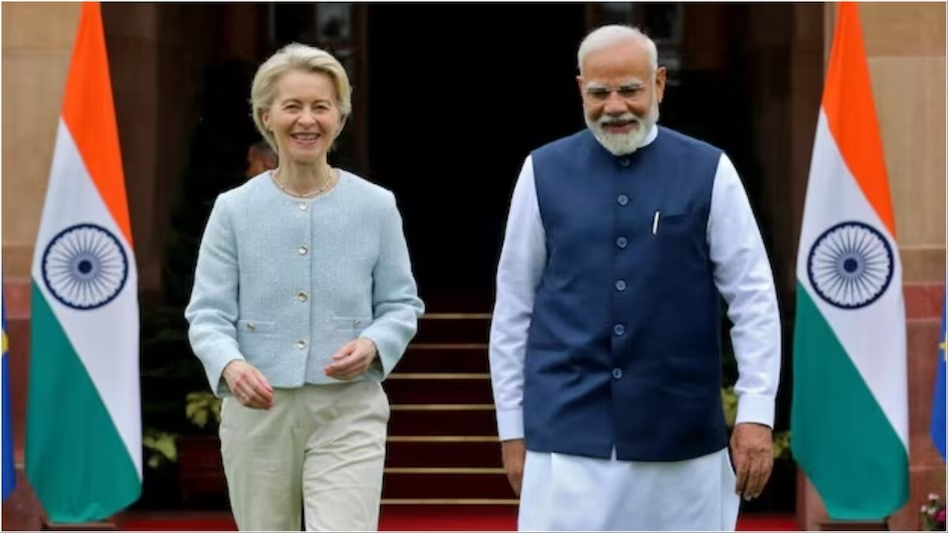
Republic Day and the Symbolism of Strategic Trust
The role of chief guest at India’s Republic Day celebrations carries deep symbolic weight. It is not merely ceremonial but often reflects trust, alignment, and long-term strategic intent. The presence of von der Leyen and Costa underscores India’s recognition of the EU as a key stakeholder in global governance, trade, and security.
This invitation also highlights the evolution of India-EU relations from a primarily economic engagement to a broader strategic partnership rooted in shared democratic values, multilateralism, and a rules-based international order.
India–EU Summit and the Push for a Trade Breakthrough
The visit of the EU leaders is expected to coincide with a high-level India–EU Summit, where economic cooperation will take centre stage. A major focus of discussions is likely to be the long-pending India–EU Free Trade Agreement (FTA), negotiations for which resumed in 2022 after a prolonged pause.
Talks have advanced across several chapters, covering goods, services, investment, intellectual property, and regulatory cooperation. However, sensitive issues such as market access, tariffs on automobiles and agricultural products, and regulatory standards continue to pose challenges. Despite these hurdles, both sides have expressed strong political intent to move negotiations forward, viewing the agreement as crucial for long-term economic resilience.
Economic Stakes and Expanding Trade Relations
The European Union remains one of India’s largest trading partners, with bilateral trade in goods and services running into well over $130 billion annually. A comprehensive trade agreement could significantly enhance this relationship by easing barriers, improving market access, and encouraging investment flows.
For India, closer economic ties with the EU offer opportunities to diversify export markets and integrate more deeply into global value chains. For the EU, India represents a fast-growing market with immense potential in manufacturing, digital services, green energy, and innovation.
Beyond Trade: Technology, Climate, and Global Cooperation
India-EU engagement today extends far beyond commerce. Cooperation has expanded into areas such as digital technology, clean energy, climate action, defence collaboration, and supply-chain resilience. The establishment of platforms like the India–EU Trade and Technology Council reflects a shared desire to work together on emerging technologies and strategic industries.
Both sides have also aligned on global challenges, including climate change mitigation, sustainable development, and reform of multilateral institutions. As geopolitical tensions rise globally, India and the EU increasingly see value in coordinated action to safeguard stability and economic openness.
The MGMM Outlook
India’s decision to host European Commission President Ursula von der Leyen and European Council President António Costa as chief guests for Republic Day 2026 reflects a clear shift in how New Delhi views its engagement with Europe. Inviting the top leadership of the European Union as a collective bloc, rather than a single nation, signals growing strategic trust and recognition of the EU’s importance in a changing global order. At a time marked by geopolitical uncertainty, supply-chain realignments, and evolving power dynamics, the move highlights India’s intent to deepen ties with partners that share democratic values, support multilateralism, and play a decisive role in global governance.
The visit is also closely linked to advancing substantive cooperation, particularly in trade, technology, climate action, and emerging strategic sectors. With the India–EU Free Trade Agreement negotiations regaining momentum and bilateral trade already crossing significant levels, both sides see strong economic and strategic incentives to move forward. Beyond commerce, collaboration in clean energy, digital technologies, defence, and institutional reforms underscores a partnership that is expanding in depth and scope. The Republic Day invitation thus represents not just diplomatic symbolism, but a maturing India–EU relationship rooted in long-term strategic and economic convergence.
(Sources: BusinessToday, LiveMint, News18)


Comments