
The Vande Mataram Debate: History, Politics, and the New Flashpoint
- MGMMTeam

- Dec 10, 2025
- 4 min read
Amit Shah’s Charge: “Appeasement Divided Vande Mataram”
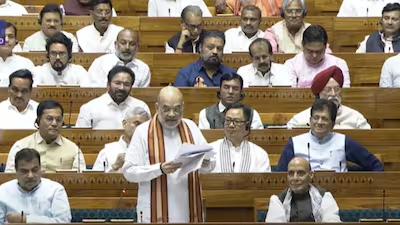
Union Home Minister Amit Shah’s recent remarks in the Rajya Sabha reignited a long-standing cultural and political debate surrounding “Vande Mataram.” He asserted that the Indian National Congress “divided” the national song in 1937 to placate certain groups, and argued that this decision weakened a symbol of unity that had once inspired millions. According to Shah, the dilution of the song contributed to the rising communal fractures that ultimately culminated in the Partition of India. This, he said, was not merely a historical misjudgment but a turning point that “derailed the country’s natural path of unity.”
Shah also dismissed accusations that the timing of this debate was politically motivated ahead of upcoming elections. Instead, he presented it as part of a larger effort to reclaim national symbols and restore the cultural spirit of the freedom movement. He emphasized that the emotional force of “Vande Mataram” had once terrified colonial rulers, and therefore deserved to be preserved in its complete form.
The Birth of a National Symbol
“Vande Mataram,” written by Bankim Chandra Chattopadhyay in the 1870s and published in his 1882 novel Anandamath, quickly evolved into one of the most powerful motivators of the Indian freedom struggle. Rabindranath Tagore’s 1896 rendition at the Indian National Congress session transformed the song into a pan-Indian anthem of resistance. Its verses, describing the motherland as divine, inspired generations of revolutionaries, students, and ordinary citizens who took part in the anti-British movement.
In the decades that followed, the song echoed across protest marches, boycotts, and underground movements. It transcended regional and linguistic boundaries, becoming a sonic embodiment of India’s national consciousness. For many historians, its role in awakening patriotic sentiment is unparalleled.
The 1937 Decision: Pragmatism or Appeasement?
The controversy around “Vande Mataram” began in the 1930s, when certain Muslim groups raised objections to later stanzas of the song that included imagery associated with Hindu goddesses such as Durga. At a time when communal tensions were rising, the Congress leadership feared that insisting on the full song could alienate sections of the population whose participation in the freedom movement was crucial.
In October 1937, the Congress Working Committee took a formal decision: only the first two stanzas — which praise the motherland without invoking specific deities — would be used at official events. Supporters of this decision describe it as an early attempt to maintain an inclusive nationalist identity in a religiously diverse country. They argue that the Congress sought to balance cultural pride with broad-based participation in the freedom struggle.
Critics, however, including today’s ruling party leaders, see the move not as inclusion but as concession. They argue that compromising on a national symbol for political gain diluted the song’s spiritual and cultural essence. This ideological difference has become a recurring theme in contemporary political discourse.
The Song in Independent India
After Independence, “Vande Mataram” retained its elevated status, with the first two stanzas officially recognized as India’s national song. Over the years, debates around its religious imagery surfaced periodically, yet the song continued to be performed in schools, public events, and patriotic gatherings. Governments across political lines upheld the significance of the first two stanzas while acknowledging the sensitivities surrounding the complete version.
In recent years, leaders like Prime Minister Narendra Modi have reiterated that earlier Congress decisions weakened the cultural symbols that united India during colonial rule. As the nation marks 150 years of “Vande Mataram,” the debate has returned to center stage — blending history, nationalism, identity, and electoral politics into one potent narrative.
Why the Debate Matters in Today’s India
The discussion around “Vande Mataram” is not merely a quarrel over a song. It reflects deeper questions about cultural identity, the politics of pluralism, and the interpretation of history. For many Indians, the song represents the emotional heartbeat of the freedom movement. For others, insisting on the full, mythologically rich version may appear exclusionary in a secular republic.
These divergent views capture the complexity of modern India: a nation deeply proud of its heritage, yet conscious of its religious and cultural diversity. As political parties revisit historical decisions and reinterpret them through contemporary lenses, the meaning of symbols like “Vande Mataram” continues to evolve.
The MGMM Outlook
The renewed debate around Vande Mataram highlights how historical choices continue to shape India’s cultural and political landscape. Amit Shah’s claim that the Congress “divided” the song in 1937 brings attention back to a turning point where a powerful national symbol was altered during rising communal tensions. The song had united the freedom struggle for decades, yet the Congress decision to limit it to the first two stanzas—taken to avoid alienating certain groups—became, in later interpretations, a compromise that weakened national cohesion. This moment is now being re-examined as part of a larger effort to restore cultural confidence and reconnect with symbols that once electrified the independence movement.
Today’s conversation around Vande Mataram reflects broader questions about how history should be interpreted in a diverse nation. The song’s emotional force remains unmatched, but debates over which version to use reveal tensions between cultural heritage and inclusive nationhood. While some believe earlier leaders had no choice but to modify the song to maintain harmony, others argue such concessions created long-term political and cultural fractures. These contrasting narratives show how deeply national symbols influence contemporary identity, politics and public memory, keeping Vande Mataram at the heart of India’s ongoing dialogue about unity and cultural pride.
(Sources: Business Standard, News18, NDTV)


Comments