
Supreme Court Strength Rises to 37 with Five New Appointments
- MGMMTeam

- Jun 1
- 3 min read
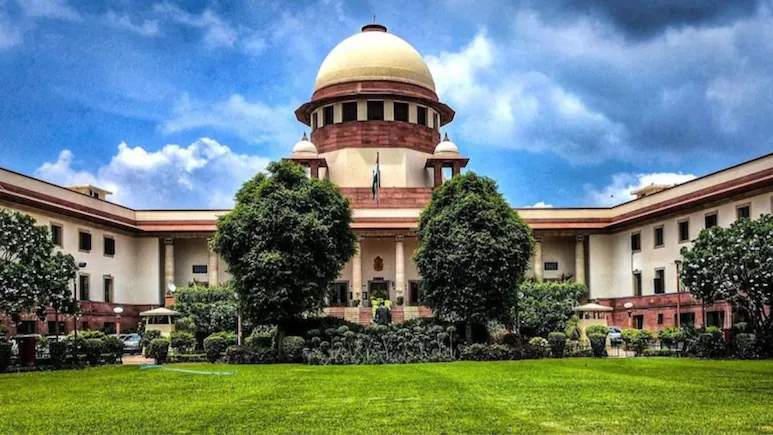
In a significant step towards strengthening the Indian judiciary, the Union Government has appointed five new judges to the Supreme Court. This development increases the working strength of the apex court to 37, including the Chief Justice of India, bringing it close to the newly sanctioned total of 38 judges.
The appointments follow recommendations made by the Supreme Court Collegium and were notified by the Department of Justice on Monday morning. These elevations are expected to play a crucial role in addressing the heavy workload and long-pending cases before the country’s highest court.
Profile of the New Judges
The five distinguished judges elevated to the Supreme Court are Justice Sheel Nagu, Chief Justice of the Punjab and Haryana High Court; Justice Shree Chandrashekhar, Chief Justice of the Bombay High Court; Justice Sanjeev Sachdeva, Chief Justice of the Madhya Pradesh High Court; Justice Arun Palli, Chief Justice of the High Court of Jammu & Kashmir and Ladakh; and Senior Advocate Venkita Subramani Mohana.
Among them, Senior Advocate Venkita Subramani Mohana’s appointment stands out as she becomes only the second woman in the history of the Supreme Court to be directly elevated from the Bar. Her elevation is being widely celebrated as a landmark moment for gender representation in the higher judiciary. Tamil Nadu Chief Minister M.K. Stalin extended his congratulations, describing her as an inspiring figure for women’s education and empowerment.
Expansion of Bench Strength
This round of appointments comes shortly after the Union Cabinet approved an increase in the Supreme Court’s sanctioned strength. The Supreme Court (Number of Judges) Amendment Bill, 2026, raised the number of judges (excluding the Chief Justice) from 33 to 37. The decision reflects a growing recognition of the need to expand the court’s capacity to handle its expanding caseload effectively.
The last such increase took place in 2019. With the current expansion now largely implemented, only one position remains vacant in the Supreme Court.
Addressing Judicial Pendency
The Supreme Court continues to face a substantial backlog, with more than 92,000 cases pending. Some of these cases date back as far as 1986. In 2025, the court managed to dispose of 56,342 cases while receiving over 60,000 fresh filings, highlighting the persistent pressure on the system.
Legal experts believe that the addition of five new judges will help constitute more benches and allow Constitution benches to function without significantly affecting the hearing of regular matters. This move is expected to improve the overall pace of justice delivery across the country.
Reactions and Expectations
The appointments have received positive responses from various sections of the legal fraternity. Former judges and senior advocates have welcomed the development, viewing it as a timely measure to enhance the institutional capacity of the Supreme Court. The relatively quick clearance of these recommendations demonstrates a collaborative approach between the judiciary and the executive in strengthening the justice delivery mechanism.
Acting Chief Justices have already been appointed for the High Courts affected by these elevations to ensure smooth functioning at the high court level as well.
The MGMM Outlook
The appointment of five new judges to the Supreme Court represents a significant effort to strengthen India’s judicial system at a time when the burden of pending cases continues to grow. With the court’s working strength now reaching 37 judges, the expansion reflects an acknowledgment of the urgent need for greater judicial capacity. The move is expected to facilitate the formation of more benches, enable quicker hearings, and improve the court’s ability to address both constitutional matters and routine appeals without prolonged delays.
The elevation of accomplished Chief Justices from various High Courts, along with Senior Advocate Venkita Subramani Mohana, highlights an emphasis on both experience and broader representation within the judiciary. Her appointment as only the second woman to be directly elevated from the Bar to the Supreme Court marks an important milestone for diversity in higher judicial institutions. Combined with the recent increase in sanctioned judicial strength, these appointments signal a commitment to improving the efficiency, inclusiveness, and effectiveness of the justice delivery system while reinforcing public confidence in the country’s highest court.
(Sources: LiveMint, Times of India, NDTV)


Comments