
Skyroot Aerospace Set to Make History: Vikram-1, India’s First Private Orbital Rocket, Ready for Launch

In a defining moment for India’s space sector, Hyderabad-based Skyroot Aerospace is preparing to launch the Vikram-1 rocket on July 18, 2026, at 11:30 AM IST. This maiden test flight from the historic First Launch Pad at the Satish Dhawan Space Centre in Sriharikota will mark the country’s first privately developed orbital rocket mission.
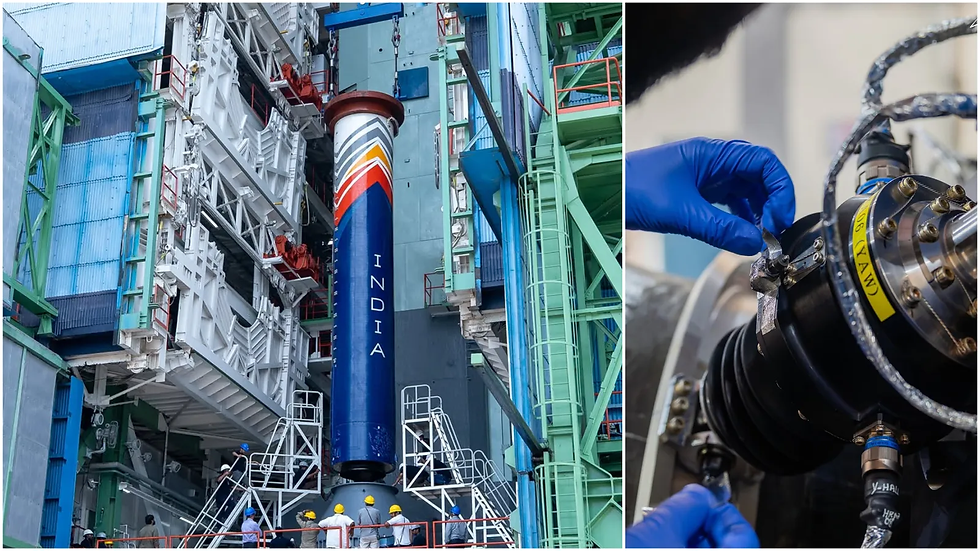
Mission Aagaman: A Landmark Achievement
The mission, named Aagaman (Sanskrit for “arrival”), symbolises the entry of India’s private industry into the domain of orbital space launches. Skyroot Aerospace has confirmed that the rocket has been fully assembled and integrated on the launch pad. The company received all necessary clearances from IN-SPACe, and the launch falls within the designated window.
This event builds on Skyroot’s earlier success with the suborbital Vikram-S rocket in 2022. It represents a major step forward in establishing reliable, on-demand launch capabilities for small satellites from Indian soil.
Rocket Design and Technical Capabilities
Vikram-1 is a four-stage orbital launch vehicle standing approximately 20 to 24 metres tall. It features a lightweight carbon-composite structure and is powered by indigenously developed propulsion systems, including 3D-printed engines and solid-fuel boosters. The first three stages use solid propulsion, while the fourth stage — the Orbit Adjustment Module — is liquid-fuelled and capable of multiple restarts for precise orbit insertion.
Designed to deliver payloads of up to 350 kg into Low Earth Orbit, the rocket will target a 450 km altitude orbit with a 60-degree inclination during this test flight. Its architecture supports flexible mission profiles, making it suitable for dedicated small satellite deployments.
Objectives and Payloads on Board
The primary objective of Mission Aagaman is to gather comprehensive real-time flight data. Engineers will evaluate propulsion performance, stage separation, guidance, navigation, and overall vehicle behaviour under actual flight conditions. This information will be crucial for refining future commercial operations.
The rocket carries a diverse set of payloads, including technology demonstrators and customer satellites. Key payloads include Skyroot’s own SCOPE satellite, Grahaa Space’s SOLARAS S3 CubeSat, Cosmoserve Space’s Embrace robotic arm for debris capture and servicing demonstrations, and technology components from Germany’s DCUBED. Symbolic payloads add a cultural touch: a lab-grown diamond lotus artwork titled Cosmic Bloom and a miniature 18-karat gold rocket featuring micro-sculptures honouring Indian scientific luminaries Vikram Sarabhai, C.V. Raman, and A.P.J. Abdul Kalam.
Company Background and Future Outlook
Skyroot Aerospace was founded in 2018 by former ISRO engineers Pawan Kumar Chandana and Naga Bharath Daka. The company has grown rapidly, becoming a leading player in India’s private space sector. An upgraded version of the rocket, Vikram-1U with solid strap-on boosters, is already in development and expected to increase payload capacity to around 550 kg.
Public viewing opportunities have been arranged at Sriharikota, reflecting strong national interest in this achievement.
The MGMM Outlook
Skyroot Aerospace’s Vikram-1 mission reflects how India’s space ecosystem is evolving beyond government-led programmes into a vibrant partnership with private innovation. The successful development of the country’s first privately built orbital rocket demonstrates the confidence of Indian startups in designing advanced launch vehicles using indigenous technologies such as 3D-printed engines, carbon-composite structures, and precision propulsion systems. Backed by regulatory support from IN-SPACe and the strong foundation created by ISRO, this mission showcases India's growing capability to compete in the rapidly expanding global small satellite launch market.
Mission Aagaman also highlights the success of India's policy reforms that have encouraged private participation in the space sector. As companies like Skyroot Aerospace move from experimental launches to commercial orbital missions, they strengthen India's vision of technological self-reliance while creating new opportunities for innovation, investment, and high-skilled employment. The Vikram-1 launch represents another significant step in establishing India as a leading global space power, where public expertise and private enterprise work together to drive the country's next phase of scientific and economic growth.
(Sources: OpIndia, Moneycontrol, The Indian Express)


Comments