
Russia Renews Invitation for Joint Development of Su-57 Stealth Fighter with India

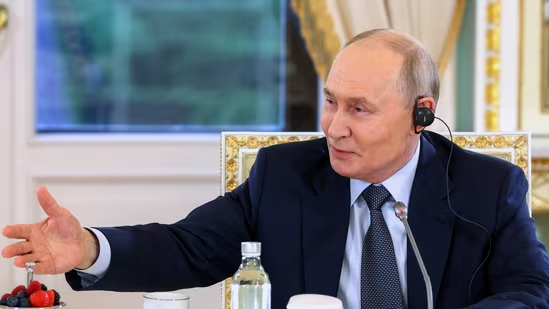
Russian President Vladimir Putin has extended a fresh offer to India for collaboration on the Sukhoi Su-57, Russia’s advanced fifth-generation stealth fighter jet. Speaking on the sidelines of the St. Petersburg International Economic Forum, Putin described the aircraft’s technology as among the best in the world and expressed Moscow’s readiness to supply the jets, pursue joint development, and deepen defence cooperation with New Delhi.
This renewed proposal highlights the enduring strategic partnership between the two nations. Putin recalled an earlier invitation for joint work on the platform and noted that Russia proceeded independently but remains fully open to partnering with India without any restrictions, including on air defence systems.
Historical Context of Indo-Russian Fighter Collaboration
India and Russia share a long and successful history of defence cooperation, exemplified by the highly capable Su-30MKI multirole fighters that form the backbone of the Indian Air Force. In the past, the two countries pursued the Fifth Generation Fighter Aircraft (FGFA) programme, an ambitious effort aimed at developing an India-specific variant based on the Su-57 platform. India participated in the early stages but withdrew in 2018 over concerns related to technology transfer, work share, and other aspects.
Despite that chapter, Russia has continued to engage India on the Su-57. Recent discussions have explored options for licensed production at Hindustan Aeronautics Limited (HAL) facilities, particularly in Nashik, leveraging existing infrastructure from the Su-30MKI programme. Proposals include substantial technology transfer, potential local manufacturing of up to 100 aircraft, and customisation to meet Indian requirements.
Capabilities of the Su-57 Fighter
The Su-57, known by its NATO designation “Felon,” represents Russia’s flagship fifth-generation combat aircraft. Designed as a multirole stealth fighter, it combines low-observability features with exceptional supermaneuverability and advanced sensor fusion. The aircraft is powered by twin engines, capable of supercruise, and equipped with internal weapons bays for maintaining its stealth profile during missions.
Key attributes include sophisticated avionics, radar-evading design, and the ability to carry a wide array of air-to-air and air-to-surface munitions. Ongoing upgrades, such as improved engines and variants featuring twin-seat configurations for manned-unmanned teaming, aim to enhance its operational versatility. These developments position the Su-57 as a potent platform for modern aerial warfare, potentially serving as a bridge for operators seeking advanced capabilities.
Strategic Importance for India’s Defence Needs
The Indian Air Force continues to modernise its fleet amid evolving regional security dynamics. While India remains committed to its indigenous Advanced Medium Combat Aircraft (AMCA) programme for long-term self-reliance, advanced platforms like the Su-57 could provide interim capabilities to address squadron shortfalls and emerging threats.
Joint production efforts would align well with India’s “Make in India” initiative, fostering technology absorption, industrial growth, and the integration of indigenous weapons and systems. Such collaboration could also open avenues for future co-development in next-generation aviation technologies.
Broader Dimensions of the Partnership
Beyond the Su-57, the renewed offer reflects the depth of Indo-Russian ties, which Putin characterised as a “special privileged strategic partnership” built over decades since diplomatic relations began in 1947. The two countries maintain robust engagement across multiple defence domains, including air defence systems, and continue to explore opportunities that support mutual strategic interests.
This proposal arrives at a time when bilateral trade is approaching significant milestones, underscoring the resilience and forward-looking nature of the relationship.
The MGMM Outlook
Russia’s renewed invitation to India for joint development and production of the Su-57 stealth fighter reflects the enduring strength of the Indo-Russian defence partnership and its continued relevance in a rapidly evolving security landscape. The proposal goes beyond a simple aircraft acquisition, offering opportunities for technology transfer, local manufacturing, and deeper industrial cooperation. Building on decades of successful collaboration, including the Su-30MKI programme, the initiative has the potential to strengthen India's aerospace ecosystem while enhancing the capabilities of its defence sector through advanced aviation technologies.
At a time when the Indian Air Force is focused on modernisation and addressing future operational requirements, the Su-57 proposal presents a strategic option that complements India's long-term indigenous ambitions under the AMCA programme. The possibility of manufacturing aircraft in India aligns closely with the country's self-reliance goals and "Make in India" vision, while also creating opportunities for skill development, technological absorption, and integration of indigenous systems. The renewed offer highlights the broader depth of India-Russia ties, demonstrating a shared commitment to advancing defence cooperation and supporting mutual strategic interests in an increasingly complex global environment.
(Sources: Hindustan Times, Moneycontrol, The Indian Express)


Comments