
NVIDIA Unveils RTX Spark Superchip: Ushering in a New Era of Intelligent Personal Computing
- MGMMTeam

- Jun 1
- 4 min read
At the Computex 2026 technology conference, NVIDIA CEO Jensen Huang made a landmark announcement that promises to fundamentally transform personal computers. The company introduced the RTX Spark Superchip, a powerful new processor developed in collaboration with Microsoft and MediaTek. This innovation aims to turn ordinary Windows PCs into advanced personal AI systems capable of running sophisticated artificial intelligence tasks directly on the device.
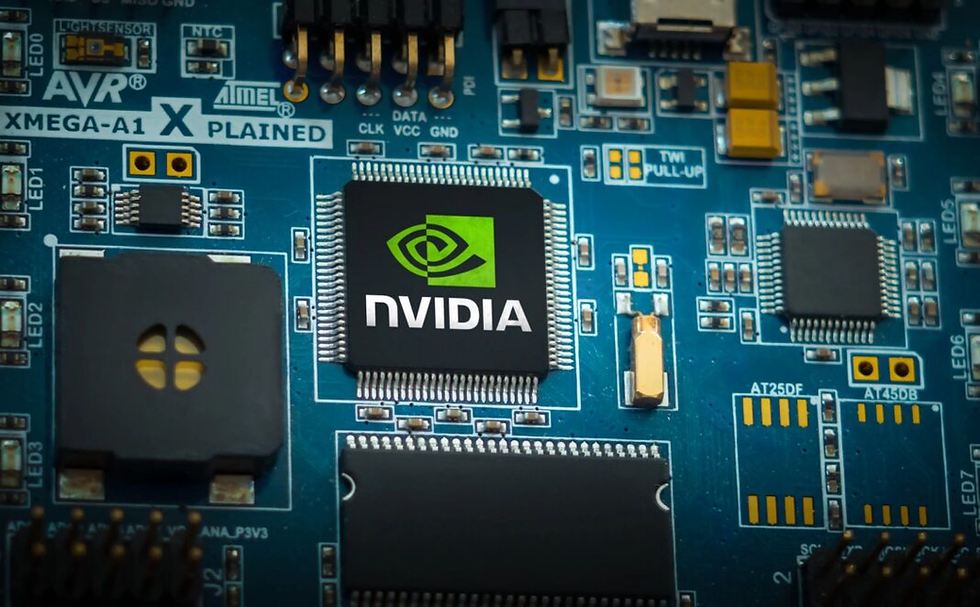
The RTX Spark Superchip: Redefining the PC
The RTX Spark represents a major leap forward in personal computing architecture. It integrates a custom 20-core Arm-based Grace CPU, co-designed with MediaTek, alongside a robust Blackwell RTX GPU boasting up to 6,144 CUDA cores. Together, these components deliver approximately one petaFLOP of AI performance. The chip also supports up to 128GB of unified LPDDR5X memory, allowing for seamless handling of large AI models, creative applications, gaming, and autonomous AI agents entirely on the device.
This unified memory architecture and efficient design, built on TSMC’s advanced 3nm process, enable high performance while maintaining excellent power efficiency. As a result, laptops and desktops powered by RTX Spark can offer extended battery life without compromising on capabilities. Major manufacturers including Dell, Lenovo, ASUS, HP, MSI, and Microsoft are preparing devices featuring this new platform, with initial shipments expected later this fall.
Jensen Huang emphasized the significance of this development during his keynote. He described it as the outcome of a three-year partnership with Microsoft to reinvent the personal computer for the AI era. “This is the new PC — the personal AI computer,” Huang stated, highlighting how the technology brings advanced intelligence directly to users’ fingertips.
Advancing Agentic AI on Personal Devices
A core focus of the RTX Spark is its optimization for agentic AI — intelligent systems that can reason, plan, and execute complex tasks with minimal human oversight. By processing these capabilities locally, the platform enhances privacy, reduces latency, and decreases reliance on cloud services. Users can expect more proactive and helpful digital assistants for productivity, content creation, and everyday decision-making.
In addition to AI workloads, the chip excels in traditional PC tasks. It delivers strong gaming performance with support for advanced features like DLSS, ray tracing, and high frame rates even in portable form factors. Creative professionals will benefit from optimized integrations with tools from Adobe and others, enabling faster generative AI workflows in applications such as Photoshop and Premiere Pro.
Industry observers view this launch as potentially transformative, comparing its possible impact to breakthroughs like the introduction of the iPhone or ChatGPT. The technology could shift personal computing from passive tools to intelligent companions that actively assist users.
NVIDIA’s Broader Ambitions with the Vera CPU
Beyond consumer devices, Huang spotlighted NVIDIA’s expansion into the CPU market with the Vera CPU platform. Designed specifically for AI agents and large-scale orchestration, this processor features 88 custom cores and delivers notable gains in performance and efficiency for data center environments. Early systems powered by Vera have already been delivered to leading organizations including OpenAI, Anthropic, SpaceX, and Oracle Cloud Infrastructure.
NVIDIA positions Vera as a significant new business opportunity, targeting a market potentially worth hundreds of billions of dollars as agentic AI infrastructure grows. The CPU forms a key part of the larger Vera Rubin platform, aimed at powering next-generation AI factories and multi-rack systems.
Implications for the Industry and Future Outlook
Huang addressed broader questions during his address, rejecting concerns that AI would lead to widespread job losses in software engineering. He argued that AI tools are instead increasing productivity and driving greater demand for skilled developers. He also reaffirmed Taiwan’s vital role in the global AI ecosystem, noting substantial ongoing investments in the region’s technology infrastructure.
This announcement intensifies competition in the AI PC space, challenging established players like Apple’s M-series chips, Qualcomm, and Intel. By combining deep Microsoft integration with Windows on Arm architecture, NVIDIA aims to accelerate the mainstream adoption of high-performance Arm-based personal computers.
Looking ahead, NVIDIA has outlined a multi-year roadmap for the Spark family, with subsequent generations planned to sustain innovation across laptops, desktops, and workstations.
The MGMM Outlook
NVIDIA’s unveiling of the RTX Spark Superchip at Computex 2026 signals a major shift in the evolution of personal computing, placing artificial intelligence at the center of everyday devices. By combining a powerful Arm-based Grace CPU, a Blackwell RTX GPU, and unified high-capacity memory, the platform is designed to bring advanced AI capabilities directly onto personal computers rather than relying heavily on cloud infrastructure. This approach not only enhances privacy and responsiveness but also opens the door to a new generation of intelligent applications capable of reasoning, planning, and assisting users in real time. With leading manufacturers preparing to launch Spark-powered devices, AI-driven computing appears set to become a mainstream experience rather than a specialized feature.
The announcement also highlights NVIDIA’s broader ambition to shape the future of AI across both consumer and enterprise markets. Alongside RTX Spark, the introduction of the Vera CPU platform demonstrates the company’s commitment to building the infrastructure required for increasingly sophisticated AI systems. The collaboration with Microsoft and MediaTek strengthens NVIDIA’s position in the emerging AI PC ecosystem while intensifying competition with established chipmakers. As on-device AI continues to advance, personal computers are evolving from traditional productivity tools into intelligent digital companions capable of transforming how people work, create, learn, and interact with technology.
(Sources: OpIndia, Indian Express)


Comments