
India's NFHS-6 Highlights Notable Advancements in Health, Nutrition, and Empowerment
- MGMMTeam

- May 29
- 3 min read
The Union Ministry of Health and Family Welfare has released the findings of the sixth round of the National Family Health Survey (NFHS-6), offering a comprehensive overview of India's progress in key areas of public health and family welfare. The survey presents encouraging trends in maternal and child healthcare, immunisation, nutrition, and women's empowerment, reflecting sustained efforts to strengthen the country's health systems.
Conducted between 2023 and 2024 by the International Institute for Population Sciences (IIPS), Mumbai, NFHS-6 surveyed over 6.79 lakh households across 715 districts in all states and union territories. This round marked a significant milestone as it was conducted entirely through digital methods using Computer-Assisted Personal Interviewing (CAPI), which enhanced data accuracy and reliability through real-time validation.
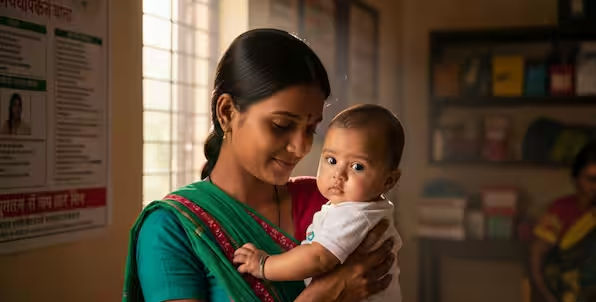
Improvements in Maternal and Child Healthcare
The survey indicates steady progress in maternal health services, which are vital for ensuring safe pregnancies and deliveries. Institutional deliveries have risen to 90.6 percent, up from 88.6 percent in the previous round. Antenatal care coverage has also strengthened, reaching 95.9 percent overall. More women are now receiving early and comprehensive prenatal support, with first-trimester antenatal visits increasing to 76.2 percent and the proportion of women attending at least four antenatal check-ups rising to 65.2 percent.
Additionally, births attended by skilled health personnel have reached 91.3 percent, while postnatal care for newborns within the first two days after delivery has improved to 85.3 percent. These developments point to better access to quality healthcare facilities and services for mothers and infants across the country.
Rising Immunisation Coverage and Reduced Childhood Illnesses
Childhood immunisation has shown further gains in NFHS-6. Full immunisation coverage for children aged 12-23 months has increased to 87.1 percent from 83.8 percent earlier. Particularly noteworthy is the sharp rise in coverage for specific vaccines, such as the rotavirus vaccine, which climbed from 36.4 percent to 85.4 percent, and the second dose of the measles-containing vaccine, which went up to 71.8 percent.
A large majority of children, around 95.6 percent, received their vaccinations through public health facilities. The survey also reports a decline in common childhood illnesses, with symptoms of acute respiratory infections dropping to 1.9 percent and severe diarrhoea cases falling to 0.5 percent. These improvements contribute to better overall child health and survival rates.
Positive Shifts in Child Nutrition
One of the most promising aspects of NFHS-6 is the advancement in child nutrition indicators. Stunting among children under five years has decreased from 35.5 percent to 29.3 percent, while severe wasting has seen a substantial reduction from 7.7 percent to 5.2 percent. Early breastfeeding practices have also gained ground, with the proportion of newborns breastfed within one hour of birth rising to 50.1 percent.
Complementary feeding for infants aged 6-8 months, combined with continued breastfeeding, has improved significantly to 59.5 percent. Such enhancements in feeding practices and nutritional status are expected to support better physical growth and cognitive development among young children.
Greater Financial Protection and Women's Empowerment
Financial protection in healthcare has expanded considerably, with coverage under health insurance or financing schemes increasing from 41 percent to 60.2 percent. This broader reach helps reduce the economic burden on families during medical emergencies.
The survey also captures notable progress in women's empowerment. Internet usage among women has nearly doubled to 64.3 percent, while the percentage of women with their own bank accounts has grown to 89 percent. Mobile phone ownership among women stands at 63.6 percent. These developments enhance women's access to information, financial independence, and opportunities for greater participation in society.
The MGMM Outlook
India’s NFHS-6 findings reflect a significant transformation in the country’s healthcare and social development landscape. The steady rise in institutional deliveries, antenatal care coverage, and skilled birth attendance shows that healthcare services are reaching more families than before. Improvements in immunisation coverage, especially for critical vaccines like rotavirus and measles, highlight the growing effectiveness of India’s public health infrastructure. The decline in childhood illnesses and better postnatal care also indicate that awareness and accessibility around maternal and child health are improving across both urban and rural regions.
The survey also presents encouraging progress in nutrition and women’s empowerment, two areas that are deeply connected to long-term national development. Reduced stunting and wasting among children suggest that nutrition programmes and breastfeeding awareness campaigns are delivering measurable results. At the same time, the sharp increase in women’s internet usage, bank account ownership, and mobile access points to rising financial independence and greater participation in society. Expanded health insurance coverage further strengthens the sense of security for millions of families, reflecting how welfare initiatives and healthcare reforms are gradually creating a healthier, more empowered, and self-reliant India.


Comments