
India Joins Global Drive to Secure Rare Earth Supply Chains Amid China’s Export Curbs

The global race to secure critical minerals has intensified as China tightens export controls on rare earth elements, materials that form the backbone of modern technology, clean energy systems, and defence capabilities. Against this backdrop, India has joined the United States and G7 nations in high-level discussions aimed at building resilient and diversified supply chains. This move reflects a growing international consensus that over-dependence on a single country for strategic resources poses economic and national security risks.
India’s participation marks a significant evolution in its global engagement on technology and resource security. The discussions align closely with New Delhi’s long-term development vision of Viksit Bharat, which prioritises self-reliance, technological sovereignty, and integration into trusted global supply networks.
China’s Dominance and the Trigger for Global Concern
China currently occupies a dominant position in the global rare earth ecosystem, particularly in processing and refining, even when mining takes place elsewhere. Recent Chinese measures requiring detailed export licences for rare earth elements and high-performance magnets have disrupted global supply chains, especially for industries such as electric vehicles, renewable energy, semiconductors, and advanced electronics.
These restrictions have heightened concerns among major economies that critical supply chains could be leveraged as geopolitical tools. Delays, rising costs, and uncertainty in sourcing have prompted governments and industries alike to accelerate efforts to reduce exposure to supply shocks emanating from a single dominant supplier.
G7 and Allied Nations Move Towards Supply Chain Resilience
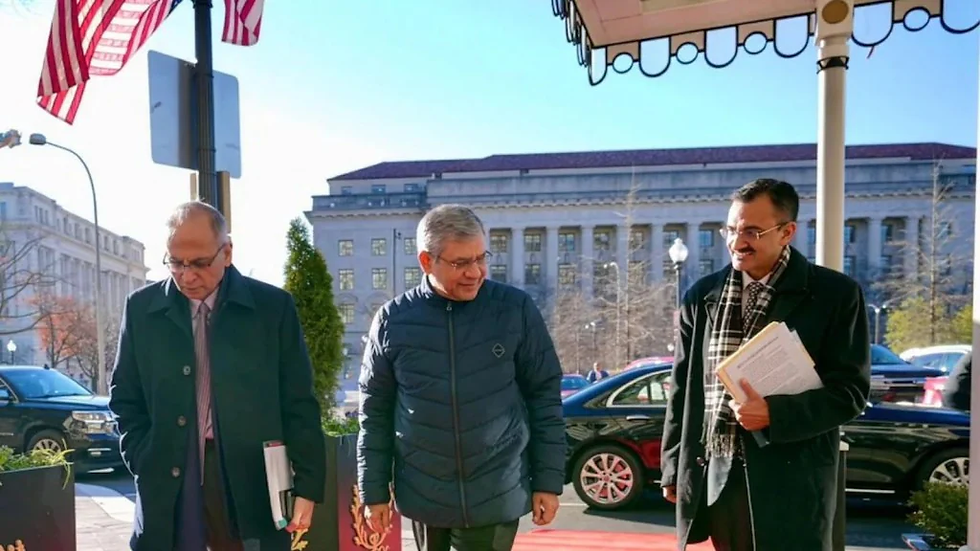
In response, the United States and G7 countries have initiated coordinated efforts to diversify sources of critical minerals and strengthen domestic and allied production capabilities. High-level meetings in Washington involving finance and industry ministers have focused on creating a stable and predictable ecosystem for rare earth supply outside China.
These discussions have explored mechanisms such as coordinated investments in mining and refining, financial support for non-Chinese producers, and policy frameworks that ensure long-term viability of alternative supply chains. Importantly, participating nations have emphasised that the goal is not abrupt decoupling, but risk mitigation through diversification and cooperation.
India’s Expanding Role in the Critical Minerals Ecosystem
India’s inclusion in these strategic talks underscores its growing relevance in the global technology and manufacturing landscape. New Delhi has recognised that securing access to rare earths is essential for sustaining growth in key sectors such as electric mobility, renewable energy, electronics manufacturing, and defence production.
Domestically, India has begun strengthening its critical minerals strategy through policy initiatives aimed at boosting local processing and manufacturing capabilities. Incentive schemes to promote rare earth magnet production, exploration of domestic reserves, and efforts to extract rare earths from mining waste signal a concerted push towards reducing import dependence. These measures are also designed to shield Indian industries from external supply disruptions while positioning the country as a reliable partner in global supply chains.
Industry Impact and the Urgency of Action
The urgency of these initiatives is already evident in the challenges faced by Indian manufacturers. China’s export restrictions have affected the availability of rare earth magnets used in electric vehicles and high-efficiency motors, leading to production uncertainties and cost pressures. These disruptions have reinforced the need for faster development of domestic capabilities and stronger international partnerships.
At the same time, India is engaging diplomatically with global partners to ensure interim supply stability while long-term solutions are put in place. Its participation in US-led initiatives such as the Minerals Security Partnership and related finance networks reflects a broader commitment to collective solutions rather than isolated national responses.
The MGMM Outlook
China’s tightening control over rare earth exports has exposed the fragility of global supply chains that underpin modern technology, clean energy, and defence systems. India’s decision to align with the United States and G7 nations in securing alternative and resilient supply networks reflects a clear recognition that strategic minerals can no longer be treated as ordinary commodities. Excessive dependence on a single country for processing and refining has created economic and geopolitical vulnerabilities, and recent disruptions have demonstrated how easily these can be weaponised. India’s engagement in these discussions aligns with its broader ambition of Viksit Bharat, where technological self-reliance and integration into trusted global ecosystems are central to long-term growth and national security.
At the same time, the push for diversification is reinforcing the urgency of building domestic capabilities. Supply uncertainties faced by Indian manufacturers, particularly in electric mobility and advanced electronics, have underlined the need for faster development of local processing, magnet manufacturing, and exploration of alternative sources. Policy measures to encourage domestic production, coupled with participation in multilateral initiatives such as the Minerals Security Partnership, indicate a dual-track approach of internal capacity building and international cooperation. This evolving strategy positions India not only as a consumer seeking stability, but as a credible partner contributing to a more balanced and resilient global rare earth supply order.
(Sources: Financial Express, Moneycontrol, Business Today)


Comments