
India Calls Out Pakistan’s ‘Doublespeak’ on Terrorism at UN

India has strongly challenged Pakistan’s position on terrorism at the United Nations, accusing Islamabad of presenting itself as a victim and a frontline state against terrorism while failing to adequately address questions surrounding terrorist organisations and their leaders. Exercising its Right of Reply in the Sixth Committee of the UN General Assembly, India’s First Secretary Raghoo Puri said terrorism cannot be defeated through statements alone and requires concrete action against perpetrators, financiers, facilitators and sponsors.
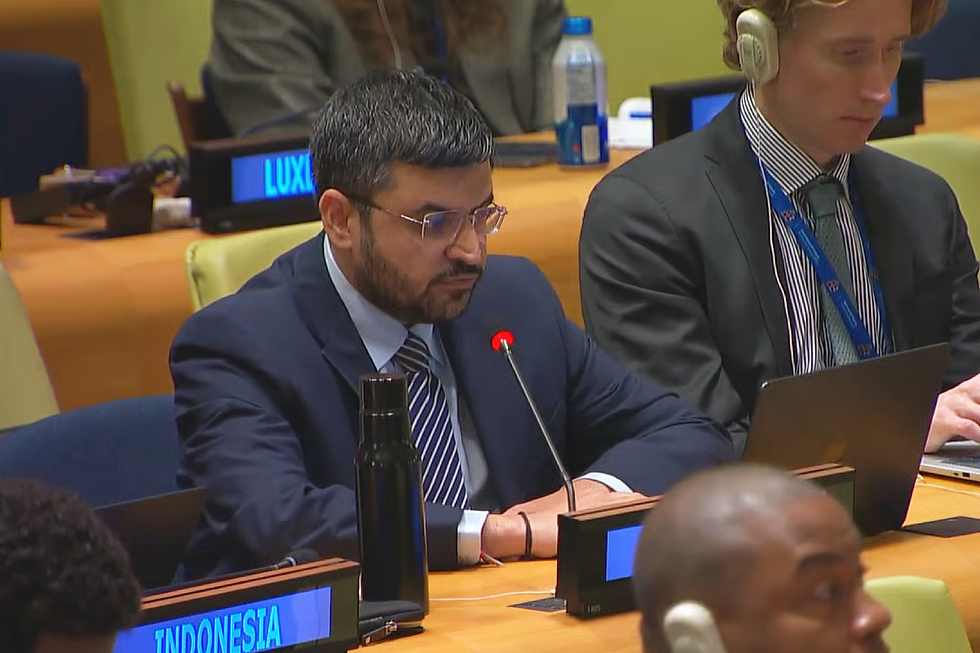
India Questions Pakistan’s Contradictory Position
Puri argued that Pakistan’s narrative does not adequately address the question of what happens when terrorist groups are financed, trained, facilitated or sheltered from a country’s territory. He said Pakistan has portrayed itself as a victim of terrorism while, according to India, organisations that once operated against neighbouring countries have increasingly contributed to instability within Pakistan itself.
India’s remarks came during a UN discussion on measures to eliminate international terrorism. New Delhi emphasised that the international community must focus on accountability and practical counter-terrorism measures rather than allowing political narratives to overshadow the threat posed by terrorist networks.
Masood Azhar Becomes a Key Point of India’s Argument
India also questioned Pakistan’s recent actions concerning Jaish-e-Mohammed chief Masood Azhar, who is designated by the United Nations as a terrorist. Pakistan has included Azhar in its Federal Investigation Agency’s Red Book of most-wanted terrorists and announced a reward of 7 million Pakistani rupees for information leading to his capture. The move came ahead of the October Financial Action Task Force discussions.
Puri questioned the credibility of Pakistan’s position that Azhar is hiding in Afghanistan. India pointed to reports of media interactions with Azhar and argued that such access raises questions about whether Pakistani authorities are genuinely unaware of his whereabouts. India described the reward announcement as insufficient and maintained that terrorist leaders must face effective legal action rather than symbolic measures.
India Recalls 9/11, 26/11 and Pahalgam
During the UN intervention, India also recalled some of the most serious terrorist attacks of recent decades, including the September 11 attacks in the United States and the 26/11 Mumbai attacks. Puri referred to the fact that Osama bin Laden, the mastermind of the 9/11 attacks, was eventually found in Abbottabad, Pakistan.
India also raised the Pahalgam terror attack of April 2025, in which 26 civilians, mostly tourists, were killed. New Delhi has linked the attack to The Resistance Front, which India describes as a proxy of Pakistan-based Lashkar-e-Taiba. The attack was followed by Operation Sindoor and a military confrontation between India and Pakistan.
Pakistan’s Internal Terror Challenge
India further highlighted statements from Pakistan’s own political leadership about the growing threat of terrorism within the country. Puri referred to remarks by former Pakistani Prime Minister Nawaz Sharif, who in a 2018 interview questioned the presence of militant organisations and their ability to cross borders and carry out attacks.
India used these statements to reinforce its argument that terrorism is not only a regional security concern but also an issue that has increasingly affected Pakistan itself. New Delhi maintained that countries dealing with terrorism must take sustained action against the organisations, financing networks and individuals responsible for such violence.
Operation Sindoor and the Battle Over Narratives
The UN exchange also touched upon the competing narratives surrounding Operation Sindoor. India rejected Pakistan’s claims about the outcome of the military confrontation and criticised what it described as continued misinformation and narrative-building.
India’s position was that military claims should not distract from the larger issue of terrorism and accountability. New Delhi has consistently maintained that the Pahalgam attack and the broader threat of cross-border terrorism require a firm response, while Pakistan has presented a different account of the events and the subsequent military confrontation.
The Larger Issue of Terror Financing
The dispute comes amid continuing international scrutiny of terrorism financing and counter-terrorism commitments. Pakistan was previously placed on the FATF increased-monitoring list from 2018 to 2022 before being removed following reforms to its financial and legal framework. The continued international focus on terrorist financing makes questions surrounding designated terrorist organisations and their financial networks particularly significant.
India’s argument at the UN was therefore broader than its criticism of individual terrorist leaders. It called for a consistent international approach in which countries are assessed on concrete action against terrorism, including the disruption of financing, safe havens and support networks.
The MGMM Outlook
India’s intervention at the United Nations highlighted the need for consistent and concrete action against terrorism, particularly against organisations, their leadership, financing networks and facilitators. By raising concerns over Pakistan’s position on terrorism and citing cases involving Masood Azhar, 26/11 and the Pahalgam attack, India stressed that international counter-terrorism efforts must focus on accountability rather than competing narratives.
The UN exchange also reinforced India’s broader diplomatic position that terrorism requires sustained international cooperation and decisive action against those responsible. India’s emphasis on terror financing, safe havens and support networks reflects its continued efforts to keep cross-border terrorism at the centre of global security discussions and strengthen collective action against terrorist threats.
(Sources: Hindustan Times, The New Indian Express, India Today)


Comments