
India Approves ₹11,718 Crore for First Fully Digital Census in 2027

The Union Cabinet has approved the long-awaited Census of India 2027, marking a historic shift as the country prepares for its first fully digital population count. With an allocated budget of ₹11,718.24 crore, the upcoming census is set to become the world’s largest digital enumeration exercise, bringing transformative changes in how demographic data is collected, stored and utilised for governance.
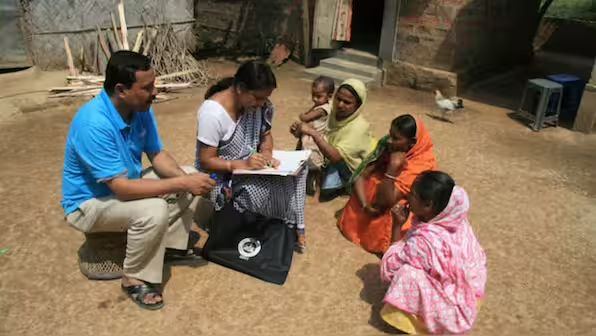
A Historic Digital Shift in India’s Census System
For the first time in Indian history, enumerators will conduct the census entirely through mobile applications instead of paper-based forms. Officials will use Android and iOS devices to record data digitally, enabling faster processing and reducing the scope for manual errors. A centralised Census Management & Monitoring System (CMMS) will allow real-time tracking of field progress, ensuring a streamlined and transparent nationwide operation.
To support field mapping, the government has introduced a web-based Houselisting Block Creator that helps define enumeration boundaries with far greater accuracy. Citizens will also have the option to submit their details independently through a secure self-enumeration portal, an initiative expected to boost participation and accessibility.
Two-Phase Census: Houselisting in 2026, Enumeration in 2027
The census will be conducted in two systematic phases. The Houselisting and Housing Census is scheduled from April to September 2026, during which enumerators will digitally map households and infrastructural details. The Population Enumeration will be carried out in February 2027 across most regions of the country. However, snow-bound and non-synchronous areas such as Ladakh, Jammu & Kashmir, Himachal Pradesh and Uttarakhand will begin enumeration in September 2026 due to climatic constraints.
This structured and technologically supported approach promises faster compilation and release of data, addressing the long gap created after the postponement of the 2021 census due to the COVID-19 pandemic.
Inclusion of Caste Enumeration for the First Time in Decades
In a major policy decision, the Cabinet has approved the inclusion of caste enumeration within the Population Enumeration phase. This will be the first structured caste data collection exercise incorporated into the national census in almost a century. The data is expected to offer deeper insight into India’s social composition, enabling more informed policymaking, welfare budgeting and academic research.
Massive Workforce Mobilisation and Technical Capacity Building
The 2027 census will rely on an estimated 30 lakh field personnel, including schoolteachers and trained enumerators assigned across India’s vast geography. In addition, nearly 18,600 technical experts will be deployed for approximately 550 days to maintain digital systems and support field operations.
This unprecedented mobilisation will generate over 1.02 crore man-days of employment, while also upskilling government personnel in digital tools, database handling and real-time monitoring—skills that hold long-term value for future governance systems.
Data Security, Accessibility and the Census-as-a-Service Initiative
Given the digital nature of the exercise, the government has incorporated stringent security mechanisms compliant with the Digital Personal Data Protection (DPDP) Act. All personal information collected will be encrypted and stored within secure servers to protect citizen privacy.
After processing, census data will be shared with the public through interactive dashboards, visualisation platforms and village-level datasets. For policymakers, ministries and researchers, the introduction of Census-as-a-Service (CaaS) will provide machine-readable datasets, enabling customised analytics, targeted welfare planning and evidence-based decision-making.
Why This Census Matters
The Census of India remains the backbone of governance and planning. The last completed census was conducted in 2011, leaving a significant data vacuum in a rapidly changing country. The 2027 exercise will finally update crucial indicators such as migration patterns, literacy, fertility, housing, health access, caste distribution and population density.
These insights will influence national development strategies, urban planning, labour policies, infrastructure investments and welfare schemes for years to come.
The MGMM Outlook
The government’s approval of ₹11,718 crore for India’s first fully digital Census in 2027 marks a decisive shift in the country’s administrative evolution. The move replaces traditional paper forms with real-time mobile-based data collection, backed by a centralised monitoring system that enhances speed, accuracy and transparency. With self-enumeration options and a digital houselisting system, the transition promises smoother participation for citizens while enabling officials to map and track demographic data with unprecedented precision. The census will be carried out in two phases—houselisting in 2026 and population enumeration in 2027—laying the groundwork for the most technologically advanced demographic study in India’s history.
The inclusion of caste enumeration after nearly a century, combined with the deployment of 30 lakh personnel and significant technical capacity building, signals a broader commitment to using data for social understanding and targeted welfare planning. Strict security measures aligned with the DPDP Act strengthen public trust, while interactive dashboards and the new Census-as-a-Service model will allow deeper insights for researchers, ministries and planners. At a time when the last complete census was conducted in 2011, the upcoming exercise promises to bridge a long-standing data gap and reshape national planning in areas such as migration, housing, health access, urbanisation and social demographics.
(Sources: OpIndia, India TV News, Firstpost)


Comments