
Delhi Police Report Reveals Nearly 1,000 Individuals With Criminal Records Were Present at NEET Protest in Delhi
- MGMMTeam

- Jul 28
- 5 min read
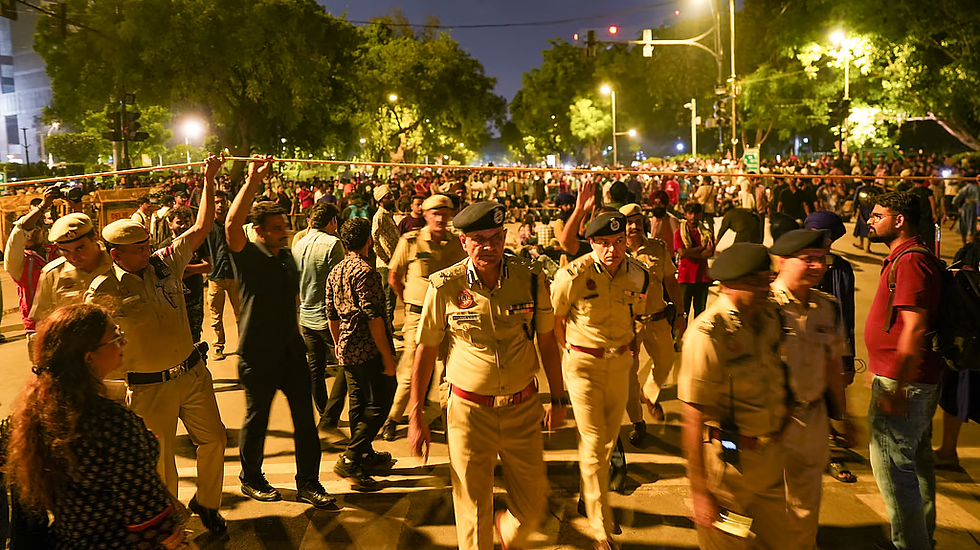
An internal investigation conducted by the Delhi Police has revealed that nearly 1,000 individuals with prior criminal records were present at the NEET protest held at Jantar Mantar in New Delhi. The findings, which emerged after an extensive verification exercise, have added a new dimension to the ongoing investigation into the demonstrations that were organised over alleged irregularities in the National Eligibility-cum-Entrance Test (NEET).
According to the police report, 989 individuals identified at the protest site were found to have previous criminal cases registered against them. Officials have clarified that the verification exercise was carried out to identify those who attended the gathering and to determine whether individuals with criminal backgrounds had entered or taken advantage of the large public protest. At the same time, authorities have stressed that having a criminal record does not automatically imply involvement in any unlawful activity during the demonstration. The investigation into individual roles is still underway.
Facial Recognition Technology Used to Verify Participants
The Delhi Police relied on Facial Recognition System (FRS) technology, CCTV footage, and other digital surveillance methods to identify people present during the protests. According to officials, nearly 2,873 individuals were identified through the analysis of video footage captured at the protest site between July 20 and July 25.
The identities obtained through facial recognition were then cross-checked against existing police databases. This verification process reportedly found that 989 of the identified individuals had previously been booked in various criminal cases. Officials stated that the use of technology helped investigators conduct a more comprehensive examination of the events surrounding the protest.
Range of Criminal Cases Identified
The internal report indicates that the criminal records of the identified individuals cover a wide range of offences. Police sources said that several individuals had previously been booked in cases involving murder, attempted murder, robbery, dacoity, kidnapping, narcotics-related offences, sexual assault, and crimes against women and children. Some were also linked to cases registered under the Protection of Children from Sexual Offences (POCSO) Act.
Investigators have clarified that these criminal antecedents are historical records and should not be interpreted as proof that the individuals were involved in the violence reported during the protest. Each case is being examined independently, and authorities have stated that any determination of responsibility will depend solely on the evidence collected during the ongoing investigation.
Background of the NEET Protest
The demonstrations at Jantar Mantar were organised following widespread concerns raised by students regarding alleged irregularities in the 2026 NEET examination. Aspirants from different parts of the country gathered in the national capital demanding greater transparency in the examination process, accountability for those responsible for any alleged lapses, and reforms aimed at strengthening the integrity of India's medical entrance examination system.
As the movement gained momentum, more supporters joined the demonstrations, turning the protest into one of the largest student gatherings witnessed in recent months. While the majority of participants gathered to voice their concerns peacefully, the protest eventually witnessed incidents of confrontation that prompted a detailed investigation by law enforcement agencies.
Violence During the Demonstrations
The protest later witnessed clashes between some demonstrators and security personnel, resulting in damage to public property and prompting police intervention. Following the incidents, multiple First Information Reports (FIRs) were registered, and an extensive investigation was launched to determine how the violence unfolded and who was responsible.
Delhi Police officials have stated that they are analysing CCTV footage, digital evidence, witness statements, and other forensic material to establish the sequence of events. Authorities have maintained that every individual will be assessed on the basis of available evidence and that legal action will be taken only after the investigation reaches its conclusion.
Supreme Court Monitors Developments
The developments surrounding the protests have also reached the Supreme Court, which has issued directions concerning the treatment of students detained during the demonstrations. The Court emphasised that minors without previous criminal records should be released if detained and instructed authorities to preserve digital evidence collected during the investigation.
The Court also observed that while law enforcement agencies must maintain public order, investigations should proceed in accordance with the law and ensure that the rights of peaceful protesters are protected. These observations have reinforced the importance of balancing public safety with constitutional freedoms during large public demonstrations.
Technology Plays a Growing Role in Modern Investigations
The Delhi Police investigation also highlights the increasing role of technology in maintaining law and order during large public gatherings. Facial Recognition Systems, surveillance cameras, and digital evidence have become important tools for identifying individuals and reconstructing events after incidents involving large crowds.
Law enforcement agencies have increasingly relied on such technologies to improve the accuracy of investigations while reducing dependence solely on eyewitness accounts. However, experts have also emphasised the importance of ensuring that digital evidence is used responsibly and in accordance with legal safeguards to protect individual rights.
Investigation Continues
Delhi Police has made it clear that the verification exercise represents only one aspect of the larger investigation into the incidents that occurred during the NEET protest. Officials continue to examine evidence collected from multiple sources before determining whether any individual identified at the protest site was directly involved in unlawful activities.
Authorities have reiterated that the presence of criminal antecedents alone cannot be treated as evidence of participation in violence. Every case will be evaluated independently, and any legal action will be based on the findings of the investigation and the evidence presented before the courts.
The MGMM Outlook
The revelations from the Delhi Police investigation highlight the need for greater vigilance during large-scale public protests, particularly when sensitive national issues are involved. While students have every democratic right to raise concerns over examinations like NEET, the presence of individuals with criminal antecedents underscores the importance of ensuring that genuine protests are not exploited by elements seeking to create disorder. At the same time, authorities have rightly clarified that past criminal records alone cannot be treated as proof of involvement in the violence, reinforcing the principle that accountability must be based on evidence rather than assumptions.
The investigation also reflects the growing role of technology in modern policing, with facial recognition, CCTV footage, and digital evidence enabling more detailed and objective inquiries into incidents involving large gatherings. As the probe continues, it remains essential to distinguish peaceful protesters from those responsible for unlawful acts while safeguarding constitutional rights. A transparent, evidence-driven investigation will be crucial in maintaining public trust, protecting democratic freedoms, and ensuring that justice is delivered fairly to all involved.
(Sources: India Today, Hindustan Times, The New Indian Express)


Comments